In 2012, J.K. Rowling told the New York Times that one of her three “desert island books” would be The Collected Works of Shakespeare, an answer which, according to Jo, is not in fact cheating, since she owns collected works in a single volume.1 Given that her other two picks were the collected works of P.G. Wodehouse and the collected works of Colette, we might be tempted to raise the question of whether her desert island picks are indeed her three favourite authors, or whether she has simply prioritised the sheer number of pages that can be squeezed into her carry-on bag.
On balance, I think that it’s safe to assume that Rowling wouldn’t choose someone she wasn’t very fond of to be her desert island companion—and so, we can place Shakespeare in a prominent position among her favourite authors. (Side note: “The Collected Works of J.K Rowling” would definitely be my number one desert island pick, so if the publishers could get to work on assembling a single volume, I’d be very grateful!)
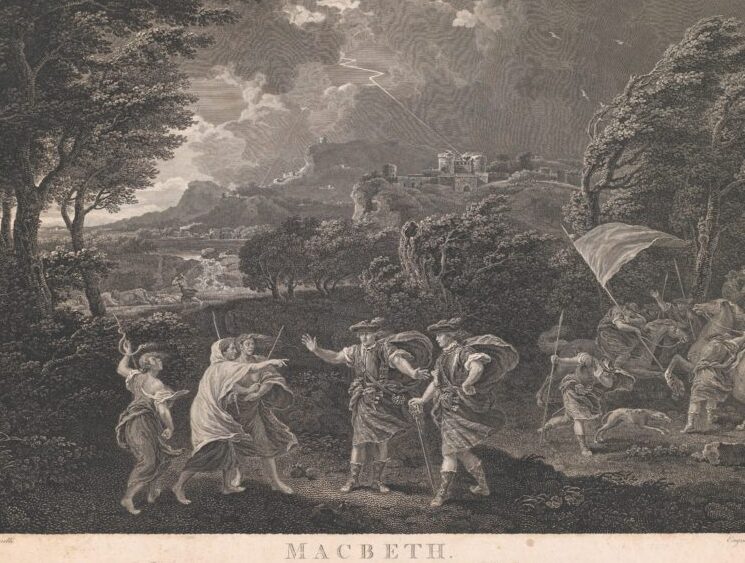
More evidence of Rowling’s views on Shakespeare came in a 2017 interview with Mugglenet, where in a discussion about the prophecy and Harry being The Chosen One she said:
It’s the “Macbeth” idea. I absolutely adore “Macbeth.” It is possibly my favorite Shakespeare play. And that’s the question isn’t it? If Macbeth hadn’t met the witches, would he have killed Duncan? Would any of it have happened? Is it fated or did he make it happen? I believe he made it happen.2
Here, Rowling is deliberately highlighting the influence of Shakespeare on her work; but that influence is not confined to just this example of the problem of fate and prophecy in Macbeth. In Dr. Beatrice Groves’s two part series on Shakespeare and Harry Potter (Part 1 and Part 2), she draws connections between the Potter series and several different Shakespeare plays: from Winter’s Tale, to Othello and King Lear, and even to A Midsummer Night’s Dream (which will be the topic of Part 2 of this blog series, so stay tuned).
So far, though, we have yet to see a similar exploration of Shakespeare’s influence on the Strike & Ellacott series (at least, to the best of my knowledge we haven’t—if one of the brilliant minds in the fandom has indeed written such an analysis, please let me know!). But in The Running Grave, we see for the first time not one, but two direct quotations from Shakespeare’s plays, making this novel the perfect entry point for a Shakespeare-Strike analysis. (ShakeStrike? Strikespearean? If we’re coining a new field of study, we should pick a great mash-up name, shouldn’t we?) In the course of writing this blog, as I dove deeper into the novel and refreshed my memory of Shakespeare’s plays, I came to believe that the Shakespearean influence on The Running Grave is even stronger than just the two quotes by themselves would suggest. In this three part series of posts, I will first explore these influences and then (in the grand TSEF tradition) speculate wildly about what this could mean for The Hallmarked Man.
[Before I begin, a quick disclaimer: I am by no means a Shakespeare expert, simply an enthusiastic amateur. I can only hope to not embarrass myself too much, and that my musings here might spark some serious analysis from one of the friends of the podcast whose literary background in this area is much stronger than mine!]
The first Shakespeare quotation in The Running Grave appears in chapter 64, when Strike first reads about Charlotte’s death online. In the article, Charlotte’s half-brother Sacha Legard quotes from Romeo and Juliet: “Death lies on her like an untimely frost / Upon the sweetest flower of all the field” (4.5.33-34). As Sacha is an actor, it makes sense that he would choose this quote—one of the most famous lines from one of the most famous plays by one of the most famous playwright of all time—to memorialise his sister, comparing her suicide to the tragic death of Juliet. In our episode covering this chapter, Episode 22: The Darkening of the Light, Dr. Kurt Schreyer pointed out just how appropriate this memorial is: “it’s the image of a fragile budding flower in the springtime that has been suddenly killed by an “untimely” frost and now will never live to ripen fully in summer. “Untimely” means unseasonable or ill-timed – premature”.
On a closer reading, it seems to me that the deaths of Charlotte and Juliet may in fact have a great deal more in common than the simple fact of their “untimeliness”. In fact, the numerous parallels between the two deaths may reveal a great deal about Charlotte’s distorted perspective of herself and Strike, as well as hint towards further Shakespeare connections in the narrative of The Running Grave.
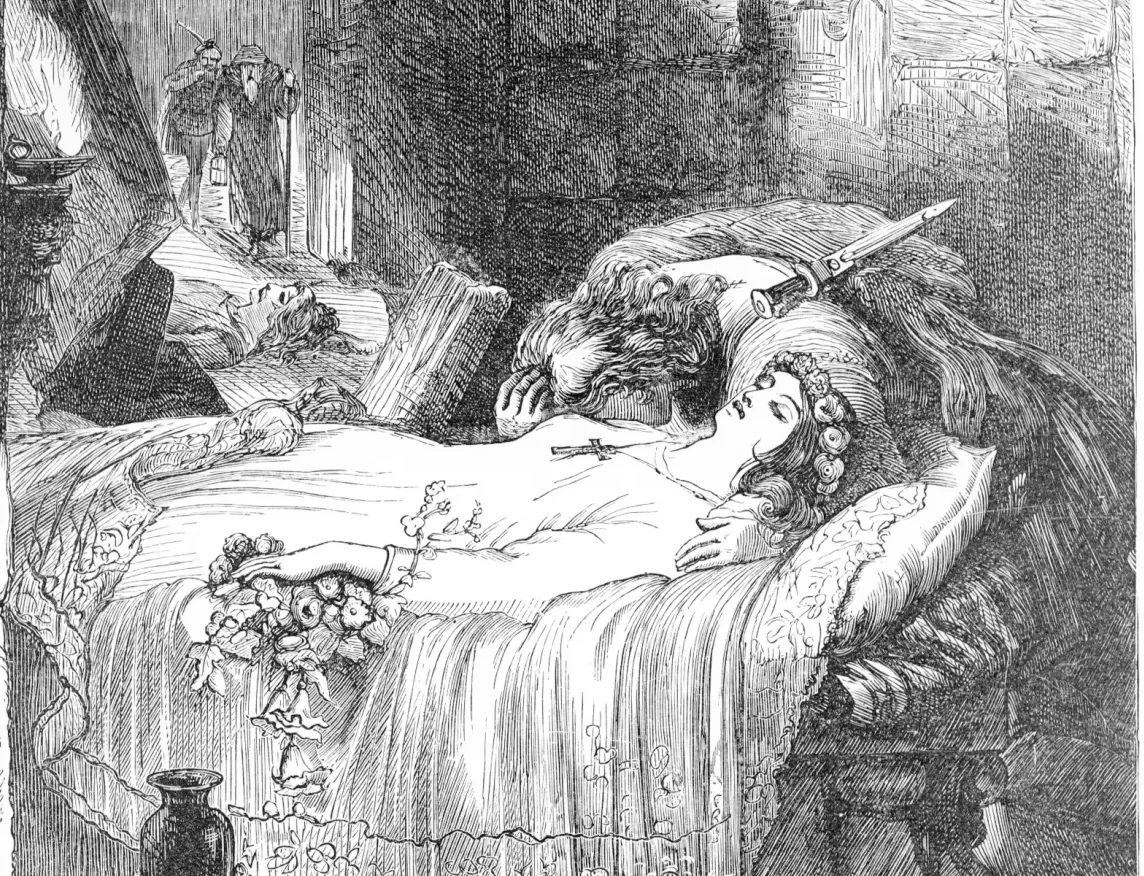
The first of these parallels is that both Charlotte and Juliet’s suicides are preceded by a kind of “false” or threatened death. In Romeo and Juliet, Juliet attempts to escape a forced marriage to Paris by taking a potion which creates the illusion of death, putting her into a cataleptic state from which she will awake to escape into exile with Romeo, her chosen husband. We can find echoes of this strategic false death in Charlotte’s history of suicide attempts, which Strike’s old friend Ilsa “scathingly categorised… into two categories: those meant to manipulate, and those that were genuine” (p. 941). Strike himself acknowledges this manipulation when he wonders if “she threatened (as she’d done so many times before) to kill herself if he didn’t give her what she wanted?” (p. 488)—and what Charlotte wanted, of course, was Strike.
Both Charlotte and Juliet, then, use the threat or appearance of death to keep hold of the man they love. Of course, one might argue that Juliet, in taking the only path open to her to escape a forced marriage, is a much more sympathetic figure than Charlotte, who has a history of threatening or attempting suicide in order to manipulate and abuse. However, there are certain shades of grey that bring the two characters into a closer alignment. We know, through Strike, that Charlotte is genuinely unhappy, and always has been; he calls her “a walking suicide” (p. 941), and the conversation he has with Amelia at the end of TRG is revealing of her mental state:
‘But she wouldn’t ever… there was a – a darkness in her.’
‘Yeah,’ said Strike, ‘and she was in love with it. It’s dangerous to make a cult of your own unhappiness. Hard to get out, once you’ve been in there too long. You forget how.’ (p.936)
In a book that has a great deal of sympathy for the victims of cults, and a nuanced ethical understanding of the damage that these victims cause to themselves, their families, and the people around them, this explicit comparison invites us to feel sympathy for Charlotte, and reminds us of her suffering as a human being. While Charlotte does use the threat of suicide to manipulate and to abuse, she is at the same time consumed with feelings of pain, darkness, and desperation that are very real.
On the other side of the coin, there are shades of Charlotte’s deliberate manipulation to be found in Juliet as well, who herself threatens suicide to achieve her own ends. When she meets with Friar Lawrence, she tells him to “Give me some present counsel, or, behold, / ’Twixt my extremes and me this bloody knife / Shall play the umpire” (4.1.62-64). In essence, she gives the Friar an ultimatum: “Help me to get out of this marriage and reunite with Romeo, or I’ll stab myself right here.” In the face of this threat, the Friar has little choice but to provide Juliet with the sleeping potion that puts into motion the tragic events of the play’s conclusion.
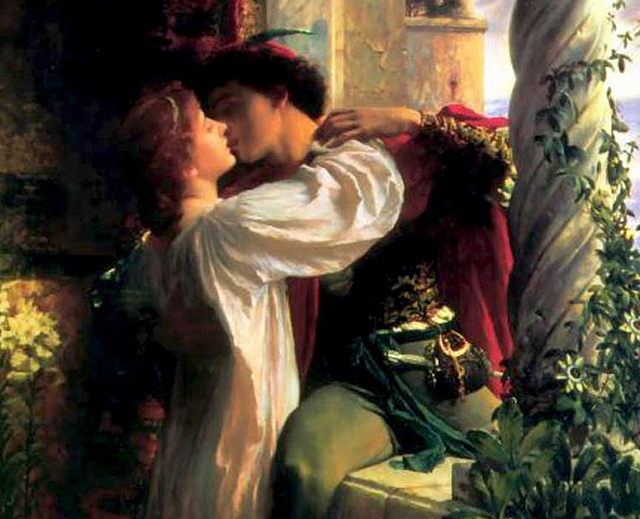
It is at this point that we come to the second parallel between Charlotte and Juliet: the moment in which their seeming or threatened death becomes an actual suicide. In both cases, this suicide could have been stopped with the delivery of a message. In Romeo and Juliet, the letter that Friar Lawrence writes to Romeo informing him of the plan is never delivered due to an unfortunate mishap. Romeo, believing Juliet to have genuinely died, arrives at her tomb and kills himself with poison. When Juliet awakens to find her lover dead, she then stabs herself in the heart with his dagger.
We see undelivered messages the night before Charlotte kills herself as well, and we are presented with several hints that these messages, if received, could have saved her life. Strike, in the immediate aftermath of reading about her death, considers the possibility: “She must have done it right after calling him. Had one of the voicemail messages he’d deleted made her intentions explicit? After threatening to go to Robin and tell her what Strike really was, had Charlotte broken down and pleaded with him to contact her once more?” (p. 488). Later on, he returns to this thought and wonders: “Could he have stopped it happening? Yes, probably, but at what cost?” (p. 489). Finally, in the last chapter of the epilogue, Robin thinks that “Charlotte’s final attempt had been no empty gesture. She’d been determined to live no longer – unless, it seemed, Strike had answered the phone” (p. 941).
We have seen this pattern from Charlotte before, in Troubled Blood, when she contacts Strike during a genuine attempt at suicide. In this first instance, Strike reads the messages she sends him, and races to a payphone in order to save Charlotte’s life. However, two books later, with his love for her finally dead and buried, Strike does not receive Charlotte’s messages. Concerned more with the damage she might do to his business and his partner than the possibility that she will hurt herself, he deletes them without listening.

In her final moments, Charlotte, like Juliet, understands that her love is lost to her forever:
He knew why Charlotte was taking things this far: she’d at long last admitted to herself that Strike wasn’t ever coming back…She’d correctly intuited that he must be in love with his business partner, and this certainty was driving her to new heights of vindictiveness. (p. 466)
Charlotte, finally accepting the fact that there will be no reunion with Strike, chooses to kill herself rather than carry out her threats toward Robin. In doing so, she fashions herself into the figure of Juliet, a beautiful life cut tragically short by the loss of her love. In the “agreed mythology” of Strike and Charlotte’s relationship, Strike is Charlotte’s Romeo, the man who “continued to love the woman who’d been generous enough to love a mutilated man” (p. 160).
But Strike is not Charlotte’s Romeo, and the shared mythology of their relationship is a delusion. Strike does not follow Charlotte into death; instead, her death leads to his own emotional and spiritual revelations, that is, the rebirth that he experiences sitting in St John the Baptist church in chapter 64. In the way that Romeo and Juliet’s deaths brings peace to their warring families, so too does Charlotte’s death bring Strike a kind of peace: a reconciliation of the long-standing inner war between his romantic feelings for Robin, and the patterns of behaviour that he now understands as stemming, in part, from a traumatic past.
The connections between Charlotte’s death and Romeo and Juliet underscore the differences between perception and reality and the emotional power of delusion and false belief that we see throughout the novel. But is this the only Shakespeare connection that we can see in these chapters? I believe that there is another, more subtle, Shakespearean influence present in The Running Grave, and that we are pointed towards it by the date of Charlotte’s death in the very early hours of June 24. As we have discussed in the podcast, this date is symbolically significant, being St John the Baptist’s Day. However, it also coincides with another important holiday, and one with a substantial Shakespearean connection: Midsummer.
Continuing in Part 2 of this series, A Midsummer Night’s Delusion, I will explore the parallel echoes of A Midsummer Night’s Dream in The Running Grave, looking at both Charlotte’s distorted perspective of her relationship with Strike and Robin’s experiences in the nightmarish setting of Chapman Farm. Check back soon, or follow us on Twitter for blog updates!
Notes:
- https://www.nytimes.com/2012/10/14/books/review/j-k-rowling-by-the-book.html
- https://www.the-leaky-cauldron.org/2007/07/28/jkrhbp3/
Thank you so much Pools for a wonderful analysis. I can’t wait for the next one.
There is so much meaning and depth to these books and I love your podcast for this kind of thing!
Thank you so much! I’m glad you enjoyed it
I quite enjoyed reading it. Unrelated to the article itself, but Juliet’s birthday is the same as J.K. Rowling’s and Harry Potter’s birthdays. Also, there’s a theory that Charlotte did message Robin, and that Ryan Murphy got Robin’s messages, but didn’t say anything to her.
Oooh I hadn’t heard that theory before! I LOVE IT! Thank you
Oh wow had no idea that Juliet had a birthday, let alone it was JKR/HP’s.
I admit I’m someone who thinks Murphy is not a bad person, just a bad fit for Robin. So however much I could see Charlotte trying to reach out to Robin, I also hope that Murphy didn’t interfere if that was the case.
Written with Pools’ signature style of entertaining information. Lovely analysis!
Haha, I’m glad my “voice” shines through in text as well Thank you!
Love your writing and your observations on Shakespeare and the way it’s been put into the books the death of Charlotte and the rebirth of strike love you and the guys on the podcast xxx
Very interesting and fun to read! I appreciate you taking the time to dive deeply into Shakespeare so we can have this analysis. I’ve only ever read and understood Julius Caesar with any depth so it was nice to see RJ analyzed a bit more deeply. I read it one time in high school and never went back so I thank you, Pools, for doing that work for me. I am really looking forward to the next installment. I liked Midsummer’s Night Dream in college but again, never really analyzed it. I’m looking forward to hearing your thinking.
Thank you again!
Wonderful work! I am planning to see A Midsummer Night’s Dream at the American Shakespeare Center in a couple of week, and I know your Strikespearean insights will help me enjoy it all the more.
I really enjoyed your commentary! I had forgotten much of Romeo and Juliet (I haven’t read it since 9th grade!), and hadn’t recalled how Juliet had manipulated the friar. I love the parallels you draw, and the divergence made with Strike’s reaction to Charlotte’s death. I had been worried that it would send him into a tailspin, but was glad he was able to find peace in ch. 64.
I look forward to reading your A Midsummer Night’s Dream comparison.
Thanks for sharing your wonderful insights!
ZoeSong
P.S. The thought of Charlotte as Ophelia had run through my mind, especially considering the choice of image that JKR used as a header last year. Perhaps you’ll be discussing that in a later post.
Also, with all of Robin’s disguises, I think of the various Shakespeare characters who “go under cover” and wonder if there could be parallels drawn there.
And finally, I like “Strikespeare”!
This is really interesting! I would not have thought to connect Charlotte and Juliet …