by Sophia
Note from TSEF: We received this wonderful email from Sophia about the connections she found between The Hallmarked Man, the Wizard of Oz, and reputations – we loved it so much, we had to post it as a post for our fellow Strike and Robin fans!
I started thinking about a connection to The Wizard of Oz on my first read when I got to the part with the yellow weights with the lion on them and Robin thinking about the double meaning of names. I thought, “Oh, she made some sort of connection between Oz and The Wizard of Oz because of the cowardly lion and the yellow brick road!” Turns out I was totally wrong about that, but it’s been percolating in the back of my mind since then. We have all the major characters at play: Oz, who is lying about his identity (causing young women to think he is the answer to their problems); Niall Semple, the incredibly intelligent man with a brain injury (Scarecrow); Tyler Powell, a man made out to be heartless who actually has such a big heart that he risks his life for the woman he loves (I find the fact that he’s a mechanic an interesting Tin Man comparison here too). And then Danny de-Cowardly-Lion who needs to find the bravery to speak up about Oliver Branfoot’s crimes. Just like with Dorothy, each of these men has a woman in his life who leads us to him. We even have an attempt to save dogs.

The question that comes up for me though is why all of these Wizard of Oz connections? And I think I have a theory for that as well. When I think about the themes of The Wizard of Oz, the message is to recognize and prize the gifts we each have within us. However, this message feels mixed when coming from the mouth of a man who has gotten all his success from doing the exact opposite— creating a reputation for having gifts he doesn’t actually possess. I think that The Hallmarked Man in conversation with The Wizard of Oz asks us two main questions: Do our inner gifts matter as much as our reputations? And what happens when we possess these qualities (intelligence, heart, and bravery), but society doesn’t value them?
There is a lot of focus on reputation in The Hallmarked Man. We have three different men whose inner gifts – their kind, caring natures – are obscured by the reputational damage inflicted on them. Tyler Powell is made out to be murderer of innocent people, and his whole town turns against him, despite the fact that he is actually trying to protect an innocent person from being murdered. Rupert Fleetwood is thought by everyone but Decima to be an asshole who never loved his pregnant girlfriend, when in fact it’s his love for her (and desire, however misguided, to protect her from an unsavory truth) that causes him to disappear. And finally, Strike, whose reputation is under sustained attack, is being made out to be someone with no moral code who preys on women, despite the fact that he’s dedicated his career to helping vulnerable people. These men are mirror opposites to the Wizard of Oz himself, who has no character virtues to speak of but doesn’t need them because of the strength of his reputation. For Tyler and Rupert and Strike, all the character virtues in the world do nothing for them if the people around them don’t recognize them.

Which leads to the question – what if your character virtues are the very things that draw you into misfortune? For the men in this book, that seems to be the case. Niall Semple is extraordinarily intelligent, but in a world at war, that intelligence is what draws him into the SAS to be a target for violence. Tyler’s compassionate heart, which compels him to save a vulnerable woman, is what causes him to end up murdered in a silver vault. Danny DeLeon has to work to get up the bravery to expose Oliver Bramfoot’s crimes, but the act of doing so is, paradoxically, what threatens his reputation by exposing him to his family as an adult actor. His reputation is at stake because of his virtues, when the opposite should be true. In a world where evil exists, none of our men are rewarded for the characteristics that should be most valued.
And what about our Dorothys? If internal characteristics don’t help you, is it any wonder that our Dorothys search for fame and money instead? In The Wizard of Oz, Dorothy is searching for the safety and security of home. But in our world, money and power are the best guarantees of safety. So of course Sapphire Neagle and Sofia Medina have to get their ruby necklace (slippers) from the wizard himself rather than having it in their possession all along. And the painful irony is that in searching so relentlessly for security, our Dorothys fall prey to a scheme that means that they will never return home again.
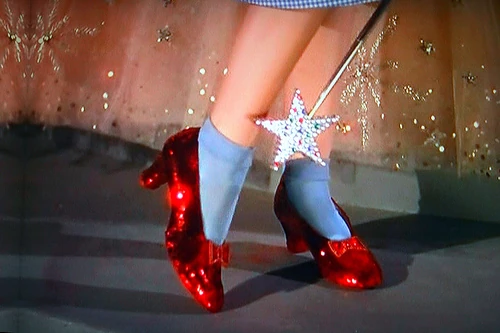
The Wizard of Oz may claim to believe that our virtues are what matter most, but The Hallmarked Man exists in the real world. And here, the forces of evil at work mean that you are just as likely to be punished for your virtues as you are to be rewarded. We may say that the journey is more important than the destination, but it’s hard to argue that as true when the only destination our heroes are led to is death and violence.
Love this!! Though those were a pretty savage bunch of Toto’s.
Your observations are even more remarkable when you consider the idea that in the original book, the slippers were silver* and how ever-present silver is in the book. The book is widely interpreted as an allegory critical of the gold standard and the demonetization of silver, a hot political issue of the time.
https://www.herobullion.com/the-wizard-of-oz-and-gold-and-silver/?srsltid=AfmBOooGkSZcSPtfo0OkWXCH_DxtgC8GZKG-xTnb70XFIxfRs6zpgSnH
We can think of Mr. Ramsey as L. Frank Baum, who is economically destroyed when his silver is stolen and weeping for joy when it is recovered.
As for the “There’s no place like home” theme, both Strike and Robin are also real-world oppositions to the fairy tale theme. Strike has to accept giving up his childhood home, though he does see to it that it will remain a true home for someone else by accepting the lower offer from the local family. As for Robin, she is not relishing her visits home anymore. I remember Strike looking at the picture on her mantle of her and RFM in front of the Masham house; the reality is that Robin is increasingly uncomfortable with both him and her childhood home, and has no desire to hunt for a new home with her boyfriend.
Again, great insights!
* the movie makers changed then to ruby so they’d be more impressive in color against the Yellow Brick road.
Love this post. Great spot on the scarecrow, tin man and cowardly lion characters and their respective virtues and shortcomings.
Louise, there’s also Robin’s doomed house-hunting. None of those places are going to feel like home…
Interesting take! I enjoyed it; thanks for sharing.
Love this post and Louise’s additional comments! Very thought provoking!