In The Silkworm, Cormoran Strike learns Robin Ellacott’s middle name: Venetia.
“It’s on the invitation,” said Strike. “Unusual. Where did that come from?”
“I was-well, I was conceived there, apparently,” she said, pink in the face. “In Venice.”
At first a source of amusement for Strike, “Venetia” goes on to become a frequent alias for Robin’s various undercover personas. In Career of Evil, she questions Holly Brockbank as Venetia Hall, a personal injury lawyer. (“Makes you sound like a poncy southerner,” is Strike’s comment when he suggests she use her middle name). In Lethal White, Venetia Hall becomes Jasper Chiswell’s goddaughter when Robin goes undercover as an intern in the Houses of Parliament. Venetia acquires a third career as a journalist in order to question multiple suspects in The Ink Black Heart, and then makes a brief appearance in The Hallmarked Man as the owner of an Instagram profile that Robin uses to warn a young girl away from Oz.
In a previous blog post, I explored The Running Grave’s connections to Shakespeare that had been “signposted” by a quote from Romeo and Juliet, which invited speculation about whether there were echoes of the play or Shakespeare generally in the rest of the novel. Similarly, Robin’s middle name – though not quite as straightforward as a direct quotation – might also function as a similar signpost, also directing us to consider a particular Shakespeare play: The Merchant of Venice.
The Merchant of Venice
For those who are unfamiliar with the plot of The Merchant of Venice, the play opens in the titular city, where Bassanio asks his kinsman Antonio to lend him the money he needs to win the hand of Portia, who is wealthy, beautiful, and fond of Bassanio. The only catch? Her deceased father’s will, which states that any suitor who wishes to marry Portia must choose between three caskets made of gold, silver, and lead. Only the man who chooses the correct casket will win Portia’s hand in marriage.
Antonio, on the strength of the profit he expects to make from his trading ships at sea, borrows from the Jewish moneylender Shylock, on one condition: that if he fails to pay back the full amount of the loan in the time specified, Shylock will take a pound of Antonio’s flesh in recompense.
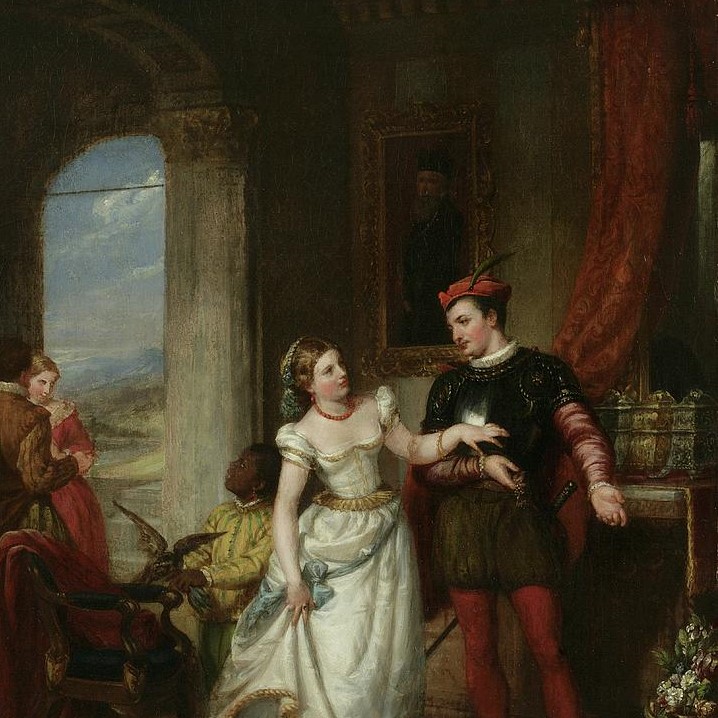 There is a parallel to Robin here which immediately suggests itself: Portia, and the attempts of three different suitors to win her hand in marriage. Her first two suitors fail (to Portia’s relief), and are summarily dismissed; but the third, Bassanio, chooses the correct casket and the pair immediately wed.
In comparison, by the final page of The Hallmarked Man, Robin Ellacott has been engaged and then married once; received a second proposal of marriage; and is likely on her way to a third (as long as she doesn’t suffer any unfortunate accidents on that 10 minute walk to the Ritz, of course).
Three suitors; three proposals – I think there is a parallel here worth looking at in a bit more depth.
Portia & Robin
When we first meet Portia in Merchant of Venice, she rails against the restrictions imposed upon her by her dead father’s wishes:
O, me, the word “choose”! I
may neither choose who I would nor refuse who I
dislike. So is the will of a living daughter curbed by
the will of a dead father. Is it not hard, Nerissa, that
I cannot choose one, nor refuse none?
Portia is bound completely by the choices of the men around her, and can do nothing to secure her own happiness. She must simply wait and hope. Robin Ellacott, on the other hand, is a 21st century woman: an independent adult (whose father is, for now at least, still alive), who is ostensibly free to date or marry as she pleases. At first glance, it would seem like Robin and Portia’s situations are nothing alike.
But in fact, Robin, like Portia, is bound; not by a dead man’s wishes, but by her own mind – by a psyche shaped by the pressures of her family, the influence of her upbringing and society, and the lingering effects of multiple different traumas. At the end of The Hallmarked Man, Robin is nearing the inevitable end of a path paved by her habitual tendencies towards people-pleasing and conflict aversion, her passivity in relationships, and the paralyzing effects of guilt, shame, and fear. Faced with a looming proposal that she dreads, she still finds herself unable to leave the man she no longer wants to be with, and impossible to choose to be with the man she does truly want.
But what of the men themselves? Do we see specific echoes of Portia’s three suitors in Robin’s three romantic interests?
Matthew Cunliffe: “Who chooseth me shall gain what many men desire”
When the audience meets Portia’s first suitor, the Prince of Morocco, his introductory speech reveals an insecure man who overcompensates with bragging and arrogance:
Mislike me not for my complexion…
I tell thee, lady, this aspect of mine
Hath feared the valiant; by my love I swear
the best regarded virgins of our clime
have loved it too.
He then boasts of his martial prowess, seeking to impress his prospective bride:
By this scimitar
that slew the Sophy and a Persian prince,
that won three fields of Sultan Solyman…
Sound familiar?
The first time that Strike meets Robin’s first husband Matthew Cunliffe, he sees in him a type of man he knew in the army: “always officer class, but with that little pocket of insecurity just beneath the smooth surface that made them overcompensate, and sometimes overreach.” In every social setting we see Matthew in, he does exactly this: over and over again, we see him relate to the people around him by boasting about his own talent and success, and belittling those he sees as lesser than himself.
–
When it comes time for Morocco to choose from the caskets in an attempt to win Portia’s hand, he reaches, without doubt or hesitation, for the golden casket. His reasoning? The casket says that the man who chooses it will gain what many men desire, and, as Morocco exclaims, “Why, that’s the lady! All the world desires her”.
By choosing the gold casket, Morocco reveals that he prioritizes appearances – that what he values most is a glittering surface, and inspiring the admiration and envy of others. To him, Portia is not a woman to be appreciated on her own merits, but rather as a prize that other men would love to win.
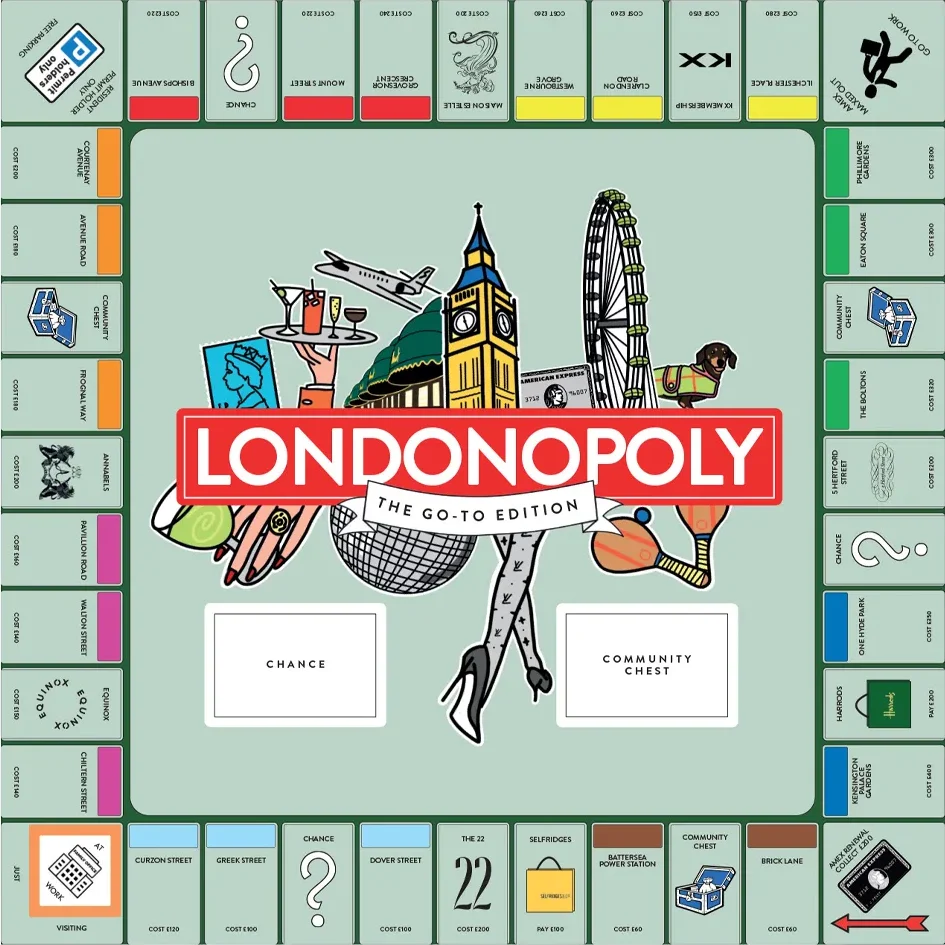
I don’t think we have to reach far here to find the similarities with Matthew Cunliffe, who spent four novels proving himself to be vain, materialistic, shallow, and concerned only with “the surface glitter: the best restaurants, the best areas to live, as though London were a huge Monopoly board”.
–
Inside the golden casket lies a skull, accompanied by the message that “not all that glitters is gold… gilded tombs do worms infold.” Outer beauty hiding inner death and decay; to me, this seems like a very apt description of the end of Robin and Matthew’s marriage. A beautiful couple, a beautifully planned wedding, a beautiful little house – and the entire time, the slow death of Robin’s love for Matthew, unnoticed until it had rotted away completely.
The similarities between Portia’s first suitor and Robin’s first husband are clearly apparent. But before we turn to suitors two and three, I want to look at the gold casket itself, which I believe can be read (along with the other caskets in turn) as a phase in the development of Strike and Robin’s relationship – that is, as a flaw in their understanding of themselves the other person that needs to be corrected before they can find their true happiness in each other.
 The Golden Night at the Ritz
The golden casket is “what many men desire”, and from nearly the beginning of their relationship, Strike has noticed the way Robin inspires desire. He has been willing to admit to himself that he desires Robin, and understands that she “is the kind of woman men want to marry”. For a long time, though, Strike couldn’t see beyond his own preconceptions and beliefs about love to acknowledge the depth and seriousness of his feelings – to acknowledge that, in fact, he is the man who wants to marry her.
When Robin is finally free of Matthew at the end of Troubled Blood, Strike gives her a “golden” night at the Ritz for her 30th birthday. It is a “wonderful, memorable and costly birthday evening” which ends in an attempted kiss – and, unfortunately, a wordless rejection.
Strike doesn’t intend to make a move on Robin at the Ritz, and in fact isn’t sure of his own intentions. He is simply caught up in the moment, and his desire takes control. Meanwhile, Robin’s rejection stems from her fear that the kiss is only about desire, that Strike wants nothing deeper than a one night stand or a brief affair – a surface level relationship without the “intimacy she craves”.
The end of the birthday celebration at the Ritz is a beautiful moment, full of desire; but it is not the correct moment (the kairos moment!) for the beginning of a romantic relationship between Strike and Robin. It is the golden casket.
Ryan Murphy: “Who chooseth me shall get as much as he deserves”
Portia’s second suitor is the Prince of Arragon (an ancient region of Spain, take note!). Arragon is wiser than Morocco, and refuses to be drawn in by the glitter of the gold casket. Likewise, Robin’s current boyfriend (for now) Ryan Murphy holds the dubious honour of being a better partner than Matthew Cunliffe:
He’d never expressed an opinion on how much she earned, or complained about the old Land Rover, or what everyone else seemed to see as her rackety career. Their now-resumed sex life was far more enjoyable than the one Robin had had with Matthew…
When he chooses the silver casket, Arragon reveals that he sees himself as smarter and better than the masses, who only see what is on the surface, and proclaims that the world would be a better place if people got exactly what they deserved.
Murphy, as police officer in the Met, is in the business of making sure people get what they deserve through the administration of criminal justice. At least, that is supposed to be his business – the jury’s still out on how effective he actually is. In The Hallmarked Man, he faces trouble at work for arresting and “roughing up” the wrong suspect, nearly derailing the investigation. He is reluctantly willing to admit his mistake when Robin asks, but not without attempting to justify his actions:
He’s got plenty of previous and his break-up with the kids’ mother was fucking toxic. I wasn’t the only one who thought he’d done it.
In other words, the man got what he deserved, even though Murphy had, according to Wardle, “sod all evidence”. The implication in all of Murphy’s explanations and apologies? That he is hard done by. That he hasn’t really done anything wrong (the same attitude he seems to take towards drinking vodka at his desk, judging by his resentment towards a colleague for “ratting” him out). The unspoken conclusion? He deserves better.
–
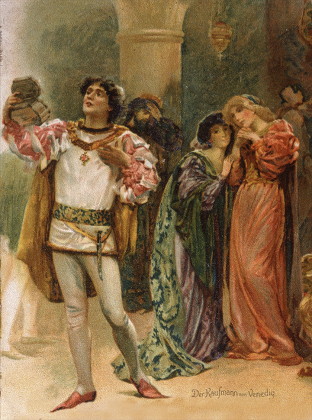
Arragon’s assumption, in choosing the silver casket, is that he is the man who deserves Portia. Does Murphy likewise feel that a life with Robin is what he justly deserves?
In The Running Grave, Robin contemplates the change in Murphy after the post-cult ‘I love you’ exchange:
It would be going too far to call his new attitude possessiveness, but there was a certain assurance that had been lacking before.
By the end of The Hallmarked Man, that possessiveness has definitely arrived: Strike hears “a proprietorial note in Murphy’s voice that had never been so obvious before, doubtless because he and Robin were now officially engaged…” (note: they were not, in fact, engaged).
Throughout The Hallmarked Man, Murphy is determined to secure a commitment from Robin. He drags her into putting an offer on a house together, pushes for conversations about freezing her eggs, and buys a small solitaire diamond for the proposal that Robin fears is looming at the end of the book. Robin, feeling guilty about lying to Murphy and about her feelings for Strike, goes along with Murphy’s plans, despite the dread, anxiety, and feelings of being stifled or trapped that they induce. She feels that she “owes” Murphy, that any other woman would be thrilled to have him – in short, that her capitulation and compliance is what Murphy deserves.
–
When the Prince of Arragon opens the silver casket, he is confronted by a mirror in which he sees a blinking fool: his own face. With this comes the realization that he has perhaps thought too highly of himself and what he deserves, and a swift departure.
When their relationship ends in Sleep Tight, Evangeline (note that I say when, not if – we’re manifesting it), will Murphy feel that Robin has made him a fool?
Some could argue that he would be justified in feeling this way. Robin has been in love with another man for the entirety of their relationship, after all. In addition, there is the looming possibility of a messy public break up, in a very expensive restaurant, when he is about to propose to Robin, on his birthday. This would certainly be a devastating blow to his ego! If Murphy feels that he has been made a fool of by Robin, he may not exit the stage as swiftly as the Prince of Arragon. In fact, it seems increasingly likely to me that Robin will spend a large part of Sleep Tight, Evangeline dealing with the aftermath of Murphy’s frustrated hopes and his anger at not receiving what he believes are his just deserts.
–
I think that the silver casket has something to tell us about Robin, as well. The suitors are told that the correct casket will contain a portrait of Portia; the silver casket holding a mirror instead can therefore be read as a clear symbol of Robin hiding the truth about her feelings from Murphy, showing him a reflection of himself and his own desires rather than her real self. Murphy isn’t oblivious to this, which we see when he texts Robin as much:
There’s a distance between us sometimes and I don’t know if … you’re fooling both of us about what you really feel. And if it’s the second one, I’d rather know now.
But rather than taking the out she is given, Robin doubles down on her reassurances to him. In the panic that Murphy might sense her true feelings, she keeps a firm hold of the mirror that reflects his own face, and pushes her true feelings deep down behind it.
The Silver Bracelet
In The Hallmarked Man, Strike gives Robin a silver charm bracelet, painstakingly and expensively assembled in an attempt to show her the truth of her feelings. Unlike when he tried to kiss Robin at the beginning of The Ink Black Heart, Strike here is finally clear about his own intentions and trying to express them to Robin.
However, as she does throughout the book, Robin misreads Strike’s intentions with this gift. Her instinctive (drunken) reaction, when she first receives the bracelet, is to understand and respond to the love embodied in it. Later, sober Robin convinces herself that the bracelet represents not love, but cynicism, and that Strike is simply playing a game with her feelings, undermining Murphy so that he can keep her single and devoted to the agency.
The image of Strike that Robin persuades herself is real – that he is “an infuriating sod who messed with your feelings to further a confused, but probably self-interested, agenda” – is actually a false construct of the silver casket. That is, the Strike that Robin imagines is a man who believes that he is entitled to keep her single and convenient, who feels deserving of her commitment to him and the agency, without offering her commitment in return.
–
Murphy is a decent(ish) guy, and a ‘good boyfriend’ on paper. However, while he might be able to leap over gates and run around remote, car-free islands like a gazelle, and though he is better in bed than Matthew Cunliffe (low bar), that doesn’t mean he deserves Robin, or that Robin owes him the rest of her life.
For Robin to find true happiness, she needs to focus on what she wants rather than what she believes Murphy deserves. (On the flip side of the coin, Robin may need to realize that Murphy actually deserves *better* than what she is giving to him.)
If Robin is going to find real happiness, she is going to need to leave behind the safe ‘good boyfriend’ who she thinks deserves her loyalty. She is going to have to take a risk.
Cormoran Strike: “Who chooseth me must give and hazard all he hath.”
Bassanio, Portia’s third suitor, is described as “a Venetian, a scholar and a soldier” – a description which also applies quite well to our favourite ex-Oxford, ex-Red Cap detective! Bassanio is also the only one of the suitors that Portia hopes will choose correctly, as she had met him long ago and holds feelings for him still. Likewise, Robin, as we know, has been in love with Strike for a long time. At her lowest point in The Hallmarked Man, she asks herself:
How much of her life was she going to put on hold, in hope and expectation – she was admitting it to herself, now – that Cormoran Strike would become sincere and straightforward, and tell her plainly what he wanted and felt?
In other words, Robin has spent years hoping and wishing that Cormoran Strike would make his choice – and that he would choose her.
–
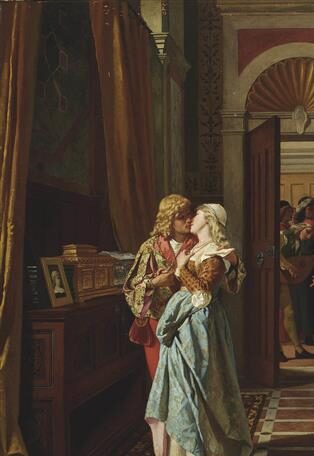
When it is time for Bassanio to choose from the caskets, he rejects the “gaudy gold, hard food for Midas”, as well as silver, the “pale and common drudge ’tween man and man”. Instead, he chooses the casket made of lead, on top of which is engraved the message: “Who chooseth me must give and hazard all he hath”.
Give and hazard all he hath: this is exactly what Strike does in the final chapter of The Hallmarked Man. He risks everything – his friendship with Robin, the agency they’ve built together – to offer her everything. He doesn’t just tell her he loves her; he asks her to be with him permanently; to marry him. Strike is willing to commit himself fully to their relationship (“all that I am I give to you, and all that I have I share with you”, as the vow is written in the Church of England marriage service), and tells her so, plainly, just as she wished he would.
–
As Bassanio chooses his casket, he says:
But thou, thou meager lead,
Which rather threaten’st than dost promise aught
Strike too feels more threat than promise in trying to declare his love. He sometimes doubts his own intuition as to whether Robin reciprocates his feelings, since she has rejected one advance of his already, and keeps her own feelings buried too deeply for Strike to be sure that he is loved in return. He has no promise that his feelings will be reciprocated; and indeed, when he finally declares himself, it is only under the literal threat of Murphy’s imminent proposal.
But much like Bassanio’s choice of the lead casket proves to be the correct one, earning him the hand of Portia, I believe that Strike choosing to “give and hazard all he hath” will prove, in the end, to be the true kairos moment for their relationship.
Robin’s character arc is not yet complete. Though she has grown professionally, becoming an equal partner to Strike in the agency, she has not yet completely overcome her habits of passivity and people-pleasing in her personal relationships.
She has had three suitors in total: she chose to leave the first, but far later than she should have and only when she had the excuse of infidelity; she will soon, hopefully, choose to leave the second because she recognizes that she no longer wants to be with him; and she must choose to be with the third, must also “give and hazard” all she has.
Really enjoyed this Pools! Especially the hazard of Strike’s declaration and I think the silver casket really makes sense of Robin’s odd feeling that other women would be happy with Murphy (why is this relevant?) i.e. they both think he ‘deserves’ her.
Also, on a hopeful note, The Hallmarked Man was absolutely the silver book, so Murphy as the silver casket means that as we move on to book 9 we can turn the page on him too…. 🙂
Thank you so much! and EXACTLY, this is why I’m so excited – I think that a breakup is in the cards for *very* early in STE!
🙂
Good evening,
Great Essay. Looking forward to the next part, but in the interim a “quick” dive into Shakespeare. Act III sc 2. Bassanio’s thoughts to himself before he opens the casket and his speech giving his conclusions of “why” he would “hazard” such a choice. These are practical thoughts in a real world, although he stands to gain both wealth and good fortune. (For Strike wealth in loving relations;hip and good fortune that he has finally “sorted” himself out) Portia, as a Lady of her time, gives up her estate to her husband upon marriage. Now that’s food for literary musings? What will Robin give up? (prevarication and self doubt?)
French composer Berlioz lifted the sequence & rhythm from Act V sc1 – Jessica and Lorenzo ” in such a night as this” for the Love duet for Dido and Aeneas “nuit d’ivresse, nuit d’extase infinie” (The Trojans at Carthage) Shakespeare invokes, Troilus & Cressida, Thisbe, Dido, Medea and the fact that Jessica (a Jewess) had escaped her upbringing to be with Lorenzo. (as Robin has with her choice of job and probable choice of spouse) Berlioz slims it down a bit with just Troilus,Phoebe, Diana & Endymion.
Both Ladies, however, rebuke their lovers as being cold (or unresponsive) to which the Men both apologise and respond.
Dido’s last rebuke is to Cytherea’s son (Aeneas, son of Venus and Anchises). Cytherea = Aphrodite = Venus, who was rather jealous of Cupid…..have we come part way around the circle perimeter?