I remember my first read of The Running Grave quite vividly. With no days off to read the book in one go, I read parts from the hardcover at home, and listened to Robert Glenister’s audio version or read from my Kindle when I was on the road. What I do NOT recall is having an elevated heart rate for about 70% of the entire book.
Reading The Hallmarked Man was an entirely new experience in that regard. Texting fellow readers – screaming in all caps – to release some heartfelt emotions, was the only thing that kept me somewhat sane. I took a week off work and devoured the entire book in less than three days. It left me quite literally exhausted when I finished it. That’s partly because I binge read a 900-page book, which you could argue isn’t necessarily the best way to go about it. But here we are: a little breathless, shocked, overwhelmed, and mostly in awe by what we’ve been given by the brilliant Robert Galbraith.

I’d love to share some first thoughts with you. They will barely scratch the surface of what’s between the covers, I know. I look forward to your additions and thoughts in the comments.
The following text is filled with spoilers for The Hallmarked Man.
A labyrinth of secrets
Every crime novel is filled with characters who have secrets they are eager to keep, and detectives who will keep digging until they’ve found out the truth. This isn’t news for any crime reader. Yet, to me, The Hallmarked Man feels more densely layered than the other Galbraith books. The author wasn’t joking when she said Strike 8 offers readers quite a complicated case. The book is filled to the brim with different suspects, victims, a sub plot, back story of returning characters, and of course a Silver Thread: Strike and Robin’s gravitational pull and push. All together, they make for a beast of a read.
During the labyrinthian investigation, Robin and Strike discover antagonists hiding sexual deviances, a secret of incest, and a victim of sexual abuse alive but hidden underneath the floor, to name just a few dark secrets pressing up against the surface.
Confined, dark spaces
The Hallmarked Man is a big book, but many of the locations we visit are very cramped. The world of Strike 8 feels almost claustrophobic to me. In a way several settings seem to mirror the main characters’ emotional walls: closed in, and with low ceilings, offering barely enough room to move.
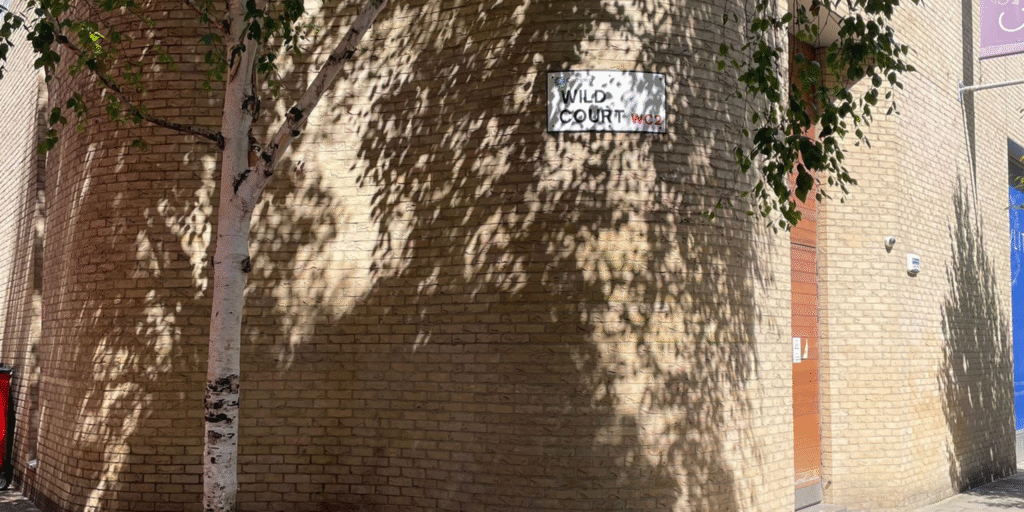
The boxed-in spaces often signal (mortal) danger: the cramped silver shop with a basement vault, a low ceiling basement in Ironbridge, and of course the beautiful but crowded and loud London, where you can’t walk ten feet without bumping into something or somebody, and need to stick a finger in your ear if you want to hear the voice on the other end of the line.
Even the mind feels like a dark small space where Robin and Strike run in circles as they struggle with their feelings. Robin hides the painful experience of an ectopic pregnancy, and several attacks, so she can avoid difficult conversations with both Ryan and Strike. Strike hides his mistakes that are turning into possible threats to the business, and – most of all – he hides his true feelings for Robin just a tad too long. To be fair, even though he tries to speak his mind, the poor guy cannot catch a break in this book.
Water, bridges, and the unconscious
From cramped rooms to murky rivers, the story’s landscape is beautifully symbolic. We expected bridges, and Jo gives us several: Ironbridge the town, the bridge where one of the victims is found, and the Westminster Bridge attack. The latter scene is so vividly described that, in my mind, I can see Cormoran’s shocked face as if I watched a film scene of him rushing towards the bridge.
“Cold sweat had drenched his entire body and he’d limped as fast as he could towards the street, barging past panicking drinkers, as though he was still armed and wearing a bullet-proof vest, and had two whole legs, and it was on him, personally, to save London.”

Psychoanalyst Carl Jung, famous for his work on dreams and their meanings, saw bridges as symbols of communication between the conscious and the unconscious. Water, a symbol for the unconscious mind and emotions, flows through this book in both literal and symbolic ways. I’ll need a good re-read to find all the symbolic treasures there.
The scars we bear
Our bodies sometimes show the pain our minds try to hide. Both Strike and Robin are literally knocked about in this book on a very regular basis – another explanation for an elevated heart rate – and their scars tell part of their stories.
Robin’s fallopian tubes are so scarred that the ectopic pregnancy almost cost her her life. She is forced to relive the traumatic event of her rape, the havoc it wrecked on her life, and now there’s the added weight of a pregnancy loss. It lays bare trauma that was perhaps not dealt with enough, and shines a light on choices for a future she hasn’t even imagined yet. These scars are also a catalyst to the painful discussions with Murphy about Robin’s desires to perhaps one day have a family. However frustrating (I am firmly on Robin’s side) I understand him wanting to know, yet detest his sense of timing and his unwillingness to let the subject go for the time being.
BTW, he couldn’t pick her up from the hospital? Major red flag there, homey.
Cormoran fares no better: whacked in the face with a spade, nearly losing a testicle (or two) to a hound from hell, and an involuntary Van Gogh treatment to the ear.
Several times, we’re taken back with him to Afghanistan. The trauma of the IED detonating resurfaces during the terror attack at Westminster bridge, and when he hurries after Robin in the final chapter. Another scene that made me think of a childhood scar of sorts was Strike talking to Rokeby. His defensiveness at his father saying Strike was like him, speaks volumes.
“I’m just like Ted.”
Years of parental absence shines through in just four words.
Metals, the feminine, and the masculine
From scars of body and soul to the hardness of metal: to no one’s surprise, the novel is threaded with silver. From the epigraphs to the literal silver mystery, the theme gleams everywhere.

Cormoran redeems himself with the ultimate Christmas gift for Robin: a silver bracelet with mis-matched but perfect charms. I absolutely melted after years of him forgetting birthdays, and now coming up with this. The possible new engagement ring also stands out (not silver, I think). Robin calling it “a tiny, sparkling shackle” is what makes it unforgettable.
Silver stands for the feminine and the moon. Both echo in Robin’s forced reckoning after the ectopic pregnancy, and Bijou and Strike’s DNA discovery (I visited The Savoy Not The Cabbage Hotel for THIS?!! It was lovely, don’t get me wrong, but I nearly choked on my tea when reading this). In contrast to these somewhat negative links to silver, there’s a beautiful scene where, as I see it, Robin thinks of Strike symbolically, as a sun, a source of comfort and warmth:
“For the second time in a few days, Robin imagined fleeing somewhere warm and light, where she’d have space to decide what she really wanted.”
An honorary mention goes to the metal stairs where several important moments in this series take place. Stairs are a liminal space that could symbolise so many things: a power imbalance (Robin moving up in Cuckoo’s Calling, her going down the stairs and Strike standing several steps above her in The Hallmarked Man), being in between stages (in The Hallmarked Man no longer just platonic colleagues, but not yet lovers), and possibly danger (in Cuckoo’s Calling Robin almost gets knocked down them, in The Hallmarked Man there’s the danger of being rejected).
The sharp sound of high heels clacking against these stairs felt loud in my head as I read chapter 127. Another woman, dressed to the nines, storms off, leaving Cormoran behind. I feel heartbroken for him, and worry that this registers as another abandonment to him.
Regarding the metals, with two more books to go I wonder if we’ll ever get a mention of the Japanese art of Kintsugi where broken pottery is repaired with gold leaf. After the repair the cracks have golden veins – the breaks are not hidden but part of the object, showing its beauty and strength.
A bird, and swans
As if the first few chapters of The Hallmarked Man weren’t enough of a whirlwind, my heart sinks when Strike describes the new hire, Kim:
“She was pertly pretty, always well-groomed, and, with her short brunette hair and alert eyes, reminded Strike of a small bird.”
A small bird? Like a robin? *Cue me crying in Galbraith*
And then there are the swans. There are eleven mentions of the word in Strike 8. Two of them stood out to me while reading. The first was a bit dark: a lone swan gliding beneath the iron bridge,
“its pure white turning dirty grey in the shade, and then he spotted a dark, huddled mass beneath the bridge that he thought might well be human.”

The second mention, knowing how the book ends, is both brilliant and a kick in the gut: the image of a chained swan in the Freemasons’ Hall temple. A chained swan, you say?! Like that ring that Robin calls a tiny sparkling shackle? Oh boy. Let’s repeat what Strike said:
“Don’t make the same mistake twice.”
Moral balance: heroes and antagonists
In this book we witness the devastating consequences of predatory behavior, but also the power of good men who step up.
To start with the dark parts: Robin’s rape continues to echo, and Strike is falsely accused of (sexual) misconduct. His flings with several women are twisted into proof of him being amoral. A legitimate fear often discussed. Branfoot manipulates countless victims for his own pleasure, and then there’s the kidnapped girl in Ironbridge. All of them the stuff of nightmares.
What I find refreshing is that the novel offers a perfect balance between good and bad men. We get the worst antagonists (IMO around Ironbridge), hinting at grooming gangs, but thankfully there are so many good men in The Hallmarked Man: the agency’s detectives, war heroes, and of course Tyler. I appreciate the portrayal and arc of this character – a young, flawed guy who at first perhaps echoes a type of Ink Black Heart’s Gus. But he turns out to be a complex and courageous man.
Of course abandoned, lonely and overlooked young men, too, have common sense, and a strong heart capable of making the right decisions. This specific arc moved me deeply, especially when I consider how polarised current discourse, that I am often part of, can be. It’s so easy to slip into black and white thinking. I catch myself doing this in online discussions as well. Food for thought.
To end on a more positive note: how satisfying was it when Strike delayed calling the police at Griffith’s house, and when Barclay offered one of the rapists a ‘kiss in the teeth’ with his boot? That felt cathartic.
Romance and heartbreak
And then, there’s the romance. This is also on my list of things that caught me off guard: the focus and scope of the romance thread. I had expected it to be an undercurrent, and not that it’d be a firm shiny thread starting at page 1, and ending on page 897. This was a lovely surprise!
Like I mentioned earlier, this book often made me gasp aloud, and at times shout a loud “Noooo!” Some of those no’s were aimed at Uncle Ted’s death and scenes about Charlotte’s backstory (which I really enjoyed hearing more of), but the main screams were reactions to Robin and Strike’s emotional and self-installed blockages.

For the first half of the book, I was mainly frustrated at Strike. I admit it – the thought ‘if only he hadn’t’ crossed my mind several times. But the cruelty of those false accusations of misconduct made me furious on his behalf. As a storytelling choice, I appreciate the realism of it, even though I hated watching Cormoran go through it.
By the end of this book my heart broke for Robin, even though I think she’s wrong to choose RFM. I think we’re looking at a woman who’s been told all her life that nice is good enough. That a boring job is okay, a boring man is fine, to choose safety over risk. They say silver symbolises a mirror. In my opinion our silver queen mirrors others’ expectations more than she shines with her own desires. Once you believe that you don’t deserve better, changing that belief is hard, even if your unconscious whispers otherwise. I lost count of the times she corrected herself:
“Robin really did think—no, she knew—that she loved Murphy.”
And everyone remembers this telling moment on the plane to Guernsey, when Robin doesn’t correct a stranger’s assumption, right?
“E’s tired, your ‘usband’.”
“Yes,” said Robin, tugging the in-flight magazine out of the pocket in front of her. “He works nights.”
Robin, I’m passing you the red flag for RFM. Please take it and plant it firmly in Ryan’s ‘water bottle’. There’s a better man fighting for you.
The big finish
So, we got no kissing, smooching, or other funny business. To be honest, it makes sense to me that Robin doesn’t throw herself at Strike, even after he finally says he loves her. I get it. His last few relationships come across as long-term convenience sex, nothing deeper. Was he ever really in love with any of his girlfriends other than Charlotte?
But that marriage proposal. I did not see that coming. There was something raw and beautiful about him blurting it out like that, and yes, it made me shed a tear. I’m happy with this ending. There is some clarity, and one big thread left hanging that will carry on into the next book. And let’s be honest, both partners did a lot of internal work. They may not be moving in sync, but they are moving towards what they truly value.
Reading The Hallmarked Man was thrilling, and overwhelming in the best possible way. It’s been a long time since a book left me this wrung out. Jokes about emotional trauma aside, with every page I turn I see proof of why this author is so loved. Every character arc shows her deep understanding of human nature, every chapter her love for storytelling, and once more we end up completely absorbed in Strike’s world.
Phew. What a wild ride. Give me some time to recover, get my bearings, and I’m ready to be puzzled by the hints for Strike 9!
Thank you for sharing your initial thoughts, Iris! This book was an emotional ROLLER COASTER. Having gone on (and been taken out) by the Velocicoaster at Universal the same day this book came out, it’s very much an accurate comparison. Just as thrilling and nausea-inducing. I was wiping tears away after both.
For me, one of the things that I look at with these books is the parallels we get with the others in the series. I glommed on HARD to the chiastic structure, as well as the parallels between odd- and even-numbered books, and while I can’t confirm it’s all 100% correct, it’s been fun in keeping me guessing.
The parallels that really stuck out for me were between Career of Evil (#3) and this now third-to-last book. For example, though the two previous books hinted at Robin’s traumatic experience at uni, it’s not actually told to us until Book 3. Now, in The Hallmarked Man we (and Robin) learn of another consequence of Robin’s rape, which is that the chlamydia transmitted by her rapist has caused significant scarring and will impact her ability to have children.
Laing and Griffiths, our primary perpetrators, both commit violence against women and girls, including sex workers. They also have a preoccupation with specific bands: Laing with Blue Oyster Cult, and Griffiths with Steely Dan. (Honestly, why I didn’t see that as a clue until I just typed it now—how did I miss that?) Both men disguise themselves (Laing literally, Griffiths figuratively) as people who are concerned about or grieving the victims. Both pose as family members to a victim. During the final confrontations in both books, Strike is in pretty rough shape (admittedly, these are not the only books in the series where one or both of our main characters get roughed up when confronting our killers… we’re 7 for 8 on that front with Book 5 being the exception).
There’s also the physical presence in each book of a man who fathered a son with Leda Strike. In CoE, we don’t only hear about Leda’s second husband (and potential murderer), but we meet him when Strike is doing surveillance. Finally, after waiting for years and years, to me it made sense that we would meet Rokeby in THM. While we see that Whittaker is every bit as awful (maybe even more) as in Strike’s memories of the man, we also see that maybe Rokeby’s not a total villain. There’s a lot to say about fatherhood and father figures through this series, and of course my heart dropped when I saw Ted had died in Chapter 1 of THM, but I hope we see a little more of the dynamic with Rokeby and Strike in books 9 & 10.
Additionally, we see high tensions in Robin’s romantic relationships between the two books, and hear about offenses that her partners commit that justify breakups. We find out that Matthew had cheated on Robin with Sarah Shadlock in book 3 and hid it from her. Here, we see that Murphy has started drinking again and has been hiding it from Robin. Furthermore, these both occur at times when Robin is going through some terrible experiences. And we also see in both books the continuing of Robin’s romantic partners’ dislike of Strike. And this might be a stretch, but Book 3 ends with Robin saying “I do” while looking at Strike and Book 8 ends with Strike asking Robin to marry him. It’s totally a stretch, but I’m putting it here anyway.
We also see the return of Two-Times in THM, whereas in CoE Laing was tailing Robin while doing surveillance on another of TT’s (IIRC) more faithful girlfriends. Can I be honest and say I missed TT? My guess is this is the last we’ll see of him. He will be missed by me (and probably me only).
There are other parallels that stood out with other books in the series but this comment is already doomed to be long.
And THAT ENDING! Initially, I thought it was going to end with Strike wrenching open the door in Chapter 126 and that we were going to be left hanging. Then I turned the page and saw more text and said, “oh, thank God.” While I’m severely disappointed that there was no on-purpose kiss in this book, I agree with you that it makes sense for Robin to not just fall into Strike’s arms. It’s just not a Robin thing to do, and even if she hadn’t gone through the emotional wringer in this book, I don’t think she would have. Charlotte ABSOLUTELY would, and I think that’s a further contrast between the two incredibly different women Strike’s fallen for.
I love your paralels to book 3–it hadn’t crossed my mind yet that we didn’t hear about Robin’s attack until CoE. Your father observation is also amazing for 3-8. I should read up on (I think Louise’s?) blog on this. I’ve heard of the theory, but haven’t studied it yet.
These things are the reason why I love these books so much, it’s the gift that keeps on giving 🙂
I think I’m about ready to start a re-read. A slower one. This also gives me a reason to sticker away the parts that I listened to instead of read in the actual book. Reading from paper really remains a favorite for me.
I endorse doing a re-read! Though I love Robert Glenister (I’m currently wrapping up my first listen of the audiobook), there really is something about reading words on a page. I don’t know if this is the same for you, but I interact differently with a story when I’m reading it versus listening.
I love Robert Glenister as well. When I hear his voice, all the feels immediately hit.
And I agree–I prefer to read from paper because it’s offer such an immersive experience. I love audiobooks, but my brain is so full of thoughts most of the time, that I can unfortunately tune everything out unwillingly. For THM I tried listening and reading at the same time for a few chapters, but found it both going too slow, and a bit exhausting.
I really love this idea! I focused more on the connections to Troubled Blood on my blog (there are lots, especially if you compare the three dead candidates for William Wright to the three suspected Creed victims, see https://fartingsofafaculty.blogspot.com/2025/09/the-hallmarked-man-epilogue-first.html) but the idea of 3rd from the beginning connecting to 3rd of the end is also brilliant and fits well with chiastic structure.
Thanks to both you and Iris for the great insights.
The parallels to Troubled Blood were there for me also; I just didn’t want my comment to be too long! Of all books in the series, I thought most of 3 and 5, which oddly, adding those together gives you 8. I’m probably reading too much into THAT. But I also think there are a lot of parallels between books 3 and 5 too: serial killers, dismembered corpses, sex workers, paraphilias, one of our main characters getting drunk, characters living “double lives.” Some of these also carry over into THM as well.
(My favorite parallel between TB and THM was the presence of cringy sub-contractors, but Morris still has the title of Worst over Kim.)
A Symphony of Siblings. Thank you for these pithy first impressions, Iris. Sibling relations became a big repetitive theme in The Hallmarked Man. There are so many kinds of siblings: full, half, step, in law, hidden, bff. I made multiple cheat charts! The Rupert Fleetwood family tree includes Charlotte’s family tree and her mother’s 4 marriages. His lover’s siblings are Rupert’s foes. There are 5 additional candidates for the body’s identification, and all but one have sets of siblings involved in the subplot. Strike relies on his sister Prudence, and visits sister Lucy at Christmas. In the long-foreshadowed Rokeby meeting, Strike’s father compares him favorably to his legit sibs. Martin, Robin’s least successful brother, turns up just when she really needs him. And on and on. A richly layered saga of Modern Family. So amazing.
Very true! I enjoyed reading that part with Martin and Robin. I still don’t know what to think about her father, though. He’s like a ghost in her life except for the driving and his sheep profession.
Perhaps for this book we won’t be drawing maps like for TRG, but charts for the family relationships. A good ole chart for the suspects and victims isn’t a bad idea either 🙂
I love all of these posts and comments, so insightful and thought-provoking. Thank you! The depths of JKRs talents and genius…astounding. Braided in with all of the emotions evoked from every page of this book, I felt annoyed and curious as to why Charlotte is still a very active and living character, she’s the thread that won’t break. Then JKR posted the painting of Cupid and Psyche on her twitter feed, and (I think) Charlotte’s role (Venus) in this mythologically paralleled human story was revealed. Relief (I think because she is the master of misdirection) washed over me. As you all have so skillfully pointed out, so many layers brings us back for multiple re-reads and I’m here for it.
Thanks for the blog Iris. Some thoughts from me.
Pride & Prejudice
Pride & Prejudice has been referenced in relation to Strike’s proposal, but there are other parallels too. Robin on more than one occasion references Strike’s assumptions about rich people, and soldiers, and we see Strike’s long formed views about his father (notwithstanding that his half-siblings Al and Prudence have a relationship with him) start to dissipate when he finally meets Rokeby.
We see Robin, too, trying to reassemble evidence, ignoring the mounting evidence that Strike is in love with her (“everyone else can see it, why can’t you?”). She re-writes the statement about Charlotte (Strike: “she knew I was in love with you”; Robin: “telling me Charlotte thought I was in love with you”), deciding the bracelet is just to bind her to the agency, wondering if he’s talking about Charlotte when he says “if you can’t get what you want, you take what we can get”, although he’s told her previously that “there’s nothing deader than love”.
And we see it in her unwillingness to face the truth about her boyfriend, who is quick to lose his temper, hides his drinking from her and isn’t honest about his work position. Although we get a big clue as to why she may be willing to overlook his failings (the line “who’s the Paul Newman lookalike” from Matthew – revenge really is a dish best served cold, and as a reader I could fully understand why Robin’s willing to overlook his failings . . .). He is Wickham, and there are clues that we will learn more about RFM in book 9 – will Strike please pay attention whenever Wardle mentions Murphy . . .
Space and Light
We see Robin, in her trauma, yearning for space and light – and Strike mirroring this – his plans to tell her he loves her are for The Lake District, and then Sark. In the end, the declaration is made in a stairwell – albeit a hugely symbolic one. But I do wonder if the future for this couple lies outside London, by the water.
Inheritance
Strike’s family may be unconventional – but it is telling that everyone who loves Strike loves Robin – and wants them to be together. Robin describes the engagement ring from RFM as a “shackle”, but she is shackled by her mum too – the argument with Linda seems like a decisive moment.
Thanks for a fascinating discussion. This isn’t my favorite of the seires, but Career of Evil is one of them, so it was interesting to see those parallels. As discouraging as the ending was, there was quite a bit of hope there as well. Robin doens’t explicitly reject him, or tell him she doesn’t care. As depressed as Strike is, he cares enough to save the fish. My predictiion is Robin will have a major panic attack and the dinner at the Ritz won’t happen.
I thought when he made the comment about not getting what you want it would have been the perfect time to say what he wanted was her. He kept saying he was going to tell her he loved her but missed an opportunity. I’m kind of over that romance. Curious to see how it will resolve in the last book but it’s been dragged out enough. I think a series with more focus on agency staff as well as th cases ,with Robin and strike’s feelings finally out in the open would be interesting reading. They’ve got a good crew that I wouldn’t mind taking up more pages. Towards the end I was so bored with the complicated case I just skimmed
Thankyou for all your comments. I enjoy them all as I’m a lover of all the Strike books and have read them all at least twice, they reveal something new every time you read them- l also dip into them often.
The characters are so well drawn and believable. JKR is a genius in the way she draws us in to their lives, loves and problems.
Keep up the good work
Listened about 6 times. I still have no clue who did it . Why and what for