There is masses to enjoy in The Hallmarked Man – from whole-series highlights such as Pat’s overhearing that ‘Marry me’ on the stairs, Robin’s perfect response to Strike’s perfect gift and the Rokeby chapter – to many excellent set-piece scenes: in the Land Rover, on Sark, Strike running rings round the police even though they are meant to be the ones questioning him and both of the fabulously awful Christmas get-togethers. And there were also, as ever, many interesting literary connections not least among the intriguingly diverse epigraph texts (five texts, one for each of the missing men?). But I also felt a little gaslit by The Hallmarked Man – so let’s get that out of the way first. The Running Grave ended with the phrase ‘she knew I was in love with you’ (Running Grave, Chapter 136, p.944). This was a wording I cherished for, as any philosopher will tell you, you cannot know something that isn’t true. Strike’s words ‘she knew I was in love with you’ are a declaration. They tell Robin what Charlotte knew and therefore acknowledge that thing to be true: he is in love with her. Otherwise, he would have said ‘she thought I was in love with you’ or ‘she was certain I was in love with you’ or ‘she believed I was in love with you’ – all phrasings which could be wriggled out of. But ‘she knew I was in love with you’ means only one thing. Both Strike and Robin know this at the end of The Running Grave and yet both of them misremember his words as ‘had been certain’ (pp.28, 37) at the beginning of The Hallmarked Man – which had this reader writing firm words in her margins, I can tell you. Strike declared he was in love with Robin at the end of The Running Grave and The Hallmarked Man pretends that he didn’t.
Talking about telling the truth, there is a nice little name clue about who is speaking true among the mountain of red herrings and misdirection in The Hallmarked Man. Dilys is telling the truth – and her name tells us as much: ‘Dilys is a feminine given name and virtue name of Welsh origin, which translates into English as genuine, steadfast, valid, true or perfect.’ [Wikipedia] Rowling has always used cratylic names (see, for example) but I think this is the first novel in which she has drawn attention to these cratylic names as clues, as happens with the violets in Tyler’s gift to Chloe. These are a punning sign that he knows her true name: Jolanda meaning ‘violet’ – with its roots in the Greek io (violet) and anthos (flower). There are two silver bracelets given in this book and both tell us that the giver truly knows the woman to whom it is given.
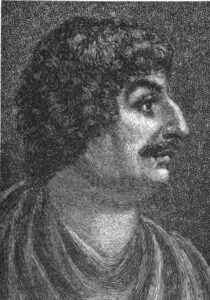
Another interestingly literary name is one that Rowling did not create, but which she references for the first time in The Hallmarked Man. Operation Herrick was the name for the British Armed Forces’ operations during the War in Afghanistan (2002-14). We’ve always known Strike was in Afghanistan but this – ‘Herrick, yes?’ – is, I think, the first time its startlingly literary operational codename has been mentioned. The operational name comes from the seventeenth century poet Robert Herrick (whose hair, incidentally, is something like Strike’s). Herrick (1591-1674) seems to have been chosen as a beloved embodiment of the English past for he was not only a clergyman and a poet of popular lyric but is famous as the exponent of particularly cheerful and warm-hearted versions of the carpe diem theme: his most famous line being ‘Gather ye rosebuds while ye may.’ His poetry collection Hesperides (1648) puns on the golden apples of that mythical isle and the fact that his father was a goldsmith. He himself was apprenticed to his uncle, William Herrick, who was a goldsmith and jeweller to the king, but the gold he fashioned in adulthood turned out to be poems not jewellery. It seems very apposite that Rowling has left the naming of Operation Herrick until The Hallmarked Man.
Another literary name I particularly enjoyed was that fact that Dino Longcaster’s club has a room called ‘Dostoevsky – that’s one of the rooms, they’re all named after famous gamblers.’ It’s a witty and classy bit of naming by Dino, but also a quiet sign of his depravity. His failure to step in once he realises that Rupert and Decima have started dating, or at least ask himself some searching questions, is behaviour of a piece with a man who approaches one of the greatest novelists of all time primarily as a gambler.
Dostoevsky wrote his novel The Gambler (1866) while mired in his own gambling addition – and it is a novel (according to Freud) about the ‘boundless egoism’ of the gambler, which seems a pretty accurate description of Dino. In Dostoevsky Dino points out the nef to his friends in front of Rupert saying that ‘Peter Fleetwood was “even worse at backgammon than he was at skiing”’. It is a horrific comment given the manner of Rupert’s father’s death, but the name of the room also serves to underline the comment, bringing us back to the role gambling plays in the plot. The nef was lost by gambling at backgammon although in reality (making Dino’s comment even worse – it didn’t seem possible!) Dino won it by cheating. And he has been ‘cheating’ the Fleetwoods in another way too.
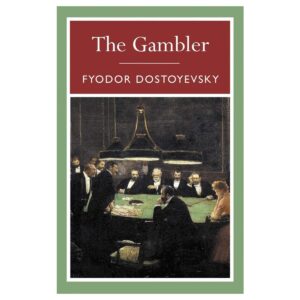
According to Dostoevsky’s Gambler ‘the “aristocratic” type gambles only for pure pleasure. The “plebeian” embraces the risk of gambling in the hope of changing his life.’ This idea of ‘aristocratic’ gambling fits with the way in which so many of the rich characters in this book seem only able to engage with other people as a form of game. There are no stakes too high for Charlotte, Tara, Dino, Valentine, Zacharias or Sacha – they are inured to the consequences of their actions and play for the pleasure of the game heedless of the broken bodies they may leave in their wake. Rupert and Decima are ‘plebian’ – trying for something real, risking real love and real connection but (unbeknownst to them) they are playing with loaded dice. Dino has cheated them out of their future just as he cheated Peter Fleetwood all those years before.
Dostoevsky and Herrick were new literary allusions in Rowling’s writing, but there are also plenty of echoes of old favourites in The Hallmarked Man. I’ve written before about Rowling’s deep love of Austen and I felt there was a minute Austenian needle directed at puncturing Murphy’s false self-image as the good guy. Like many a reader I felt that Murphy outstayed his welcome in this book – I had no problem with him for a chapter or two in Ink Black Heart but three novels is definitely pushing his luck. I was appalled, for example, by his response to Robin explaining to him that her ectopic pregnancy was a present trauma built on a past one. ‘By the time she’d finished talking’ – he was by her side, surely, holding her hand, weeping with her; but no – ‘he had his face in his hands’ as if the scars Robin so bravely bears are, primarily, his sorrow. As a result, I was particularly pleased to see a tiny echo in Murphy’s behaviour of one of Rowling’s most hated characters – Mrs Norris in Mansfield Park (who is, of course, the literary character she most clearly name-checks in Harry Potter – the evil cat whose name started me off looking for literary allusions in her writing). It is only a tiny echo, but when Murphy showed himself so intent on buying a house with spare rooms for people who will never stay there it reminded me of Mrs Norris obsessively keeping space in her house for someone who will never arrive:
So ended their discourse, which, for any very appropriate service it could render Fanny, might as well have been spared, for Mrs. Norris had not the smallest intention of taking her. It had never occurred to her, on the present occasion, but as a thing to be carefully avoided. To prevent its being expected, she had fixed on the smallest habitation which could rank as genteel among the buildings of Mansfield parish, the White House being only just large enough to receive herself and her servants, and allow a spare room for a friend, of which she made a very particular point. The spare rooms at the Parsonage had never been wanted, but the absolute necessity of a spare room for a friend was now never forgotten. (Mansfield Park)
Mrs Norris’s self-image as someone who has friends to stay is like Murphy’s self-image as someone who is in a happy relationship that will lead to children – we know it isn’t true, and he should realise it too.
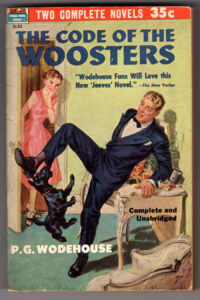
P.G. Wodehouse is Rowling’s other favourite comic prose stylist, and I have written before about his best novel – The Code of the Woosters – and its influence on Rowling’s writing (here). When we knew The Hallmarked Man was going to involve silver collecting it seemed likely that echoes of this Wodehouse novel – which is all about obsessive silver collectors – would appear. It was there in the background as a possible red-herring (for Aunt Agatha reminds us that there are no lengths to which a really looney collector will not go to own a coveted specimen) and was also present in Ramsay’s obsessiveness: ‘Ramsay now launched unstoppably into an explanation of the significance of the Murdoch silver, speaking with the peculiar, tone deaf intensity of the monomaniac.’ Early on The Code of the Woosters Bertie appears to commit a theft from a silver shop and there is, delightfully, a direct quote from this moment in The Hallmarked Man when it is suggested that Fleetwood stole the nef because he failed to distinguish between meum and tuum.
I have inherited my own love of Wodehouse from my father (who used to read us Mulliner stories at bedtime – strong recommend if you don’t know them!) and this moment made me smile as it reminded me of a walk in the woods with my father and son when an unwary walker had left some silvered fingers of kit-kat on a bench. My father and I both saw my son clock it and called out to the walker that they probably ought to pick it up if they wanted to keep their chocolate. Once we were closer, we apologised, but explained, in one voice, that this is because my son ‘does not understand the difference between meum and tuum.’ It is a phrase that leaps naturally to every Wodehouse lover’s lips. But its use is wonderfully ironic in The Hallmarked Man not only because the nef is – oh horror! Dutch! (silver must never be Dutch in the Code of the Woosters) – but because, as it turns out, Fleetwood does understand the difference between meum and tuum and is taking back his own. The nef forms something of an objective correlative for Rupert himself – as something that belonged to his mother but whose relationship to both Longcaster and Peter Fleetwood is rather more fraught.
Another author whom Rowling has long loved is Dickens, and I am always on the look-out for for possible echoes of my favourite Dickens novel – Our Mutual Friend – in her work. I think one appears in The Hallmarked Man as the description of Ramsay as an ‘aging cherub’ seems inspired by the depiction of R. Wilfer in Dickens’s novel: ‘If the conventional Cherub could ever grow up and be clothed, he might be photographed as a portrait of Wilfer. His chubby, smooth, innocent appearance was a reason for his being always treated with condescension when he was not put down. A stranger entering his own poor house at about ten o’clock P.M. might have been surprised to find him sitting up to supper… In short, he was the conventional cherub, after the supposititious shoot just mentioned, rather grey, with signs of care on his expression, and in decidedly insolvent circumstances.’ R. Wilfer is a much more loveable character than Ramsay but both are men very decidedly down on their luck and both, although they open their novels in ‘insolvent circumstances,’ end it more happily. Wilfer discovers that his daughter is the true ‘golden gold’ as he always believed and Ramsay is reunited with his silver.
The Golden Age of detective novels are, of course, even more obviously influential on Strike than they were on Harry Potter and The Hallmarked Man is an explicit homage to the Locked Room mystery. As I’ve written before, if the TSEF ‘Gillespie Theory’ is correct, then I think that this may show the influence of the first detective novel – The Moonstone (as discussed here). On this note, it was fun to see Peter Gillespie getting a brief mention, and also the theme of embezzling turned up twice. It was, once again, something that happened in one of the side plots (‘one of Plug’s Ipswich mates has done a two-year stretch for embezzlement’) but it also appeared, in a more spiritual sense, in the epigraph to chap 8 ‘He is the faithless steward, that embezzles what God has given him in trust’ (from Morals and Dogma of the Ancient and Accepted Scottish Rite of Freemasonry).
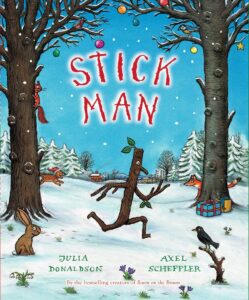
Literary references in this novel took in an unusually wide compass. At one end of the spectrum were classic novels, along with an extraordinary number and layering of mythic references – Oedipus, Leda, Narcissus and the frequent requests for Strike to ‘come tae the Golden Fleece’ (‘she sounds crazy enough to have mistaken me for Jason of the Argonauts’). And at the other end of the scale Julia Donaldson, one of the most beloved children’s authors, made her first appearance. Julia Donaldson’s wonderful picture-books link together traditional folktales with a modern awareness of family dynamics and given that The Hallmarked Man is novel that revolves around paternity, it is a highly suitable that Annabel has reached her ‘big Stick Man phase’ as Stick Man is the Donaldson book about fathers. (In addition to the delight of Strike not becoming a father, the constant presence of Ted and Strike finally allowing his own father to behave in a paternal way, I loved that the wisest action Strike takes in this book is to take Shanker’s father’s advice.) Robin’s serious ‘You need to look after him’ to Annabel about her stick resonates nicely with Lucy’s nick-name of ‘Stick!’ for her brother – which we hear only a few pages later.
Many of the other literary references involved – like so much in this novel – involve callbacks to earlier books in the series. For example, the use of Robert Browning as one of the five epigraph sources links The Hallmarked Man with The Ink Black Heart in which his wife, Elizabeth Barrett Browning, wrote the most important epigraph source (as we discussed in this podcast). This is one of many links between these two novels that mean, as TSEF have discussed, this novel feels like Robin’s The Ink Black Heart. In The Hallmarked Man Robin’s worst past trauma is weaponised against her by an enemy who is not the murderer they are seeking; just as in The Ink Black Heart Strike’s worst past trauma was weaponised against him by an enemy who is not the murderer they are seeking.
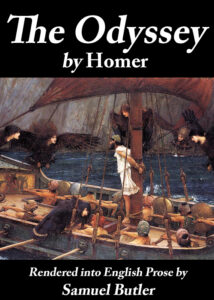
In another example of a literary call-back, the very literary pub – the Alfred Tennyson – where Robin interviews Albie, recalls the crucial Tennyson passage at the end of The Cuckoo’s Calling (which I’ve written about here). This striking ending of the first novel firmly places Odysseus as the central mythic archetype for our hero. Odysseus’s ten-year journey back home may link into our ten-book series and certainly Strike, like his mythic precursor, has some difficulty warding off fetching seductresses along the way (one of his ‘sirens’ even has a siren name – Lorelei). In The Hallmarked Man we are reminded of The Odyssey again, but the struggles Strike is facing in this book mean that he has become one of the monsters of the quest rather than the hero: ‘Polyphemus blinded, striking at random, and falling headlong among the sharp rocks by the impetus of his own blows.’ This is the epigraph to Chapter 31 and it speaks to Strike’s deep frustration that the attack he is under in this chapter (‘Jonny Rokeby Son in Sex Worker Abuse Claim’) is, to some extent, one which he has brought on himself. He thinks of ‘Ted, a man of whom nobody could ever have believed this kind of sleaze.’ But, of course, the reader knows he is innocent and although on first reading it is Strike who is the impotent and furious Polyphemus, on the second reading we discover that the person who will fall headlong among the sharp rocks by the impetus of his own blows after this chapter is not Strike, but Culpepper. These lies are Culpepper lashing out in revenge and they will bring about his own demise. By swallowing his pride, going to Rokeby and allowing him to sort things out, Strike is no longer his own worst enemy and takes back the Odysseus role.
Finally, I’ll leave you with one of the most romantic moments in The Hallmarked Man which reminded me powerfully of a moment in the ultimate novel of pining – Edith Wharton’s Age of Innocence. (I studied this novel at A-level, and I wonder if Rowling might have too.) Looking at Robin from a distance: ‘Strike thought Robin looked far from her best. She still hadn’t regained all the weight she’d lost at Chapman Farm, and in this bright winter light looked slightly gaunt and very tired. She also had a smudge of something black under her right eye. But none of it mattered: he wanted her as he’d never wanted any woman in his life.’ In Wharton’s novel Newland Archer suddenly sees Madame Olenska:
She was excessively pale, and her pallor made her dark hair seem denser and heavier than ever. Perhaps that, or the fact that she had wound several rows of amber beads about her neck, reminded him suddenly of the little Ellen Mingott he had danced with at children’s parties, when Medora Manson had first brought her to New York.
The amber beads were trying to her complexion, or her dress was perhaps unbecoming: her face looked lustreless and almost ugly, and he had never loved it as he did at that minute.
Note: The opinions expressed in guest posts don’t necessarily reflect the views of TSEF or its hosts.