(Above) Ophelia by Sir John Everett Millais (Below) Still from BBC/Bronte’s The Ink Black Heart
Written by: Leslie L. Golden
Adapting any book to a film can be a two-edged sword. On the one hand, film production companies know the people who loved the book will want to see their work. On the other, devoted readers can and will savage any movie they think doesn’t reproduce beloved scenes and details. That conflict must have crossed the minds of the creative team at Bronte Film & TV Ltd when they began work on the television adaptation of The Ink Black Heart. After all, the story’s about a group of hard-core fans’ attachment to the story they adore! Bronte’s team had a difficult task, reducing a thousand-plus page novel about dozens of characters living simultaneously in two worlds (Real Life and Online) to a watchable four-hour series that exists solely in one. But, the miniseries does more than recapture the essence of the novel. Through lighting, direction, costumes, and camera work, the film highlights some of the original story’s subtext and themes, enriching our understanding of the original work.
For example, a previous novel mentions the heroine, Robin Ellacott’s “Pre-Raphaelite” beauty. This is important because members of The Pre-Raphaelite Brotherhood or PRB (a group of English poets and artists) are referenced in The Ink Black Heart and buried in its Highgate Cemetery. That reference is visually underscored in the series when the camera cuts from a shot of the painting of Hamlet’s Ophelia by John Everett Millais (one of the PRB) to a vision of the actress playing Robin in a similar position to the model in the painting. There’s a second, stronger echo of the painting’s model, Elizabeth Siddal, in the character of Edie Ledwell, played by actress Mirren Mack. In the film, Robin and Edie both possess the coloring of Elizabeth Siddal, which underscores the parallels between the three women. Elizabeth, Edie, and Robin are all gifted women who work in professions traditionally dominated by males. All three are essential contributors to partnerships they’ve developed with men. (Elizabeth, a poet and artist herself, has been called the PRB’s “most significant model”) And, at the beginning of the series, none of these women are getting the recognition they deserve. Elizabeth is chiefly remembered as a model and muse rather than the artist and a poet she was. Fans of the cartoon, The Ink Black Heart, tend to belittle and dismiss Edie’s work in favor of her partner, Josh, and, despite Robin’s four years of sharing the work and responsibility of their partnership, Strike’s name is the only one publicly associated with their detective agency.
Robin Ellacott, Elizabeth Siddell, and Edie Ledwell
The similarities between Edie Ledwell and Elizabeth Siddell are even more profound. Both women showed an aptitude and affinity for the arts but neither received the formal education most people need to develop their talent. Instead, Edie and Elizabeth both gravitated toward a circle of (predominantly male) artists and learned from their friends. Both characters became artists, whose creative work was overlooked and both died at a very young age. In a final, eerie parallel, each woman is buried in Highgate Cemetery, with a tribute written by a man who declared he loved her. In many ways, Edie Ledwell becomes a 21st Century doppelganger of Elizabeth Siddal.
Nevertheless, The Ink Black Heart also injects a note of hope. While Elizabeth and Edie never receive the support and validation they deserve in their respective lifetimes, Robin seems destined for a different fate. Strike’s decision to rename the agency to reflect his partner’s contribution shatters the old pattern and suggests these two can transcend the inequitable past.
Stills from BBC/Bronte’s The Ink Black Heart (Above) Nils de Jong’s studio (Below) Strike working in Robin’s flat
Gender discrimination isn’t the only motif in the novel visually recaptured on film. The theme of unhealthy people and relationships, a structural part of TheInk Black Heart, is reintroduced in this adaptation through ambient lighting. Photographed during the winter, the actors frequently appear pallid; the outdoor settings are cheerless and gray. Although The Ink Black Heart is a crime fiction story, this is not the high-contrast lighting that characterises film noir or the cheery, vibrant tones associated with a cozy mystery tale. This cinematography mimics the dim and anemic light associated with emotional depression and the sick room. The few sets lit to suggest comparatively health and warmth (such as Robin’s flat and the student studio and kitchen in the North Grove Art Collective) memorably reflect the characters’ relationships and interactions in those locales. By contrast, Nils’s studio is as murky as his outlook. The sky above Jago Ross’s home in Kent is as cold and distant as he is.
Stills from BBC/Bronte’s The Ink Black Heart (Above) Robin walking in Walthamstow (Below) Strike walking in Kensington
Setting can also visually underscore a point or theme in the narrative. The difference between Robin Ellacott and Charlotte Campbell is underlined dramatically in an exchange between Strike and Robin in Episode 4. The characters are in two separate locations: Strike in Kensington, minutes after leaving Jago and Charlotte Ross, and Robin is in Walthamstow, next to her apartment building. The street where Strike collapses is an endless row of beautiful, white, staid, identical houses, a metaphor for the aristocratic class the Rosses inhabit. The area is lit and clean, almost to the point of sterility, but nothing natural thrives there save a single manicured plant. There is no sign of honest life in this bell jar of a street except Strike, and he’s an unwelcome visitor. The visual subtext in this setting is clear: the only life allowed in Charlotte’s world must be uniform and curated.
Intercut with Strike’s struggle are Robin’s responses, filmed in an outdoor setting as different as Robin is from Charlotte. As Robin talks to her partner, she walks, surrounded by life. Green plants and shrubs flourish between her and her building. The city’s neon lights shine behind her. Even the shadows of leafless trees can be seen in the distance, dormant but living. Robin’s world is vibrant and dynamic. Life thrives wherever she walks.
Still from BBC/Bronte’s The Ink Black Heart: Grant Ledwell
Costumes and camera angles editorialise about the characters, especially in David Westhead’s portrayal of mercenary Grant Ledwell. Grant’s tailored but slightly too-tight suits (photographed to show strained seams) show that while his niece, Edie, endured poverty and bulimia, he is well fed, carrying extra pounds both in his bank and on his frame. This strengthens what is already inferred in the novel and the script. The true Greedie Fedwell of The Ink Black Heart is Edie’s uncle, Grant.
In this production, even the staging reflects what’s happening in the script. When Yasmin Weatherhead is initially questioned in Episode 3, she’s confident in a fashionable ensemble and free to leave when the interview becomes uncomfortable. When Strike questions her in the next episode, Yasmin’s no longer dressed to impress. Instead, she huddles in a chair pushed under an arc-shaped bay window. The horizontal blinds across the windows above her look like bars. The coffee table in front of her blocks any direct exit. Yasmin’s actions and Strike’s questions have trapped her in this corner, and she can’t escape what she’s done.
Still from BBC/Bronte’s The Ink Black Heart: Yasmin Weatherhead
Sometimes, a film can create a visual reference by recreating a well-known camera shot. Anyone who spends too much time at the movies can recognise the awe-filled “Spielberg face”, or the sense of unease created by the “Hitchcock shot”. In The Ink Black Heart, director Sue Tully’s climactic confrontation recalls the terrifying “Here’s Johnny” sequence in Stanley Kubrick’s 1980 adaptation of The Shining. Either version makes Strike’s suggestion seem prescient: in a world filled with evil, we all need steel-reinforced doors.
Since these cues are separate from the actors’ performances, most viewers overlook them. Things like lighting, sets and costumes provide subtle hints, while audiences focus on dynamic elements like performances and plot. Nevertheless, elements like lighting, costuming and staging help the actors create their performances and ensure the story is told well, without words. At their best, these cues create links and references of their own that add new context to the original work. They’re the well-hidden keys that help solve the mysteries at the center of The Ink Black Heart.
Welcome to Part Two in our series of guest posts written by Dr. Beatrice Groves, author of Literary Allusion in Harry Potter. (You can find Part One here.) Dr. Groves teaches Shakespeare and Renaissance English Literature at Oxford University, and her blog Bathilda’s Notebook can be found over on Mugglenet. In this second and final part of the series, Dr. Groves discusses the Paradise of Eden as seen in three separate pieces of glass in The Ink Black Heart. (We’re sure you can guess which of these three is our favourite!)
Stained glass plays an important role in the only scene set on holy ground in Harry Potter. Harry and Hermione stand in Godric’s Hollow churchyard as Midnight Mass is celebrated, and the light streaming from inside this ‘jewel bright’ church shines through its ‘brilliant windows’ and falls on them. The snow on which they stand is transfigured by this light: ‘a blanket of pale blue that was flecked with dazzling red, gold and green wherever the reflections from the stained glass hit the snow’ (Deathly Hallows, Chap 16). The beauty of these stained-glass windows and the way in which they transmit that beauty to the world outside are an important part of the religiosity – the numinous aura – of this scene (I’ve written more about this here). George Herbert, one the greatest English religious poets, has written of stained-glass windows as a metaphor for people in their ability to transmit the divine:
Lord, how can man preach thy eternal word?
He is a brittle crazy glass;
Yet in thy temple thou dost him afford
This glorious and transcendent place,
To be a window, through thy grace.
But when thou dost anneal in glass thy story,
Making thy life to shine within…
…then the light and glory
More reverend grows, and more doth win.
(George Herbert, ‘The Windows’)
There are three stories ‘anneal[ed] in glass’ – as Herbert calls it – in The Ink Black Heart and I think they are connected, both with each other and with the religious colouring that stained glass carried in Deathly Hallows.
Herbert’s poem speaks to the simultaneous fragility of glass – ‘a brittle crazy glass’ – and its transcendent possibilities. When a stained-glass window is lit by the sun it becomes a ‘glorious and transcendent place.’ The brittle beauty of the three stories annealed in glass in The Ink Black Heart express the vitality and vulnerability of hope and human connection in the bleak, anomic world of this novel. The first two glass artworks in the novel are pieces of stained glass, and they are both images of Paradise.
The first is Christopher Whall’s ‘Adam Naming the Animals’ (1880) and this traditional Edenic image (seen by Robin at the William Morris Museum) primes the reader to recognise the Edenic hinterland of the secularised version that follows in the window at North Grove. In Mariam’s beautiful artwork we are shown what the commune could and should have been: the happy and creative coupling of Josh and Edie as the Adam and Eve of this perfectly realised imagined world. The final story told through glass in Ink Black Heart also represents a man and woman, and just as we saw Adam naming the animals in the first image, so some new naming has occurred here likewise. The images of Eden annealed in glass earlier in the novel suggest the hope that the union within the newly named ‘Strike and Ellacott Detective Agency’ does indeed represent a paradisal future for the pair.
Although, as mentioned in yesterday’s post the word ‘Eden’ only appears once in TheInk Black Heart, Eden appears in a visual representation when Robin follows the agency’s targets to Walthamstow:
…a stained-glass panel showing a naked Adam naming the animals. He sat round-shouldered on a grassy tussock, pointing at a tiger, while a bearded angel beside him recorded the chosen name in a book. Two tropical birds seemed to be poking out of the top of the angel’s halo. Adam’s expression was vacant, even clueless.
Groomer and Legs were standing with their backs to Robin on the other side of the room, discussing the symbolism of the pelican in a design by Edward Burne- Jones…. Robin had been pleasantly surprised when her targets pulled into the car park of the William Morris Gallery… Having explained the Christian symbolism of the pelican, which was feeding her chicks with her own blood, Groomer wondered aloud whether Legs was ready for a coffee. (Chap 16, 143-44).
The animals in Whall’s ‘Adam Naming the Animals’ are rather lovely, and they include a Pelican which gets fuller treatment in Burne-Jones’s depiction (drawn in the same year and hung, according to The Ink Black Heart at least, opposite it in the same room). The narrative voice is quite right about Adam, whose expression is vacant to the last degree, but it has simplified what is happening with the angel: ‘a bearded angel beside him recorded the chosen name in a book.’ Actually, divine knowledge (symbolised as another book placed in the top right of the image) emits beams of light that fall simultaneously on Adam and the Book into which the angel writes. The symbolism of the stained glass suggests that divine inspiration (from the divine book) is directly active both in Adam’s knowledge of the animals and in the book of nature into which it is written (which is a pleasing piece of two-text symbolism given the text-within-a-text nature of TheInk Black Heart!)
The Christian symbolism of the pelican will, of course, return in Highgate cemetery – the place where inspiration first struck Edie was ‘near a grave Edie always liked. It’s got a pelican on it’ (p.618). The Ink Black Heart takes care to remind the reader of the traditional symbolism of the pelican (which had been explained nearly 500 pages earlier):
To Robin’s slight surprise, she saw again the image she’d heard Groomer explaining to Legs back in the William Morris Gallery: the mother pelican plucking at her own breast, with a nest full of hungry chicks, beaks upturned, ready to be fed with her blood.
The girls surrounding the young man in the Drek T-shirt were now clutching each other.
‘That’s it, that must be it!’
‘Oh my God,’ breathed the girl in the Paperwhite T-shirt, speaking through the fingers she pressed to her mouth. ‘I’m going to cry.’
The guide had stopped too. Turning to face the group, and ignoring the agitation displayed by the Ink Black Heart fans, he said:
‘This unusual headstone is that of Elizabeth, Baroness de Munck. The device of the pelican represents sacrifice. This tomb was erected by Elizabeth’s daughter, Rosalbina…’
But Robin wasn’t listening. She’d just remembered what Josh Blay had said about the place where they’d had the first ideas for the cartoon – the place where Edie had been murdered. ‘Near a grave Edie always liked. It’s got a pelican on it.’ (p.647)
Elizabeth Baird-Hardy and John Granger have discussed the symbolism of the Pelican in some detail (here and here), and Elizabeth’s piece shows how it remained popular in the nineteenth century (the aesthetic home of this novel): ‘the pelican is the second-most popular bird symbol in cemetery art, ranking just behind the extremely popular dove.’
The Christian symbolism of the Pelican can be found throughout literature and a favourite example of mine is in The True Chronicle Historie of King Leir (Shakespeare’s source play for King Lear) in which Leir compares himself to ‘the Pellican/ That kils it selfe, to save her young ones lives’ while his daughter Cordella is compared with the Phoenix (the Pelican’s sister-bird in Christological symbolism). It is an image that Shakespeare remembers- but reverses – in King Lear by focusing on the ‘Pelicane daughters’ who tear the flesh of their parent rather than the loving sacrifice of the parent bird. Another example which pairs the Pelican and the Phoenix – making their Christological symbolism inescapable – is this fabulous pair of miniatures painted of Elizabeth I by Nicholas Hilliard.
The Pelican in her Piety is a strikingly Christological animal to find in Strike, but it is one I have been waiting for.
Last month Rowling ran a Twitter competition encouraging us to (accurately or wittily) guess the plot to Running Grave – and *many* congratulations to @LudicrousMonica who actually won this competition! (I hope you will wear Narciso and chat Sheep Management on your fabulous dinner!). My guess failed to bring home the prize, but I was nonetheless was delighted when Rowling commented on it:
Prudence will trigger yarrow-stalk memories from Strike’s time at the Norfolk commune; Rokeby deathbed revelation; Norfolk dialect, Beeston Regis Priory & folktales of hidden tunnels, golden calf & grey spectres; body washed up under cromer pier; danger on the Lion’s Mouth road.
She has spotted that we’re paying attention to her headers, but she does not, I suspect, know the half of it. She put up a pelican as her Twitter header in May 2018 and I’ve been waiting ever since for this superbly symbolic bird to make an appearance.
I discussed this beautiful header (from the thirteenth-century Aberdeen Bestiary) at the time and, while it fitted in with the general importance of bestiaries for Fantastic Beasts (as I’ve discussed in detail here) no actual pelicans have turned up in her work until now.
The text underneath this superb image runs:
https://www.abdn.ac.uk/bestiary/ms24/f35r
[The mother pelican] lets her blood pour over the bodies of the dead, and so raises them from the dead. In a mystic sense, the pelican signifies Christ… It kills its young with its beak as preaching the word of God converts the unbelievers. It weeps ceaselessly for its young, as Christ wept with pity when he raised Lazarus. Thus after three days, it revives its young with its blood, as Christ saves us, whom he has redeemed with his own blood.
The Pelican in her Piety, most visible in The Ink Black Heart in the grave-image Edie is so drawn to, is also present in Whall’s ‘Adam Naming the Animals’ as well as in Burne-Jones’s beautiful cartoon opposite. ‘Cartoon’, centuries before animated cartoons were thought of, meant something done on paper: from French carton or Italian cartone ‘augmentative of carta paper:’ ‘A drawing on stout paper, made as a design for a painting of the same size to be executed in fresco or oil, or for a work in tapestry, mosaic, stained glass, or the like’ (Oxford English Dictionary). And this, indeed, gestures once more at the religious stained-glass symbolism in Ink Black Heart as it is a cartoon for a stained-glass window.
The striking religiosity of Whall’s ‘Adam Naming the Animals,’ and perhaps even the pelican stained-glass cartoon, is recalled when Robin next looks at a secular paradise annealed in glass:
Directly opposite Robin was a large and beautiful stained-glass window that she guessed was Mariam’s work. It had been cleverly illuminated with an artificial light source on the exterior of the building, so that even in the evening light it cast patches and flecks of cerulean, emerald and crimson light over the scrubbed wooden table and the many large pots and pans hanging on the walls. At first glance Robin thought the window might depict a vision of paradise, but the many people depicted there bore no wings or halos. They were working cooperatively on different tasks: planting trees and picking fruit, tending a fire and cooking over it, building a house and decorating its front with garlands…. Robin glanced up at the stained-glass window again, trying to make out Edie or Josh. She had a suspicion they might be the two people picking fruit: both had long brown hair and the female figure was throwing apples down to the male. Then she noticed, with a little start of surprise, the ruby-coloured glass letters set across the top of the picture, like a biblical verse.
A state of anomie is impossible
wherever organs in solidarity with one another
are in sufficient contact,
and in sufficiently lengthy contact. (372, 376)
This is, of course, a crucial clue – but we are also given a number of pointers here to recognise this as an Edenic re-imagining of North Grove: it depicts a man, a woman and an apple tree; Robin thinks at first that it is an image of paradise and words are set above it ‘like a biblical verse’ in a church window. As Gerard Manley Hopkins writes in his wonderful sonnet ‘Spring’ every fresh spring, each new start, has ‘A strain of the earth’s sweet being in the beginning/ In Eden garden.’
This window expresses the way in which something good – both Edie and Josh’s initially joyful relationship and the ideals of North Grove – has fallen away from that Edenic hope, has ‘sour[ed] with sinning.’ But the final story written in glass in Ink Black Heart inverts this trajectory.
In doing so – in showing how good can come out of destructive acts – it echoes something that is central to Milton’s poetic creative reimagining of the Fall. When Adam hears about the Incarnation in Paradise Lost, he rejoices:
Oh goodness infinite, goodness immense!
That all this good of evil shall produce,
And evil turn to good; more wonderful
Than that which by creation first brought forth
Light out of darkness! Full of doubt I stand,
Whether I should repent me now of sin
By me done and occasioned, or rejoice
Much more, that much more good thereof shall spring. (12.469-76)
This idea that the Fall might actually be something to rejoice at because it brought the gift of the Incarnation is a traditional Christian idea known as the ‘fortunate fall’ or felix culpa. The belief that Paradise Lost subscribes to this view was rejected by many critics at the end of the 20th century, critics who rightly recognised that Adam’s tentative recognition of his sin as a ‘happy fault’ is phrased as a question, reanimating the paradox within the felix culpa idea. But I think that Paradise Lost does encourage the reading of the ‘fortunate fall’ (as I’ve discussed in my book The Destruction of Jerusalem in Early Modern English Literature) and one reason for thinking this is that God’s creative redeployment of evil for good is not a lone insight of Adam but a central theme of the poem. Over and over again Paradise Lost tells us that this is how God works: ‘his providence/ Out of our evil seek to bring forth good’; ‘all his malice served but to bring forth/ Infinite goodness, grace and mercy’; ‘evil/ Thou usest, and from thence creat’st more good’ (1.162-3; 217-8; 7.615-6).
Central to Paradise Lost is the idea that evil cannot win: ‘evil/ Thou usest, and from thence creat’st more good.’ Satan’s actions are used against him by God whose reflex is always to make ‘evil turn to good’ (12.471). Satan’s instigation of the Fall will be answered by the gift of Christ. Paradise Lost writes the Christian story as an inversion of the story of Pandora and Prometheus – Eve’s eating of the apple (the Christian version of Pandora’s opening of the box) is not the punishment for Prometheus’s sin in trying to save mankind, but its opposite: the gift of Christ, the new Prometheus is the result not the instigation of the Fall.
This optimistic reading of evil hoist on its own petard is central to Paradise Lost, and it is shared by Harry Potter. At the centre of Harry Potter is the idea that Voldemort’s decision to commit a terrible crime – the murder of a baby – was what gave that baby the power to defeat him. The bleak world of The Ink Black Heart contains only a tiny refraction of this idea of good coming out of evil, but it is a pleasing connection nonetheless. The bomb that destroys the Agency’s office does not only get rid of a sofa which, it seems, will be much missed among the Strike fandom, it also enables Strike to anneal in glass an acknowledgement that someone has transformed his agency – and his life – for the better.
The Ink Black Heart has created a new bond between Strike and Robin – we learn that they are going to become godparents to the same child (a duo of godparents – replacing the lone godparents of Harry Potter [Sirius (to Harry) and Harry (to Teddy Lupin)] symbolic of the way in which the singular hero of Harry Potter has been replaced by the twin-heroes of Strike). And their new professional parity has likewise now been openly expressed. The evil act of the bomber necessitates new glass for the door, providing the opportunity for Strike to give Robin a gift which is also a promise. Evil is transmuted into a new togetherness, writ in glass. The Edenic promise of a perfect union between a man and woman – seen in the stained glass earlier in the novel – finds its realisation in this moment which is likewise an apotheosis of the hope felt by Robin as she first glimpsed in that glass the life she had longed for:
Robin stood quite still, with her mouth slightly open, experiencing a moment of wonder… her lifelong, secret, childish ambition…
Taking this…. vow… gave back to her some of the mystique, even glamour, that she had imagined lay beyond the engraved glass door ….
Five years previously, the words engraved on the glass had read: ‘C. B. Strike, Private Detective’, but no longer. She was now looking at ‘Strike and Ellacott Detective Agency.’
(Cuckoo’s Calling, Chaps 1 and 6; Ink Black Heart, Chap 107)
We’re so thrilled to be able to share with you this two-part series of guest posts written by Dr. Beatrice Groves, author of Literary Allusion in Harry Potter. Dr. Groves teaches Shakespeare and Renaissance English Literature at Oxford University, and her blog Bathilda’s Notebook can be found over on Mugglenet. In this first part, Dr. Groves explores the connections between The Ink Black Heart and Milton’s Paradise Lost, as well as the parallels between Anomie and The Silkworm’s Elizabeth Tassel. We hope you enjoy!
In The Ink Black Heart we see the author – someone who sits at the heart of one of the largest fandoms in the world – enjoying imagining herself into the role of being on the other side for once. In the Wally Cardew YouTube video the (accurately placed) italics of a legal document cleverly express the disdain of the speaker:
‘intellectual property of Edie Ledwell and Joshua Blay, ‘ereinafter called the creators…’
‘Fuckin’ bullshit, man,’ said MJ, shaking his head. (p.111)
The fandom of ‘Ink Black Heart’ is outraged at Edie Ledwell and Joshua Blay being called ‘the creators’ and demanding creative control over what they have created. At the surface level Ink Black Heart deals with very modern tussles between fandoms and writers over creative ownership. At a deeper level it reflects on the concept of the ‘death of the author’ (famously trumpeted by Roland Barthes in 1967) by literalising it – but at its dark heart there seems to be something more theological going on. The hatred so many of the characters expend on Edie Ledwell for creating something they love reflects a reflex of ingratitude towards the creator, a refusal to acknowledge the innate human condition of being beholden to others.
Watching Time Bandits the other day (if you don’t know it, I thoroughly recommend – Sean Connery as Agamemnon is not to be missed!) I was reminded of how the idea of the Devil as sensitive of the idea that he might be a ‘creature’ (something created) rather than an Ultimate Being has permeated popular culture.
This idea (like so many theological ideas) can be traced back to Augustine, but one of its most well-known expressions is in Milton’s epic poem Paradise Lost. In this poem Satan defiantly declares that he is ‘self-begot’:
Remember’st thou
Thy making, while the maker gave thee being?
We know no time when we were not as now;
Know none before us, self-begot, self-raised
By our own quickening power, when fatal course
Had circled his full orb, the birth mature
Of this our native heaven, ethereal sons.
Our puissance is our own. (Book 5.857-64)
Anomie, like Milton’s Satan, has a certain charisma; but like him also he is fundamentally confused about being ‘self-begot, self-raised’ and The Ink Black Heart as a whole ruminates on some fairly Miltonic ideas about creation going wrong when it wanders too far from its creator. As Anomie pulls away from accepting the creativity of others, he grows increasingly monomaniacal: repudiating Edie, never fairly acknowledging Morehouse as co-creator of ‘Drek’s Game,’ and then murdering them both, along with his literal progenitor, by the end of the novel.
Anomie as both a character and an attribute is at the centre of The Ink Black Heart which Rowling calls ‘a novel about disconnection’ (discussed here). The animation of Anomie in ‘Drek’s Game’ as nothingness – an empty cloak – is a brilliantly Satanic touch, related to Augustine’s idea about evil as uncreated: an absence, not a presence. As I wrote in Literary Allusion in Harry Potter – discussing the influence of Paradise Lost on the presentation of evil in Harry Potter:
Augustine of Hippo, one of the most influential Christian thinkers, has argued that evil has no positive existence; that it is, rather, an absence of good: ‘what, after all, is anything we call evil except the privation of good?’ Rowling has commented that, for her, likewise ‘“evil” is something that exists in the negative – it’s the absence of the empathy and moral code that enables acts of kindness and love.’ This comment suggests that Rowling has been influenced by Augustine’s famous formulation of evil as something that ‘has no being’; it is ‘something that exists in the negative.’
I think Rowling’s attitude to evil as ‘something that exists in the negative’ has continued into The Ink Black Heart – a photo-negative novel of how this idea plays out in Harry Potter. Gus recognises this aspect of non-being in himself and actually calls Anomie ‘a void-like creature into which all unsatisfactory characters disappear’ (p.604). Strike has the revelation late in the book that Drek is Death. The unspoken corollary of this is that Anomie is Satan.
Paradise Lost is a submerged influence in a novel that – in its numerous epigraphs –wears a number of its literary sources in plain sight. In a question, posted by Nick Jeffrey and written by John Granger, during last October’s Twitter Q&A Rowling acknowledged that these literary allusions go deeper than might at first appear:
Is Barret Browning's Aurora Leigh the book within the book of Ink Black Heart? There are 13 epigraphs from it and the poem's story parallels Robin's chrysalis with a partner blind to who she is and his feelings for her.
Marian Erle – the character in Elizabeth Barrett Browning’s long blank verse poem Aurora Leigh (1856) on whom Rowling based Zoe Haigh – has read Milton’s epic. She learns to read from half-torn volumes given to her by pedlars and among the pages of Shakespeare, Bunyan, Thomson and Burns she learns of ‘Edens Lost’ (3.981) – Barrett Browning’s way of telling us that Marian has read Paradise Lost. And perhaps it is the poem, as much as the biblical Eden, that comes to Marian’s mind when she realises that she is shut out from the world to which she wishes to belong.
By slow degrees it broke on her slow sense…
That she too in that Eden of delight
Was out of place, and, like the silly kid,
Still did most mischief where she meant most love.
A thought enough to make a woman mad. (Aurora Leigh, Book 6 ll.942-46)
This is from a passage in which Marian Erle comes to the realisation that the man she is devoted to and engaged to marry – Romney Leigh – does not love her. It forms the epigraph to Chapter 33 of The Ink Black Heart (the crucial chapter in which we meet the murderer for the first time) and is that novel’s only use of the word ‘Eden.’ (For more on the importance of Aurora Leigh have a listen to the Strike and Ellacott Files special episode 12.5 ‘Ink Black Heart Epigraphs’ in which we discuss it in depth!)
The epigraphic use of ‘Eden’ here appears to reference the idyllic early life in North Grove and the creative love-affair between Edie and Josh, which Katya – like poor Marian Erle – is drawn to, but also feels excluded from. Katya goes to North Grove as an escape and finds a seemingly youthful simplicity there: ‘It was all… just rather fun. All their friends doing the voices… Tim’s a lovely man and… it was fun, that’s all’ (p.304). Katya’s devotion to Josh is clear in this chapter as are her husband’s insinuations that what she feels for Josh is not reciprocated: ‘If he feels sorry for anyone,’ said Inigo nastily, ‘it isn’t Kea Niven.’ (305). The Edenic space referenced by the epigraph – already irrevocably soured with sinning before the novel begins – is North Grove, with its temptingly vernal name, at the time when Edie and Josh are newly in love and enjoying their new creation of The Ink Black Heart, innocent of all that would follow.
It is only on a reread that it seems perhaps that there is a deeper meaning to the ‘Eden’ of this epigraph – the snake who hides in this chapter. In Milton’s poem Satan is jealous of God’s love for his new creation:
Of some new race, called Man, about this time
To be created like to us, though less
In power and excellence, but favoured more
Of him who rules above.
(Paradise Lost, 2.348-51)
Satan’s antagonism towards these ‘puny habitants’ (2.367) springs in part from embittered affection (what is God doing favouring someone more than me?). Gus is a fatal prey to jealousy likewise. Part of his warped incentive to murder Edie is his inability to cope with feeling as Marian Erle feels in this epigraph – a ‘silly kid’ rejected from the Eden of a relationship with her and her creative world, even if that relationship is a mere figment of his own imagination.
This Satanic aspect of Anomie – his jealous of the creativity and love of others – is the answer, I think, to Rowling’s slightly surprising answer to my question about the novel’s parallels with Silkworm which she gave during last October’s brilliant Q&A session (hosted by JKR’s Barmy Book Army). Nick Jeffrey very kindly posed her this question on my behalf:
Beyond the text-within-a-text parallel how do you see the links with Silkworm playing out in IBH? Were the choice of genre/time based epigraphs part of this?
As is the Silkworm and more than just the cemetery setting…
Beyond the text-within-a-text parallel how do you see the links with Silkworm playing out in IBH? Were the choice of genre/time based epigraphs part of this?
I wrote this up at an earlier blog at Hogwart’s Professor (here) and it is a parallel that rests on John Granger’s early insights into the chiastic form of Harry Potter and the ways in which Strike appears to echo that. (How this plays out now that we know the series will have ten books remains to be seen, but up to this point the parallels, as discussed in the blog above, have been convincing – and, for any sceptics out there! – they have now been confirmed by Rowling herself in this tweet.)
But why does Rowling say: ‘this time, the killer isn’t a creator, though we surmise they’d like to be’? Gus is a brilliant artist and has drawn a beautifully rendered game creating, in ‘Drek’s Game,’ a deeply popular parody of ‘The Ink Black Heart.’ This would seem to justify him as a ‘creator’ far more than Liz Tassel (who has merely created a parody of Bombyx Mori out of a patchwork of Quine’s own novel and his previous works). The clue, I think, lies precisely in the word ‘parody.’
As Andrew Fichter has argued, in response to Augustine’s insight of evil as something that ‘has no being,’ in Milton – as in much Christian literature – evil ‘exists only as parody.’ 1 In Paradise Lost, for example, Satan’s incestuous relationship with Sin and Death is a parodic version of the Trinity. Liz Tassel’s first sin – the act which all her others are trying to cover up – is a brutal parody (which leads to Ellie Fancourt’s suicide). Parody forms the closest of parallels between the second and sixth Strike novels for in both there are two texts-within-the-text accompanied by a tussle over the authorship of these texts. The true author (Quine, Ledwell) is killed by the person who has also created a parasitic version of their text (Tassel, Anomie). In both cases the killer is the creator of the text-within-the-text which exists as a parody of the text of the author they destroy.
But a central difference between Tassel and Anomie lies in the motivation for this murder. Anomie – unlike Tassel, who is simply acting pragmatically to cover her tracks – is desperate to be considered ‘the’ creator. He wants to be a part of ‘The Ink Black Heart’ as a scriptwriter and for his creation (Anomie) to appear within it. He bombards Josh with DMs about it, DMs that speak to a narcissistic belief that he – not Edie or Josh – is the true creator of ‘The Ink Black Heart’s’ success.
The Ink Black Heart has no truck with fans who think they are the creator – Anomie’s fantasy leads to his descent into becoming a serial killer, but even Kea (who suffers from the same delusion without trying to act out the ‘death of the author’ in such painfully literal terms) is treated fairly mercilessly. Kea’s letter about her own sufferings written to Josh as he lies paralysed in hospital – someone she claims to love but whose unimaginable suffering she shields herself from attempting to imagine – drips with a self-pity which is difficult to read. Tassel and Anomie both create a parody of the original ‘text’ – an original which both, in their own way, admire (I like the detail of Tassel keeping the incriminating text of the original Bombyx Mori because she was enough of a literature-lover that, cold-hearted author-murderer that she was, she couldn’t destroy a text). But Anomie’s crime is bound up in his desire to be part of the original – he wants to write and star in ‘The Ink Black Heart’ itself, not just the spin-off game he has created. Anomie mistakes himself for the creator in a way that Tassel does not. As Gus writes to Josh, seemingly blind to the irony: ‘Your pretensions to being hero-creator are now utterly destroyed… There can be only one Ἀρχηγέτης’ (p.604). Strike explains this as relating ‘to the Archegetes heroes… Ancient Greeks who founded settlements or colonies’ (p.604). Archegetes means ‘leader’ or ‘founder’ – which in itself is self-aggrandising. But it is also interesting that this word derives not from heroes but from Apollo – ‘Archegetes’ is an epithet of Apollo, worshipped in his aspect of founder.
Gus’s view of himself as the creator god – the Apollo – of ‘The Ink Black Heart’ is perfectly in keeping with his narcissistic self-image. Gus, like the Satan of Milton and medieval mystery plays, covets the creator’s throne. His creation existing only as parody betrays the Satanic nature of his jealous self-delusion that he himself is the creator. Anomie ‘isn’t a creator, though we surmise they’d like to be’ in Rowling’s mind because she does not intend to give him that satisfaction.
1 A. Fichter, A. (1982) Poets Historical: Dynastic Epic in the Renaissance (New Haven: Yale University Press), p.59.
If you listen to The Strike & Ellacott Files, you’ll know that we love to discuss the chapter epigraphs. Paying attention to them on a first read can provide hints for the upcoming chapter and on subsequent re-reads they can reveal extra insights into the characters and clues to the mystery.
In episode 10 (Captain Ilsa), Pools revealed she had discovered a misattribution for the epigraph for chapter 29; and in our upcoming episode (episode 12), you’ll hear that we found two more epigraphs that were incorrectly attributed – including one that we only discovered while recording.
For the sake of thoroughness (and obsession), we then checked all of the epigraphs to see if we could find any other errors. In total, we found five misattributed epigraphs. Four of them are the correct author but the wrong title, while one has the incorrect author and title.
Welcome back to my analysis of parallels between The Ink Black Heart and the opera Tannhäuser by Richard Wagner. In yesterday’s Act 2, I discussed Strike’s and Tannhäuser’s search for true love.
Banishment and pilgrimage
Assassination of Reinmar III. von Brennenberg, Codex Manesse, around 1275.
After Tannhäuser, through Venus’s influence, lets slip that he has been in the Venusberg, his former friends turn against him and shout “Steep your swords in his blood!” (act 2, scene 4).
Charlotte telling Robin about Madeline does not endanger Strike’s life, but her deliberately letting her husband find the nude she sent Strike, which leads Ross to try and draw Strike into their divorce battle, threatens the agency:
“‘I think you made bloody sure Jago found that nude’ […] ‘If I’m named in your poxy divorce, my business will be fucked. It’ll mean paps following me, my face all over the papers—’” IBH chapter 25.
In addition, Strike’s fall, which keeps him from work, potentially “made the agency the target of a far-right terrorist group” (IBH chapter 43). When the subcontractors are angry about this, it’s Robin (although hurt by hearing about Madeline), “who absorbed most of their resentment”, and tries to pacify the arguing staff (IBH chapter 43). And she seems to succeed: “‘Nothing serious,’ said Pat, pausing in the doorway. ‘Robin’s handling it.’” (IBH chapter 46).
When the knights / minstrels threaten to kill Tannhäuser for having been with Venus, he is saved from immediate death by Elisabeth who, in spite of the hurt she feels, courageously throws herself in front of him, risking her own life (“What is the wound dealt by your swords to the death blow I received from him!”) and demands that he be given a chance to repent and achieve salvation (act 2, scene 4).
Robin, too, has received a death blow with the news about Madeline, feeling “as though all [her] intestines had been seared with dry ice” (IBH chapter 26).
Elisabeth’s pleas for him make Tannhäuser come out of the “fearful mighty magic [that] holds [him] captive” and (again according to the German stage directions) he ‘sinks down in contrition’ because he hurt Elisabeth and alluded to having sex with her / drinking from the well (see “Tannhäuser in The Ink Black Heart, Act 2”): “But, oh, to touch her wantonly I raised my dissolute gaze to her!” Strike has a similar attitude after the Ritz: he is “full of self-recrimination. He shouldn’t have made that foolish, unconsummated move” (IBH chapter 2).
Touched by Tannhäuser’s remorse and feeling obliged to Elisabeth’s wishes, the Landgrave sends him on a pilgrimage to Rome to “atone for your sin!” from which he must “nevermore return” without the pope’s blessing. (act 2, scene 4).
With the agency under threat, Strike is banished from the security he felt before, like Tannhäuser is banished from the Wartburg to pray for forgiveness. The extra load of work in order to get something on Jago feels like his own repentance trip: “’Sorry,’ said Strike. He felt so guilty at the moment he was developing a tendency to start all verbal exchanges with the word” (IBH chapter 43).
In order to atone for his sins and especially the hurt he has done Elisabeth, Tannhäuser deliberately seeks more pain than his fellow pilgrims suffer because “[their] way appeared to me too easy” (act 3, scene 3), his main wish being to “sweeten for her the tears she had once shed over me, a sinner!” (act 3, scene 2).
When Robin doesn’t want to go to a hotel after the death threat she’s received by phone and Strike senses her fear, he is ready to endure more pain to his stump by coming to her “‘Sorry. OK, well – if you don’t want to come back into town, I’ll come to you.’” (IBH chapter 93).
Tannhäuser denies himself a cooling drink and a comfortable rest: “When at the spring [the pilgrim] would allow his lips to taste refreshment, I would imbibe the scorching glow of the sun; […] when the weary pilgrim would refresh himself at the hospice, I would bed down my limbs in snow and ice” (act 3, scene 2).
Strike also denies himself comfort: “Given that he was to blame for adding an extra job to the agency’s workload, he was trying to cover as many hours as possible”, which makes it “impossible to remove his prosthesis and rest up with an ice-pack pressed to the end of his stump”. By working this much, he also deprives himself of leisure activities with Madeline, Lucy, Ted and Jack (IBH chapter 32).
Whitstable, Google Maps from strikefans.com
Tannhäuser ignores the beautiful landscape on his journey: “With eyes fast shut, their beauty not to see, I dragged myself, blind, through Italy’s fair pastures” (act 3, scene 2).
At the hotel in Whitstable, Strike, although Robin has switched rooms with him to do him a favour, “instead of enjoying his sea view, […] was now watching his stump twitch uncontrollably inside his trouser leg”, which seems part of his punishment. In that same scene, he decides to apologise to and end the relationship with Madeline: “he thought he should have seen from the first that his and Madeline’s lives were fundamentally incompatible“ (IBH chapter 79). This is also a form of atonement, to free himself of one of the Venus’s in his life.
“When [the pilgrim] devoutly offered up his prayers to heaven, [Tannhäuser] would shed [his] blood to the glory of the Almighty”(act 3, scene 3).
Strike, though involuntarily, also sheds blood when he is attacked by the bird in Sara Niven’s house: “Blood now trickling down the side of his face, Strike wrenched open the door and stepped outside” (IBH chapter 49).
I might be over-analysing this, but I see a connection to “Dame Holda”, whom the shepherds sing about announcing spring, after Tannhäuser comes back from the Venusberg (act 1, scene 3) and who is identical with “Frau Holle” from Grimm’s fairy tales. She is also known as “Perchta”, who, according to Jacob Grimm, was “thought to be a white-robed goddess who oversaw spinning and weaving”, which made me think of Sara Niven’s white umbrella cockatoo, and the fact that the “baggy dress she wore was made of a sludge-green Liberty print that matched the cushions in the sitting room”, which gives the impression that she made both items herself (IBH chapter 48).
Perchta “appears as [a] little old woman […], her hair is dishevelled, her garments tattered and torn”. She ”was often described as having “one large foot, sometimes called a goose foot or swan foot”. Sara Niven is “a middle-aged […] woman with untidy grey hair” and has “a hole in the left foot of her thick black tights, through which her big toe was attempting to poke” (IBH chapter 48).
www.viajar24h.com – Birds www.photo.org.es-3, CC BY 2.0
According to the German Wikipedia page, Perchta is almost always described as having a large nose, which can be interpreted as a bird’s beak and presumably refers to an old bird goddess who was worshipped in numerous variants in South Eastern Europe. This fits in with Sara Niven keeping all those birds in her house and being “vaguely bohemian-looking”.
And to bring things back to Strike’s and Tannhäuser’s endeavour for forgiveness: “In contemporary culture, Perchta is portrayed as a ‘rewarder of the generous, and the punisher of the bad, particularly lying children”. Well, Strike has been bad, lied a lot and definitely been punished by this bird.
While the pilgrim is walking on “the soft sward of the meadows”, Tannhäuser “sought thorn and stone for [his] bare feet” (act 3, scene 3).
Strike’s way back from his interview with Yasmin looks very similar: “He now felt as though splinters of glass were digging into his stump” (IBH chapter 93). And just like Tannhäuser is praying to God for redemption and promising to better himself, Strike is “mentally offering bargains to a God he wasn’t at all sure he believed in. I’ll lose weight. I’ll stop smoking. Just let me get home. I swear I’ll take better care of myself. Just don’t let me collapse in the fucking street.”
In the opera, the pope denies Tannhäuser forgiveness (“As this staff in my hand no longer bedecks itself in fresh green, so from the burning brands of hell deliverance can never blossom for you!” (act 3, scene 3). After all his efforts, this leaves him in desperation and leads him to say he might just as well go back to Venus.
For Strike, it’s Madeline ranting at him shortly before he reaches his flat that does it: “In spite of every resolution he’d made on the journey, Strike pulled his cigarettes out of his pocket. If God wanted to mess with him this badly, all deals were off” (IBH chapter 94).
Tannhäuser resists this last temptation because he thinks of Elisabeth, who was his advocate the whole time, although Venus tries to lure him back.
Strike eventually resists the temptation at the end of IBH: he stops smoking, having “vowed to kick [the habit] for ever”, and eating too much unhealthy food, all with the help of Robin (IBH chapter 107), whom he has consulted about food and weight loss throughout the book (“‘Calories? You?, IBH chapter 75). And as “he made very few vows, because he trusted himself to keep them” (LW chapter 24), I think he will succeed.
Eternal Salvation
Before Tannhäuser comes back from Rome, Elisabeth’s prayer for her death in exchange for his redemption, is fulfilled. When Tannhäuser resists Venus’s temptation by thinking of Elisabeth, Wolfram tells him: “Your angel is praying for you at the throne of God, she has been heard: – Henry, you are saved!” The knowledge that Elisabeth died for him is too much for Tannhäuser. He dies as well, crying out: “Holy Elisabeth, pray for me!”.
Elisabeth keeps saving Tannhäuser throughout the opera: She is the reason he agrees to go back to the Wartburg; she risks her own life to save him from the knights, thereby breaks Venus’s spell and allows him to go on the pilgrimage; in order to atone for the hurt he has done her, he repents much more than the other pilgrims; the thought of her saves Tannhäuser from Venus’s final temptation and when the pilgrims come back from Rome and Elisabeth doesn’t find him among them, she prays for her own death which finally brings redemption to Tannhäuser.
Robin also saves Strike a lot: The thought of her saves him from Madeline, as the latter’s jealousy after Strike declaring Robin room service is the beginning of the end of that relationship.
Having physically stopped Strike from going after Charlotte in CC part 1, chapter 1 (see “Tannhäuser in The Ink Black Heart, Act 1”), Robin seems to indirectly save him when Charlotte comes after Strike outside Jago Ross’s place. When Charlotte reveals her lack of protective instinct towards her children, Strike experiences a reverse moment to the one he had with Robin in front of the Ritz:
“With those words, the busy night seemed to slow again around Cormoran Strike, and the constant growl of traffic seemed suddenly muted. This time he wasn’t staring down into Robin’s face, full of alcohol and desire: the seismic change had happened inside him because he felt something break and he knew, at last, that there was no putting it back together” (IBH chapter 87).
Now, the charm is breaking. “The old power” has stopped (IBH chapter 87). The familiarity is gone: there is no smelling Charlotte’s perfume any more, when earlier in the book he “hated the fact that he recognised it” (IBH chapter 25). Strike stops claiming to know her but has “come to believe that there was no single, static truth about any human being”, when during Charlotte’s row with Ross, he “could have predicted” her behaviour. Instead, Strike seems immune to her drama and, when he sits in the taxi, he doesn’t think of her as “the most beautiful woman he’s ever seen” any more, but he’s just “leaving one of the most beautiful women in London staring blankly after him” (IBH chapter 87).
The comparison of this moment with the one between Strike and Robin in front of the Ritz points, in my view, at the influence Robin has, indirectly, on Strike’s reaction here. Even though Charlotte’s selfish attitude towards children was the reason for Strike leaving her, over the years, he has ignored further signs of it: wanting to abandon her twins at birth (“‘I don’t want to be needed’”, LW chapter 50), trying to kill herself without thinking of them – at least, if this was an act of manipulation (TB chapter 54 and 72) and talking of them as if they were her possession in the divorce battle (“James is the heir to the title and he’s my bloody son and they’re not having him – they’re not having either of them”, IBH chapter 25).
Without Robin’s influence, including her constant efforts and risk-taking to save children (SW chapter 28, COE chapter 55, IBH chapter 106), I don’t think Strike would have finally seen through his delusion that Charlotte’s “own vulnerability meant an instinctive rapport with other vulnerable people“ (IBH chapter 87).
The Z Hotel, booking.com
This impression is confirmed by the scene directly afterwards: back at the Z Hotel, in Robin’s room, the great discrepancy between Charlotte’s indifference towards her children and Robin’s empathy for them seems to complete Strike’s recovery from the “virus in his blood” as which he had come to see Charlotte (SW chapter 23): “talking intelligently about the case and expressing compassion for children she’d never met, she couldn’t have presented a greater contrast to Charlotte” (IBH chapter 88).
Robin defends Strike against the subcontractors’ anger (see above), helps him eat more healthily (“‘Why haven’t you got chips?’ Strike asked, […] ‘Solidarity,’ she said, smiling”, IBH chapter 90), and against her inclination, agrees to go to a hotel after the death threat, when Strike offers to come to her and she hears the pain in his voice: “‘Yes. I’ll call a cab, I’ll ask for help with my bags – everything’” (IBH chapter 93).
Though Midge and Dev do the legwork in the Ross case, Robin is the one who, on her own initiative and in spite of her own hurt, finds out about Ross’s violence against his older kids, which ultimately saves the agency: “‘Sorry,’ he said. ‘Christ. I should’ve – of course he’s knocking his daughters around” (IBH chapter 54). Finally, Robin risks her life to save Strike’s: “Robin saw a raised machete. She jumped from the fourth step, landing on Gus’s back, arms around his throat” (IBH chapter 106).
Saint and Sinner
Saint Elisabeth of Thuringia by Hans Holbein the Elder, ca. 1516
Elisabeth praying for Tannhäuser throughout the whole opera in spite of being hurt by him, throwing herself in front of Tannhäuser to protect him from the knights and praying for death in exchange for his redemption, her being compared to the Virgin Mary and Tannhäuser calling her “Holy Elisabeth” when he dies, are all signs that she is supposed to be the actual Saint Elisabeth of Thuringia(although the latter was Landgrave Hermann’s daughter in law, not his niece and was not even born yet at the supposed time of the contest). In IBH, the saint-motive is already introduced in the Ritz-chapter with the “glittering halo” around Robin’s opal and the “misty aureole” around each crystal of the chandelier.
Robin, in addition to the saving she does for Strike and Ross’s daughters, also shows saint-like tendencies when jumping on the railway tracks to save Oliver Peach (IBH chapter 56) and running into the Upcotts’ house to save Flavia (IBH chapter 106). And even though hurt by Strike, Robin always feels for the women in his life: She deflects Ilsa’s deprecating remark about Madeline (“’You don’t know she’s a bloody woman’”, IBH chapter 28); she doesn’t even seem to be jealous: “she’d never felt more sympathy for the women who, in Ilsa’s words, he pissed off” (IBH chapter 32).
Being a woman of the 21st century and not a medieval maiden though, Robin also has a different side: Unlike Elisabeth, she is not only hurt by Strike seeing Madeline, but angry and resentful, even cold towards him for a while (chapter 26, 32). And when Pez Pierce first texts her after their drink, he sends her “a drawing of a naked brunette, one arm placed coyly across her breasts, the other hand hiding her pubis” (IBH chapter 79). Which is supposed to be her, or rather Jessica Robins. Apart from the hair colour, this looks like a reproduction of Sandro Botticelli’s picture “The Birth of Venus” .
Sandro Botticelli, The Birth of Venus (c. 1484–1486)
It also fits in with Strike discovering this whole new side in Robin when he listens to her recording with Pez: “He’d never heard Robin talk like that, never imagined she could flirt that well. He’d thought… what? That she was some innocent schoolgirl?” (IBH chapter 68). This last description echoes Elisabeth’s as a “pure maid” and brings the conflict between sacred and profane love back to friendship vs. sex between Strike and Robin. These two opposing images for her also reflect the fact that in some productions of the opera, the two female characters, Venus and Elisabeth, are interpreted as two aspects of the same woman and are played by the same singer. Just like the solution of the conflict for Robin and Strike is not either friendship or sex but both: a serious relationship.
Indeed, in spite of Strike’s entanglement with Madeline and Charlotte, throughout IBH, whenever he feels temptation, it’s just as likely to come from Robin: Before the Ritz, “he’d assumed her slight awkwardness […] had the same root as his own: a determination not to succumb to temptation” (IBH chapter 2). After his final scene with Charlotte, he leaves Robin’s hotel room because he ”feared loss of control – not some clumsy physical overture, […] – but a caving-in to the temptation of talking too personally, of saying too much” (IBH chapter 88).
The flirty, Venus-side in Robin that surprises Strike so much, is new to herself. It has already been foreshadowed in the Ritz scene (IBH chapter 1), when, feeling intimidated by the story about Charlotte’s stepmother’s sexual advances on Strike, she sees the “murals of nymphs”, of which there are also a lot in Venus’s cave (stage directions of act 1, scene 1).
And, as if they were the two female opera-characters, Robin treats this side like a separate person, her undercover alter-ego: when Pez first kisses her on their fake date at The Gatehouse, “for a fraction of a second she tensed, but Jessica Robins wasn’t Robin Ellacott: she’d had all the boyfriends Robin hadn’t“ (IBH chapter 67), which seems to enable her to act ‘in character’. Probably to her own surprise, she realises that “Pez Pierce, a man with […] an extensive sexual history, didn’t seem to have detected […] a lack of experience” (IBH chapter 68) and that “if this were a genuine date […], she’d be doing exceptionally well” (IBH chapter 67).
She realises, too, “half-guilty”, that although “Pez Pierce wasn’t the kind of man she generally found attractive”, and “she didn’t particularly like him”, she actually enjoys that snog: “her body, which had forgone any form of sexual contact for three years, hadn’t much cared what her brain was up to” (IBH chapter 68).
Robin finds herself here in a similar situation to Strike with petite Nina Lascelles, whom he uses for help with the case and distraction from Charlotte (see “Tannhäuser in The Ink Black Heart, Act 1”). Strike knows it would be a bad idea but sleeps with her anyway even though he doesn’t fancy small women (SW chapter 13 and 15).
Although Robin uses Pez as well, and however badly her body might need it, she does not go as far as Strike, as “she didn’t think sleeping with Pez Pierce lay within the scope of duties” (IBH chapter 68). And in any case, she sees very clearly that Pez tries to use her, too: she “suspected that she was being used, like the lager, to distract Pez from his worries” (IBH chapter 67), parallelly to Strike with Coco in LW (see “Tannhäuser in The Ink Black Heart, Act 1”). She has a greater sense of self-preservation and self-esteem than Coco or any of the other women, as “Jessica Robins didn’t like being treated as though she ranked only slightly higher than a pint of lager in terms of distractions” (IBH chapter 67), which is the reason for her “no” in front of the Ritz, because she doesn’t want to try and “fix down this man who clearly doesn’t want to be fixed down” (IBH chapter 28).
Robin feeling “inexperienced and unworldly compared to other women her age” (IBH chapter 1), which she emphasises throughout IBH (chapters 1, 26, 28, 67), and her experimenting with her alter-ego Jessica, which, by a “residual recklessness” encourages her to take back her rejection of Ryan Murphy (“‘I’m not used to people asking me out’”, IBH chapter 72), feels a little as if she goes through a very late adolescence. I think JKR also means this, when she talks about “the real sort of coming-of-age novel for Robin”, which, in her Q&A about IBH, she applies mainly to the job and the fact that Robin “takes charge of things in a way that she has never really done before”.
Robin’s search for a new scent in TB is another symbol for her wish for growth and change after her break from Matthew, experimenting with different fragrances as if trying on different personalities (“Robin, breathing in heady, luscious, oily tuberose, had been seduced by the idea of becoming, in her thirtieth year, a sophisticated woman”, TB chapter 12), but it also shows how much she has already changed since the beginning of the series, in contrast to Charlotte wearing her perfume “ever since she was nineteen” (LW chapter 50), which suggests that Charlotte is not interested in change, or growth.
Aphrodite Torso, 200-1 BC, Greek, Hellenistic, perhaps Tarentum, Thasian marble – Cleveland Museum of Art – DSC08229.JPG|Aphrodite Torso, 200-1 BC, Greek, Hellenistic, perhaps Tarentum, Thasian marble – Cleveland Museum of Art
By “taking charge” in the job, Robin grows even more into herself, which Strike’s ego doesn’t feel threatened by but which makes him “[see] her as a true partner, an equal” (IBH chapter 82). Her row with him about him not taking care of himself (IBH chapter 100), is another sign of how much confidence she has already gained.
Shortly afterwards, during her fight with Gus, there is a symbolic moment, where Robin grabs “the foot-high marble torso of a woman” (IBH chapter 106), that she’s already seen at her first visit in the Upcott’s house (IBH chapter 33). “She swung it into the window, which shattered: the marble slipped through her hands and fell with an echoing bang onto the path” (IBH chapter 106).
In ancient Rome and Greece, the transition into womanhood was marked by girls sacrificing their dolls to one of the goddesses, among others – Venus or Aphrodite, which is also a reference to the two different aspects (Venus and Elisabeth) in Robin. Of course, this sculpture is way too heavy to be a doll, as “she could barely hold it” (IBH chapter 106), and doesn’t have a complete body, only a torso. But then Robin’s childhood has been over for a while in many respects, and the part of the symbolic doll that she has not yet given away, has had time to gain a lot of weight.
The chapter ending with the renewed mention of that ‘doll’ seems to me to underline the symbolism of this moment. Its description as “the fallen sculpture of the woman’s torso lying in broken glass” (IBH chapter 106) suggests the end of a chapter in Robin’s life:
“She understood her mother’s panic and pain, but she was a grown woman of thirty and she was going to make her own decisions now, no matter who it upset, after long years of doing what other people – her parents, Matthew – wanted her to do: the safe, dull and expected thing” (IBH chapter 75).
By throwing out her insecurities and her conformity to others’ wishes, she shatters their expectations about the woman she is supposed to be.
Death and Redemption
After Elisabeth’s and Tannhäuser’s deaths, the younger pilgrims return from Rome and bring with them the pope’s staff in full bloom as a sign for Tannhäuser’s redemption: God has forgiven him although the pope has declared it as impossible as his staff coming to leaf again.
Their deaths could be reflected in both Strike and Robin being physically hurt during the showdown with Gus, Robin because she wants to save Flavia, Katya – and Strike, Strike because he wants to save Robin (IBH chapter 106). Or, more metaphorically, in Robin and Strike being disconnected again through her date with Ryan Murphy: Robin is lost to Strike romantically because she goes out with someone else, and Strike has “suffered a blow to the heart” (IBH chapter 107) which, as we know from the epigraph to the prologue, is “often fatal”. In that respect, one could argue that redemption has been denied to Strike (like the pope did to Tannhäuser) even after all he has suffered and all the resolutions he has made.
And he has tried. Not with Madeline, as he keeps telling himself, but with Robin: Throughout IBH, Strike redeems himself with regard to Robin’s complaints during their Valentine’s Day row: when she offers him her sofa-bed, she is astonished that “atypically for Strike, he arrived exactly when he’d said he would” (IBH chapter 75), addressing her reproach of never showing her “the common fucking courtesy of turning up on time—’” (TB chapter 41).
During their interview with Josh Blay, Strike, by wiping the former’s tears away, surprises Robin with an “unexpected display of empathy”, having formerly “[foisted] what she’d sometimes heard him call ‘touchy-feely’ stuff onto Robin” (IBH chapter 64), which also came up in the Valentine’s Day row (TB chapter 41).
Strike coming to help Robin with her move (IBH chapter 60), is so unexpected for her that she cries, her former complaint “What do I matter?” (TB chapter 41) still in mind.
Robin’s accusation that Strike takes her for granted (TB chapters 41 and 43) has no longer any grounds in IBH either: Throughout the book, he’s worried she might be too bored by playing Drek’s game (IBH chapter 46), compliments her several times on her cooking (IBH chapter 75), on her work, and it doesn’t even seem to take him much trouble (“‘just thinking, you’re good at this detective shit’”, chapter 38).
Finally, after Robin’s angry demand “‘don’t […] buy me any more fucking flowers!’” (TB chapter 41), he arranges a thoughtful and beautiful birthday gift with the perfume and the drinks at the Ritz (TB chapter 73, IBH chapter 1). On her move, he anxiously tells her of his worry about the philodendron, which she answers with a laugh: “‘No. A plant isn’t flowers‘“ (IBH chapter 60). And he does all this not in order to get something in return (like the sex he gets from Madeline), but because he wants to make Robin happy.
So in terms of their friendship, there has been a lot of redemption. Robin’s tears when seeing the new name on the agency door (“’I am pleased – but why did you have to spring it on me?’”) and her squeezing Strike’s hand (“She didn’t dare hug him in case she hurt him”), seems to confirm this, as well as her indulgence with Strike lying to Lucy because “the resolutions to stop smoking, lose weight and exercise were enough personal improvement to be getting on with” (IBH chapter 107).
As for the women he hurt or “pissed off” (IBH chapter 32), Strike seems to me to atone as well: As I have pointed out (see above), Robin’s “date” with Pez Pierce mirrors Strike using Nina and Coco (see “Tannhäuser in The Ink Black Heart, Act 1”). So to me, Strike’s sleepless night of jealousy over the recording is like a kind of punishment for his treatment of both women. The kick in his stump and the fall he suffers after his interview with Yasmin (see above), remind me of Strike’s fall in LW (chapter 22), where he calls Lorelei for help even though he knows this means trouble (see “Tannhäuser in The Ink Black Heart, Act 1”), which leads to her unrequited declaration of love (LW chapter 24). The second connection between these two incidents, the two women’s identical Veronica Lake hairstyles (LW chapter 7; IBH chapter 55), makes me think of Strike’s fall in IBH as a punishment for his actions after his fall in LW. And in the same logic, Strike being spattered in blood after the bird attack (IBH chapter 48), could be a punishment for Elin being spattered in red wine after Strike learning about Robin’s visit at Alyssa’s and Brockbank’s (COE chapter 55).
AronstabBjörn S…, CC BY-SA 2.0 <https://creativecommons.org/licenses/by-sa/2.0>, via Wikimedia Commons
I found some other things on redemption, but the first one only counts if you translate it into German: I was wondering about the philodendron that Strike gives Robin for her new flat and Robin waters with such dedication. Apart from the undeniably symbolic heart-shaped leaves, this plant, (like the monstera deliciosa in North Grove, incidentally), belongs to the family of Araceae, which in German is called “Aronstabgewächse”. Aronstab, English: Arum, which means “Aaron’s rod”, is so called because of its similarity with the walking stick of Moses’s brother Aaron.
This stick miraculously sprouted overnight by which God showed that he chose Moses and Aaron’s tribe for priesthood. And, of course, it reminds me of the pope’s blooming staff symbolising Tannhäuser’s redemption. If at some point in a future book, Robin’s philodendron begins to develop flowers, I will know that not only Strike and Robin are finally getting together, but also that JKR knows German very well, and/or knows a lot more about plants than can be found on Wikipedia. Or the plant might be a sign that redemption has already been granted.
The Ink Black Heart cartoon is also in a way a story of redemption. According to Josh and Edie, Harty “knows he’s bad but he’s trying to be good.” and “he isn’t really bad, though. Or he wouldn’t be trying to be good” (IBH chapter 15). In the video of Josh and Edie’s first interview, Edie explains how she got the idea for Harty, having been “told a story of somebody swapping their heart with a stone” (IBH chapter 14).
Heart of Stone, Peter and the Glass Man, by Carl Offterdinger
This is most probably the fairy-tale “Heart of Stone” by Wilhelm Hauff (1802-1827, German poet of the romantic era). It is about (among other things) – redemption. In this story, which is very well known in Germany, Peter Munk (Peter Marmot in the English version) exchanges his heart with a stone in order to get riches and status from the Holländermichel (Dutch-Mike), an evil spirit of the forest (or the devil).
Now he has all the money he wished for, but he can feel neither joy nor pain nor compassion. Consequently, he lets his mother live in poverty and strikes his wife Lisbeth dead when she gives a little old man food and drink. The little man turns out to be the Glass man (glass imp), a benign forest spirit who earlier has denied Peter the last of three wishes because his first two were foolish. For the sake of Lisbeth and her kindness, the Glass man gives Peter eight days to repent his sin and threatens to crush him down otherwise.
As Peter has no heart, he is unable to repent for himself but, like Tannhäuser – and Strike – he is saved by a woman: In the fairy tale, which, literally translated, is called “The Cold Heart”, the ghost of Peter’s wife keeps telling him: “Peter, get yourself a warmer heart.” Only this induces Peter to ask the Glass man to help him get his heart back as a reasonable third wish. The Glass man grants it and also brings Lisbeth back to life, which is quite some redemption for Peter, who then comes to be a kinder and wiser man.
Peter in the hand of the Holländermichel, by Bertall
“Heart of Stone” is part of a frame-story called “The Spessart-Inn” (The Spessart is a low mountain range in Germany). This could explain Madeline’s computer-password “spessartite19” (apart from spessartite being a gemstone), and maybe even Madeline’s profession. Her heart might not be entirely of stone, but there is a definite lack of empathy in her behaviour (see “Tannhäuser in The Ink Black Heart, Act 1).
Strike’s heart could also be meant by this reference in that he himself wonders several times “whether Charlotte had not stunted his ability to feel deeply” (TB chapter 22).
In psychoanalysis, the Holländermichel is seen as the “wrong father” Peter goes to, which leads him to make the wrong decisions. Whereas the Glass man stands for Peter’s conscience or the (Jungian) positive archetype of the father https://de.wikipedia.org/wiki/Das_kalte_Herz), which makes me think of Strike’s negative and positive father figures, Rokeby and Ted: he sees Ted as his true father but, against his will, is greatly influenced by Rokeby.
Another Tannhäuser
Without appearing directly, Jonny Rokeby has been very present throughout IBH. The images of Leda and the swan, him being the thing that connects Strike with Prudence, and Madeline’s constant comparisons between father and son suggest that his influence on Strike’s self-destructive habits are probably as big as Leda’s. As I have identified Leda with Venus before (see “Tannhäuser in The Ink Black Heart, Act 1”), and he has wrecked a marriage by their affair, it’s only logical to imagine him as another Tannhäuser. This gives additional meaning to both their presence, as Leda and the swan, in the Ritz and Annabel’s chapters. And Strike’s lie to Midge “‘Met an old friend of my mother’s’” (IBH chapter 3) could actually be the truth in that he met his mother’s fellow Venus, Madeline.
At the end of his life, according to his wife Cosima, Wagner said “I still owe the world a Tannhäuser.” In fact, he constantly revised the opera and left 3 different versions of it.
The Historical Tannhäuser By Master of the Codex Manesse / Darth Vader at Comic Con Pikawil from Laval, Canada, CC BY-SA 2.0
Which might be the reason why, apart from Rokeby and Strike, whose impersonation of the former Jedi Knight Darth Vader at Comic Con is not dissimilar to the medieval knight of the opera, I can detect a third Tannhäuser in IBH: Nils de Jong, who even has a sword (IBH chapter 66), and whose life-partner is called Mariam, which is another form of the name Mary and a possible hint at the Virgin Mary. According to Josh, Nils also sleeps with a woman called Freyja (IBH chapter 63), who is a Germanic version of Venus. There is even a green pope’s staff in the form of the gigantic monstera deliciosa (see above) in North Grove. This might either mean that Nils has achieved redemption from something very big or that he still needs a lot of it.
Jonny Rokeby, the promiscuous singer, is perfect for the part of Tannhäuser, although I don’t know if he’s a tenor or if he plays the guitar to match Tannhäuser’s harp. But once I saw the similarities, I came to believe that JKR might have created the character already with Tannhäuser in mind. His redemption will be Strike’s forgiveness and if my theory is correct, he will also achieve it with the help of a woman, as this is a recurring theme in Wagner’s work. This could of course be Prudence, who has already talked about forgiveness for Rokeby, and who is very likely to suggest therapy to Strike. But perhaps Strike will also remember the prophetic words of his aunt Joan from TB (chapter 31): ”‘I think your father’s at the heart of … of a lot of things’”.
Coda
I have wondered why in IBH, there is a coda instead of an epilogue, as I have not found one in Tannhäuser. The function of the coda is usually explained in connection with a sonata: two opposing musical themes (thesis and antithesis) are introduced and developed, then brought to a conclusion in the coda. According to Wikipedia, the musicologist
“Charles Burkhart suggests that the reason codas are common, even necessary, is that, in the climax of the main body of a piece, a ‘particularly effortful passage’, often an expanded phrase, is often created by ‘working an idea through to its structural conclusions’ and that, after all this momentum is created, a coda is required to ‘look back’ on the main body, allow listeners to ‘take it all in’, and ‘create a sense of balance.’”
As there is so much music in this book, I try to apply this theory to IBH: In the Ritz chapter (thesis), Robin and Strike mainly talk about 5 subjects, that come up again, reversed, in the Annabel’s chapter (antithesis): Current cases, family, women in Strike’s life, men in Robin’s life and the agency (see “Tannhäuser in The Ink Black Heart, Act 1”).
All these subjects have been “worked through”: several cases have been closed, two of which having greatly challenged Strike’s health and given Robin the opportunity to take charge more; Strike has been texting back and forth with Prudence, coming to like her in the process; there has been drama with Strike’s women, leading to separation from Madeline and, more importantly, disentanglement from Charlotte; Robin has been courted by Hugh Jacks, Pez Pierce and Ryan Murphy, which helped her trust more in her flirting abilities; and through her initiative Jago Ross is no longer a threat to the agency nor, hopefully, to his older kids.
There has been a “particularly effortful passage” with Strike and Robin’s row about him not looking after himself, followed by the show-down with Gus (IBH chapters 100 and 106), during both of which Strike has been forced to accept his limits and Robin gained yet more confidence in herself. All of these themes are looked back on and find their conclusion in the coda.
When Robin visits Strike at the hospital, they discuss the solved Anomie case (and Robin laughs about Gus wanting to rape a live woman), they talk of Prudence finally coming to see Strike (after missing each other for the whole book), Strike asks Robin to bin Madeline’s card as a symbolic way to tell her about the break-up (Charlotte not even being mentioned), Strike has given up smoking and shows Robin their joint names on the agency’s door as a sign for them being equal partners. Finally, Robin tells him about her date with Ryan Murphy, which, although hurting Strike, opens his eyes about his feelings for Robin; it helps Robin to feel more sure of herself, and, in reversing Strike’s and Robin’s roles, creates “a sense of balance”.
Scherl: Von den Bayreuther Festspielen 1930. Tannhäuser Schlusszene.
Although many readers desperately wanted Strike and Robin to get together in IBH, in a way, this outcome is as inevitable as the opera’s. In both cases you could say that it was just bad timing. If Tannhäuser had come back from Rome earlier, if Strike had talked to Robin about the Ritz, if Strike had told her right away that he left Madeline… But none of this would have helped.
Only on Tannhäuser’s return from Venus does Elisabeth become aware of her feelings for him, and only her death (and his own) brings Tannhäuser redemption. Just as only the painful knowledge of Madeline and Ryan Murphy makes Robin and Strike aware of their feelings for each other, which is redemption in itself.
— Curtain —
End of Act 3
End of the opera
I hope you enjoyed my analysis and welcome any thoughts about it!
Welcome back to my analysis of parallels between The Ink Black Heart and the opera Tannhäuser by Richard Wagner. In yesterday’s Act 1, I gave a short summary of the opera and discussed Strike’s and Tannhäuser’s entanglement in a toxic relationship.
Return to the Wartburg
Tannhäuser Act III, undated set design.
After Tannhäuser’s departure from Venus, the knights / singers of the Wartburg find him kneeling in front of a Madonna, praying full of tears and remorse (act 1, scene 4). Once they recognise him and renew their friendship, they try to make him come with them to the Wartburg but at first he refuses, wanting to repent on his own (“Be reconciled with me and let me go on further!”).
Just like Strike after his separation from Charlotte, when he refuses his friends’ offers to let him stay with them: “There were friends all over London who would welcome him eagerly to their homes, […] he preferred grim solitude, a Pot Noodle and a sleeping bag.” (CC, part 1, chapter 7).
When Tannhäuser agrees to come to the castle with his friends, they ask where he’s been. Not wanting to lose their favour, he lies: “I have journeyed in far-distant realms – there where I never found response nor rest.” He also lies to Elisabeth when she poses the same question: “Far from here in broad and distant lands. Deep forgetfulness has descended betwixt today and yesterday” (act 2, scene 2).
Strike does the same both after his separation from Charlotte and during his relationship with Madeline, although for very different reasons: “He had not wanted to tell Anstis, and he could not face telling anyone else” (CC, part 1, chapter 7), because he wants to avoid “face-to-face sympathy and post-mortems” about Charlotte (CC, part 3, chapter 7).
Like Tannhäuser with Venus and Elisabeth, his sole aim in lying about Madeline is so that Robin doesn’t know about her, although Strike’s lies to Robin about swapping jobs without apparent reason (IBH chapter 7) and getting a takeaway with a rucksack (IBH chapter 12) are laughably transparent.
“Many scholars and writers on opera have advanced theories to explain the motives and behaviour of the characters, including Jungian psychoanalysis, in particular as regards Tannhäuser’s apparently self-destructive behaviour. In 2014 an analysis suggested that his apparently inconsistent behaviour, when analysed by game theory, is actually consistent with a redemption strategy. Only by public disclosure can Tannhäuser force a resolution of his inner conflict.”
A similar paragraph on the German Wikipedia page gives more details: the “public disclosure” is meant to be Tannhäuser himself revealing that he stayed with Venus, which is self-destructive behaviour because it makes him lose Elisabeth and the good-will of his friends. He does it because during the singer’s contest, Tannhäuser is in a dilemma (inner conflict): If he loses, he loses Elisabeth’s hand, if he wins and marries Elisabeth, he deprives himself of the possibility of repentance and redemption.
As I will show later, I don’t believe that this is Tannhäuser’s reason for revealing his stay with Venus. Nor do I think Strike tells Robin these stupid lies because he wants her to know about Madeline. Look at the stupidest and most transparent lie he tells Madeline:
“‘Who was that?’ asked Madeline. ‘Room service,’ said Strike. ‘No, it wasn’t,’ said Madeline, while Robin stared down at him with accusatory eyes. He had a strong feeling both women knew exactly what was going on: yielding ill-advisedly to the impulse of the cornered male, he attempted to brazen it out. ‘It was.’ ‘Corm,’ said Madeline, ‘I’m not stupid.’” (IBH chapter 75).
And nor is Strike. In general. But here I think, as with Robin, he’s just getting complacent and too caught up in his own denial. In any case, as Ilsa puts it, “he wants to get his end away while [Robin] stay[s] available”, and certainly does not want her “to feel free to go and shag CID officers” (IBH chapter 28).
During Tannhäuser’s absence, Elisabeth has wondered about the feelings his songs awoke in her: (“help me unravel my heart’s enigma!”, act 2, scene 1) and isolated herself from the other singers and their hall (“For, when, in haughtiness, you left us, her heart closed to our song […] she ever shunned our circle!”, act 1, scene 4).
Robin, too, ever since the hug with Strike in LW, asks herself if she’s in love with him, on three occasions that we know of, each time away from London and away from Strike: alone on the beach on the Maldives (LW chapter 3), alone in the The Old Library in Leamington Spa (TB chapter 45) and alone (presumably in her hotel room) in Zermatt (IBH chapter 4). On each of these occasions, she is trying to avoid another man: Matthew on her honeymoon, Morris throughout the whole of TB and Hugh Jacks in Switzerland.
Elisabeth tells Tannhäuser about her feelings: “But what a strange new life your song conjured up in my breast!”, which is followed by a mutual declaration of love: “Praised be the hour, praised be the power that has brought me such sweet tidings.”
Even though such a declaration is yet far away for Strike and Robin, their friendship, after Strike’s distance because of her rejection in front of the Ritz, seems to be getting back on the right track with Robin’s encouraging behaviour, and with her spontaneous hug when learning that she’s got her flat. Or at least Strike thinks she might not find him entirely disgusting: “Strike, realising he was grinning foolishly, consciously repressed his smile. He could still feel the warm shape of Robin’s body, pressed briefly against him” (IBH chapter 20).
But doom will soon arrive in the shape of Venus / Charlotte.
Singers’ contest
Singer’s Contest, Master of the Codex Manesse, Public domain, via Wikimedia Commons
When Landgrave Hermann finds out about his niece’s love for Tannhäuser, he initiates a festival with a singers’ contest, solely to enable Tannhäuser to win Elisabeth’s hand as a prize (no intended similarities with Ilsa’s arranged dinners to bring Strike and Robin together). The task is to explore the true essence of love.
Wolfram von Eschenbach sings about love being like a well that refreshes the heart but must be protected from all human interference:
“And behold! Before me a miraculous spring appears, […] it revives my heart. And never would I sully this fount, Nor taint the spring in wanton mood: I would practise myself in devotion, sacrificing, gladly shed my heart’s last drop of blood.” (act 2, scene 3).
When Tannhäuser answers, according to the stage directions, ‘[he] seems to awaken from a dream: his haughty mien now changes to an expression of ecstasy. He stares fixedly at nothing. […] an uneasy smile indicates that a strange magic has taken possession of him. […] He hardly knows now where he is, and […] he is especially oblivious of Elisabeth’. This looks like Tannhäuser is still under Venus’s spell – or drugged.
Strike, too, thinks of his infatuation with Charlotte as an addiction (see “Tannhäuser in The Ink Black Heart, Act 1”). He’s also haunted by her in his dreams (CC part 1, chapter 7, SW chapter 24, LW chapter 52, TB chapter 72) and almost seems to suspect magic is involved: “As he slammed his way out into the street, he felt as though he was pursued, as though Charlotte had projected after him a succubus that would tail him until they met again” (LW chapter 50).
In his song, Tannhäuser accuses Wolfram and his fellow singers of having “woefully misrepresented love”, if they think “worship is due to such marvels” that you’re not allowed to touch. Instead of the chaste admiration from a respectful distance, he claims that only in enjoyment (by which he means sex) does he know love. Tannhäuser prefers to “ever refresh myself at the source” because “the fount is inexhaustible, as my longing is unquenchable!”
By drinking of the well and thus disturbing the water, Tannhäuser acts like the nineteen-year-old Strike on his first ever seeing Charlotte:
photo by Tolu Olarewaju on Unsplash
“He had never seen anything so beautiful in his life […] Strike had been visited by precisely the same urge that had come over him as a child whenever snow had fallen overnight […]. He wanted his footsteps to be the first to make deep, dark holes in that tantalisingly smooth surface: he wanted to disturb and disrupt it” (CC, part 3, chapter 7).
The argument about enjoyment of sensual (profane) love on Tannhäuser’s side and courtly (sacred) love from the other singers appears like the conflict that rages in both Strike’s and Robin’s minds between their mutual attraction and their fear that sex will ruin their friendship (which is sacred for them). Her “no” to his attempted kiss is a “no” to risking the friendship (sacred love) for what she believes to be a one-night-stand, or meaningless sex (profane love) on his side. Strike fears that a relationship with Robin wouldn’t work and answers her “no” with meaningless sex with Madeline.
The True Essence of Love
Strike’s belief that a relationship with Robin “goes wrong” (TB chapter 58), and his unwillingness to “[give] a name” to his feelings for Robin (IBH chapter 25), are probably rooted in the fact that his ideas of “love” and “relationship” are still so negative that it seems natural he doesn’t want to connect them with her.
This links the singers’ contest with Robin’s and Strike’s fight against their feelings for each other: While Robin answers her query if she’s in love with him untruthfully, Strike doesn’t even ask himself the question. Which makes his denial greater than hers.
So the singers’ contest also reverberates in Strike’s ideas about love and relationships being challenged, mainly by Robin. Actually, in LW, TB and IBH, Strike seems to have to explore and understand the true nature of love / relationships (=compete in the contest) in order to advance in his future relationship with Robin (=win the prize).
Let’s go back to Strike’s reasons for leaving Charlotte:
1. Pain, a substantial part of love in Strike’s mind (see “Tannhäuser in The Ink Black Heart, Act 1”): When Madeline makes a terrible scene after her launch, Strike is reminded of “life with Charlotte; of screams and thrown objects, outbursts of irrational jealousy and accusations of every vice. […] The difference had been that he’d loved Charlotte, in spite of it all. Without love, such behaviour held no appeal whatsoever for Strike” (IBH chapter 52). In his relationship with Charlotte, Strike experienced a lot of pain, but the consequence of it, i.e. of every blazing row, was always that “Charlotte would walk out, and only after she came back […] would the row be discussed” (TB chapter 42). This is also what Strike believes Robin will do after their Valentine’s Day row in TB. He expects her to make the first move and either apologise herself or start “negotiations”, by giving him “an essay on her various grievances” (TB chapter 42) and demand he change. But by keeping silent, she teaches him to actually think about what she accuses him of, realise she is right, make the first move himself for a change and call her to apologise. This is a different kind of pain, as, unlike Charlotte, who fights to “know she’s alive” (LW chapter 9 and IBH chapter 25), Robin, with whom “he got on […] better than he’d ever got on with any woman” (TB chapter 22), and who actually soothes his pain (“he might be able to walk more comfortably if he were talking to Robin”, IBH chapter 93), only rows with Strike about important things: His insensitivity, his irrational desire of wanting to keep her safe from the same dangers he puts himself into, whether or not to save a child… So, the kind of pain Strike learns about and for which the Tannhäuser in him possibly longs, is not the one that Charlotte burdens Strike with when she sends him suicidal messages in TB nor the constant fights for their own sake, but the one where you challenge each other in order to permit each other to grow, thus strengthening the relationship instead of making the “trust in each other […] more fragile” (SW chapter 23) until there are ”more cracks than substance” (COE chapter 40), as happened with Charlotte. Only in Strike’s last scene with Charlotte in IBH, he seems to have understood that, when he tells her: “Love’s one long fucking chemistry experiment to you. You’re in it for the danger and the explosions” (chapter 87).
2. Children: Charlotte’s lies about a possible pregnancy (see “Tannhäuser in The Ink Black Heart, Act 1”) made Strike leave her in the first place. When Charlotte comes back into Strike’s life in LW, she actually is pregnant, which gives him a convenient reason to reject her attempts to get him back. On her statement “’All that’s kept me going through this pregnancy is the thought that once I’ve had them, I can leave” (LW chapter 50), he tries to appeal to her sense of responsibility (“‘They’re going to need you, aren’t they?’”, LW chapter 50). But he does not yet understand what her pronouncement should tell him about her character. Maybe because he is still too deep into the idea he shares with Charlotte, of not wanting children because his own birth was unwanted (“‘I’m an accident. I’m not inclined to perpetuate the mistake”, TB chapter 58). When she stays with her children, Strike seems to believe that Charlotte has developed motherlove after all (“‘Kids come out of you. Men don’t understand what that is’”, TB chapter 8).
https://thestaffordlondon.com/american-bar/
After Strike’s involuntary punch in the American Bar in TB, Robin, who got herself sacked by trying to save two little girls (COE chapter 55), gives him her own, much more empathetic reasons for not wanting children (“‘I can’t see myself having kids while doing this job. I think I’d be torn ’”, TB chapter 58) and dismisses his theory as “‘bloody self-indulgent’” (TB chapter 58), pointing out that he “’can’t let [his] whole life be coloured by the circumstances of [his] conception‘” (TB chapter 58). In his last scene with Charlotte in IBH (chapter 87), when she doesn’t try to protect her children from Jago’s violence, Strike finally understands that his pull towards her was entirely based on an illusion: that they shared “certain inalienable principles” and a “a desire to refashion [their] corner of the world into a saner, safer, kinder place” (IBH chapter 87), in other words: empathy. Which was probably one of the virtues he invented for her in order to justify his attraction to her looks (see “Tannhäuser in The Ink Black Heart, Act 1”).
3. Freedom: As he is tired of Charlotte’s possessiveness and endeavour to change him (see “Tannhäuser in The Ink Black Heart, Act 1”), Strike is keen on staying single at first, and later having no-strings relationships. When Robin, during their Valentine’s Day row (TB chapter 41), accuses Strike of lack of respect and appreciation, he is astonished, because so far, ”she was the unique woman in his life who’d never tried to change him” (TB chapter 41). Other women “often expected you to understand that [that] was a measure of how much they loved you” (SW chapter 8). He has to learn that true freedom does not mean that he can do whatever the hell he wants, but that he is free to be the person he is while respecting others. In the talking-to Robin gives Strike about not taking care of himself, she makes this clear: “‘I’ve never nagged you about you looking after yourself,’ […] ‘Not once. It’s your life, and your body. But the day you told me I had to get therapy, you said it wasn’t only me who’d have to live with the consequences if I got myself killed.’ […] ‘You are this agency. It’d be nothing without you. I’ve never told you to rest up, or stop smoking, or eat better. It wasn’t my business – but now you’re making it my business” (IBH chapter 100). As Ilsa tells Robin: “’I don’t think he’s ever met any other woman who has wanted him to be free to do what he does best’” (IBH chapter 28). And by the end of that book, I hope Strike has given up his view that “‘a stable relationship means some kind of prison’” (IBH chapter 28).
During Strike’s relationship with Charlotte, he dismisses his friends repeatedly telling him “‘That’s not love, what she does to you’” (LW chapter 52). But a year after the separation, he seems to start doubting his own love for her: “He had called what he felt for Charlotte love and it remained the most profound feeling he had had for a woman. In the pain it had caused him and its lasting after-effects it had more resembled a virus that, even now, he was not sure he had overcome” (COE chapter 23). By this, he practically admits that he does not really know true love.
A Real Relationship
Even after having learned so much from Robin, Strike still has strange ideas about relationships. His constant refrain throughout IBH that “he’d genuinely tried to give the relationship with Madeline a chance” (IBH chapter 70), shows how very caught up in his old habits he still is. Yes, he spends more time with her than with Lorelei, with whom he did not want to spend “two nights in a row” because it would “lead into true intimacy” (LW chapter 11). Yes, he meets Madeline’s son Henry whereas he did not want to meet Elin’s daughter, because he wanted to avoid “the status of ‘Mummy’s boyfriend’” (COE chapter 39).
Minnesänger Bernger von Horheim (Codex Manesse, early 14th century)
But the first ingredient for “a real relationship” he can think of is that “the sex was good” (IBH chapter 70). Apart from her beauty, her other “endearing, even admirable” qualities (IBH chapter 70) are only named once: That she is “entirely self-made”, “commit[ed] to what she [does]”, “passion[ate] for her business”, feisty about “people who underestimated her because of her accent and background” (IBH chapter 8), and the apparently amicable relationship between Madeline, Henry, Henry’s father, and the latter’s new family, which he finds “very grown-up and civilised”, (IBH chapter 13).
When next he tries to kid himself into believing that “he’d tried”, Strike thinks about having “turned up when he was supposed to, given her flowers when it was appropriate, listened to her work worries and had what he believed to have been mutually exciting sex” (IBH chapter 76).
The empty gesture of the flowers about which Robin has shouted at him in TB, remains in his repertoire of supposed relationship-requirements. “These were the things you did for the woman you were sleeping with if you wanted to keep sleeping with her, and Strike was keen to keep sleeping with Madeline” (IBH chapter 13). This applies to the flowers as well as the other things: to him, a relationship seems like a contract he has to fulfil in order to get sex.
Which brings me back to Venus, whose relationship with Tannhäuser is all about sex. It also is a selfish love (“Seek your salvation – and find it never!”), as opposed to Elisabeth’s altruistic, self-sacrificing love (“What do I matter? But he – his salvation! Would you rob him of his eternal salvation?”). The same goes for the love Strike has known: Charlotte gives him pain for her own enjoyment, Robin for his growth. Charlotte uses her children, Robin tries to save them. Charlotte tries to form Strike after her wishes, Robin “like[s] him just the way he is” (IBH chapter 28).
On some level, Strike knows this, but he is not able to spell it out. When he compares the beautiful antique, but too short Malacca walking stick he got from Charlotte with the cheap but practical one from Robin, “Strike felt he might be on the verge of coining an aphorism about what seemed attractive in times of trouble versus what a man actually needed, what was of value as opposed to what cost a lot, but his tired brain […] refused to turn neat phrases” (IBH chapter 29).
Ilsa sees the origins of his “odd ideas about relationships” in Strike’s childhood and the polar opposites Leda and Joan: “He spent his life bouncing between two extremes: man of the house and too much responsibility whenever he was with Leda, but little boy who had to mind his Ps and Qs when he was with Joan” (IBH chapter 28). Joan seems to know that very well: “I wish,’ she added, after a short pause, ‘you had someone to look after you.’ […] ‘Pretending you don’t need things … it’s just silly,’” (TB chapter 31).
In contrast to that, “Leda, who lurched from lover to lover, and whom he had sometimes had to physically protect as a teenager” (TB chapter 22), selfishly shoved her children back and forth between London and Cornwall (TB chapters 1 and 4) whereas Joan, with “practical kindness” (TB chapter 31), took care of them, trying to do what was best for them, sometimes risking a row, like when Leda was “amazed and angry that such definitive steps as enrolling him in school had been taken in her absence” (TB chapter 4).
Joan is worried about Strike’s health: “‘I wish you’d stop smoking,’ she said sadly.” (TB chapter 4). And like many of his other self-destructive habits, this one might just as well stem from Leda: “‘Have you tried smoking yet, Cormy?’ she’d once asked vaguely, out of a haze of blue smoke of her own creation. ‘It isn’t good for you, but God, I love it.’” (TB chapter 4).
Joan’s dying words “‘ … you’re … good man.’ […] “‘ … helping people … ’” […] “‘I’m proud of you.’” (TB chapter 44), express that she gave him what he didn’t get from his parents (“‘I wanted to look smart, so he’d be – so he’d be proud of me’”, TB chapter 58). And although she never met “that Robin girl” she predicts Strike is “gonna end up with” (TB chapter 1 and 58), Joan seems to know exactly that with her empathy, her genuine care for his wellbeing and the fact that she doesn’t need the protection or “fixing” all the other women did (IBH chapter 28), Robin is much better suited to him than Charlotte. Or Madeline.
Still Under Her Spell
Tannhäuser and Venus, 1901 by John Collier
The argument between the singers about enjoyment of sensual love on Tannhäuser’s side and courtly love from the other singers escalates, until Tannhäuser, enraptured (according to the German stage directions), sings his song of praise to Venus and thereby reveals that he has been in her cave.
So, in spite of all his efforts to repent, Tannhäuser is still under Venus’s spell: she sort of speaks through him in order to get him back, which is reflected in the music (repeating the themes from Tannhäuser’s departure in act 1, scene 2). Charlotte has the same motive but doesn’t need magic; she tells Robin about Madeline herself (“‘Corm’s girlfriend,’ said Charlotte […] ‘Haven’t you met her?”(IBH chapter 25).
Charlotte’s arrival in the office shows that Strike, too, is still under her spell: “For a full minute Charlotte looked up at him, and he found her appallingly familiar, fatally desirable and utterly enraging” (IBH chapter 25). To me, these are the three indicators for Strike’s continuing infatuation with Charlotte: familiarity, beauty and drama.
Strike thinking he “knew her better than any other human being” (LW chapter 52), shows his belief that they “shared a similar core” (IBH chapter 87), both having had traumatic childhoods, and probably how much she reminds him of Leda.
It is also symbolised by him recognising her perfume. This image has been used at the end of SW to express the beginning familiarity between Strike and Robin: “The place was small and cheerful and it smelled of her perfume, which he had never noticed much before. Perhaps a week without smelling it had made him more sensitive to it” (SW chapter 50).
When Tannhäuser later, after his return from Rome, looks for a way back into the Venusberg (act 3, scene 3), he recognises Venus’s presence by her scent (“And do you not breathe sweet perfumes?”).
When Strike meets Charlotte again after two years, he hasn’t forgotten her scent either. It even follows him into his dreams (“She trailed Shalimar and black chiffon behind her”, LW chapter 52). Which makes the scene in the Italian restaurant another sign that Strike is far from over Charlotte: “She leaned in, too, her tear-stained face the most beautiful he had ever seen. He could smell Shalimar on her skin” (LW chapter 50). And drama-loving Charlotte is still able to push Strike’s buttons: “’Don’t you dare fucking blame me,’ he said, in spite of himself. Nobody else did this to him: nobody even came close” (LW chapter 50).
Even in TB, where I was fooled by Strike changing his mobile number, declaring best friendship to Robin and remembering Mazankov and Krupov (as symbols for marriage), Strike admits to himself that he is not over Charlotte yet:
“He thought of all the things he could have told her, which would have given her hope: that he’d wanted to call the hospital, that he’d dreamed about her since the suicide attempt, that she retained a potent hold over his imagination that he’d tried to exorcise but couldn’t” (TB chapter 72).
Intermission: Wolfram von Eschenbach
Statue of Wolfram von Eschenbach User: Jarlhelm, CC BY-SA 3.0
There is one character of the opera that I have not yet really talked about: Wolfram von Eschenbach, the knight and minstrel whose song compares love with a pure spring: He is not only Tannhäuser’s good friend but also secretly in love with Elisabeth (“Thus vanishes, for this life, my every gleam of hope!”, act 2, scene 2).
Now, he’s not your classic opera rival who would duel Tannhäuser, or plot to separate the lovers. He’s a really good guy. He respects Elisabeth’s wish not to be accompanied by him and helps Tannhäuser so much, he’s almost too good to be true. Sound familiar? Thought so. Ryan Murphy.
We haven’t seen Murphy sing yet, but as a Met officer, he is a good representative of Wolfram the knight.
When the singers meet Tannhäuser after his departure from Venus and first suspect him of still being their enemy, only Wolfram sees the regret and remorse in Tannhäuser’s face and convinces the other knights that he’s still their friend (“Oh, do not ask! Is this the bearing of arrogance?”, act 1, scene 4). When Tannhäuser refuses to go back with them to the castle, it’s Wolfram who convinces him by telling him that Elisabeth loves him (“Was it by magic or by pure might that you achieved the miracle of captivating the most virtuous of maids?”, act 1, scene 4). When the row during the singing contest starts, before Tannhäuser’s revelation, Wolfram’s renewed contribution brings quiet to the room (according to the stage directions act 2, scene 4). When Elisabeth prays for Tannhäuser during his pilgrimage, Wolfram wishes for her prayers to be fulfilled (“Will he come back with the pardoned? This is […] her prayer – You Saints in heaven, may she see it consummated!”, act 3, scene 1).
Ryan Murphy helps Strike and Robin a lot in their investigation: he shares information, some of it confidential, about the “out-of-control Alsatian on Hampstead Heath” (IBH chapter 26), Edie Ledwell’s phone (IBH chapter 26), the Halvening / Wally Cardew (IBH chapter 43, 48, 62, 89) and Phillip Ormond (IBH chapter 72, 89). He looks the other way when Strike hits Thurisaz. “‘I – er – I’m aware I’m self-reporting an assault here,’ said Strike, […] ‘I didn’t hear you,’ said Murphy”, (IBH chapter 43). And he calms Pat after the bombing of the office. “Strike knew Murphy had taken the measure of Pat’s state of shock by his calm response”, (IBH chapter 71).
When Elisabeth doesn’t find Tannhäuser among the returning older pilgrims, and prays for her death so she can pray in heaven for his redemption, Wolfram asks her to let him go with her (“Elisabeth, might I not bear you company?”, act 3, scene 1) and respects her refusal. On her departure, he senses her imminent death and sings a beautiful aria asking the Evening Star to greet her when she passes on her way to heaven (https://www.oxfordlieder.co.uk/song/1393). When Tannhäuser comes back and wants to return to the Venusberg, it’s Wolfram again who tries to stop him and reminds him of Elisabeth, the thought of whom saves Tannhäuser from temptation (act 3, scene 3).
After Robin’s near-death experience attempting to save Oliver Peach, Murphy asks Strike to greet her from him (“‘give her my best’”), which Strike conveniently forgets (IBH chapter 62). Later, Murphy asks Robin to let him accompany her (“‘Want a lift?’”, IBH chapter 71), which, unlike Elisabeth, Robin accepts. And so far, he has not tried to keep Strike from any kind of temptation. Although he has not actively promoted a relationship between Robin and Strike, his date with Robin makes Strike realise he loves her.
If my theory is correct, in a future book, perhaps after a short relationship, Murphy will realise Robin loves Strike and not only quietly let her go, but remain friends with both of them, and maybe even tell Strike about Robin’s love.
Photo by Timothy Eberly on Unsplash
Or he might have an understudy for that: Pat Chauncey. I know, she’s not in love with Robin, but she’s not so bad for the part. For one thing, she’s got the right vocal range: baritone- “she heard Pat singing along, in her raspy baritone: Once I was a funky singer, Playin’ in a rock and roll band …”, (TB chapter 63). Then she likes Robin a lot: she puts some thought into her birthday gift (TB chapter 12) and stays with her after she finds out about Edie’s murder “because she seemed to feel that Strike was being insufficiently solicitous towards his partner” (IBH chapter 12).
And she’s become a really good friend to Strike: Bringing him soup when he has flu (TB chapter 29), baking fruitcake for him (IBH chapter 46 and 107), “[carrying] bags of food up the stairs for him”, (IBH chapter 43) and defending him against the subcontractors’ resentment about Strike’s impairment and the potential terrorist threat. “‘He didn’t fall over on purpose,’ snapped Pat from her desk behind them before Robin could answer”, (IBH chapter 43).
Only with the matchmaking, she still gets it wrong. In TB, she’s trying to set up Robin with Morris. In IBH with Hugh Jacks. Let’s wait and see what she’ll do once she finds out about Robin and Strike.
— Curtain —
End of Act 2
Check back in tomorrow for Act 3 where I will discuss Jonny Rokeby, Tannhäuser’s and Strike’s quest for redemption, and the inevitable conclusion.
“Beside Strike and Midge, a portly Russian was explaining the plot of Tannhäuser to his much younger female companion.” When I first read this line from chapter 3 of The Ink Black Heart, I thought: ‘Wow, a reference to an opera! I have to go see it at some point’. But only when I heard similarities between its overall theme and IBH discussed in The Strike and Ellacott Files podcast did I get really interested. So, I watched Tannhäuser on Youtube, read the libretto and in the stage directions of act 1, scene 1 I came across – Leda and the swan!
This was just the first of a whole lot of parallels I found between the opera and the book, as well as the rest of the series and which Lindsay, Kenz and Pools kindly gave me the opportunity to share on this blog.
Tannhäuser, or in full title “Tannhäuser und der Sängerkrieg auf Wartburg“ (Tannhäuser and the Minnesängers’ Contest at Wartburg), is the 5th completed opera of German composer Richard Wagner (1813-1883) and premiered in 1845. It is based on two separate legends, one about Tannhäuser in the Venusberg and the other about Heinrich von Ofterdingen and the Singers’ Contest at the Wartburg, which in German is actually a “singers’s war”. These were combined to one story by Wagner, who wrote the libretto, did stage design and costumes and also was the stage director.
According to Wikipedia, “The story centres on the struggle between sacred and profane love, as well as redemption through love.” This is precisely the struggle Strike has to go through in IBH.
For those who don’t know the opera yet, here is a brief summary based on the German libretto (Richard Wagner: Tannhäuser und der Sängerkrieg auf Wartburg. Reclam 2001). Most of the quotes are from a bilingual libretto online. (N.B.: there are errors in the German text and the English translation, some of the names are written wrongly and some of the English stage directions are missing, but it’s the only libretto in English I found online).
Synopsis
Act 1
Libretto, Dresden 1845
Tannhäuser, a knight and Minnesänger of the early 13th century, has spent a year as Venus’s lover in her cave inside the Venusberg, which, in those days, means sin in two ways: the worship of a pagan religion and sexual excesses (or profane love).
Tired of the endless pleasure in his life as a god and longing to be a mortal man again, he begs her to let him go. Venus tries to charm him into staying and, as if in a trance, he sings her praises, vows to fight for her but still leaves her. Venus is furious, curses him and predicts that he will never find forgiveness and peace among humans.
Act 2
Back among his friends the knights / minstrels on the Wartburg in Thuringia, Tannhäuser participates in a singers’ contest with the task of exploring the true nature of love, in order to win the hand of Elisabeth, Landgrave Hermann’s niece. Tannhäuser loved her before but didn’t know she loved him back.
During the contest, Tannhäuser makes fun of the innocent and self-denying love his friends sing about; boasts about the sensual and physical love he has known and eventually confesses to his stay with Venus.
Through the advocacy of Elisabeth, although she’s hurt by his confession, Tannhäuser is saved from being killed by the knights and sent on a pilgrimage to Rome in order to repent and pray for forgiveness and redemption.
Act 3
When the older pilgrims return from Rome, Elisabeth, who has constantly prayed for Tannhäuser, is devastated that she doesn’t find him among them.
She prays for her death so she can dedicate herself entirely to begging for his redemption.
Tannhäuser comes back after having voluntarily endured extra pain to atone for his sin, but the pope has told him that just as his staff would never sprout leaves and flowers again, Tannhäuser would never be redeemed.
Embittered, Tannhäuser wants to go back to Venus but resists the temptation when he thinks of Elisabeth, who meanwhile has been granted her death-wish.
Seeing her in her coffin, Tannhäuser dies begging Elisabeth to pray for him.
After his death, the younger pilgrims bring the pope’s staff in full bloom, which is a sign that God has granted Tannhäuser redemption even though humanity didn’t.
Venus’ cave and the Ritz
The most obvious parallel between the opera and IBH is of course the basement nightclub Annabel’s in chapter 3, which symbolises Venus’s cave, with Tannhäuser / Strike giving in to the temptation of Venus, represented here by Madeline. She is also referred to as Venus’ Greek counterpart Aphrodite in the Epigraph of chapter 78, where Strike ignores Madeline’s messages: “Why should I praise thee, blissful Aphrodite?”
According to the stage directions of act 1, scene 1, which describe the Bacchanal (an orgiastic dance scene in the cave, reproduced on the dancefloor in Annabel’s), an image of Europa’s abduction by the bull appears out of the mist and dissolves, then the same happens with an image of Leda and the swan.
These two impersonations of Zeus / Jonny Rokeby, paired with his adulterous partners, also parallel this scene with IBH chapter 1, in the Rivoli bar of the Ritz, where Strike sees “a bronze-panel” of “a naked Leda being impregnated by Zeus in the form of a swan”, right at the moment when he tells Robin about his half-sister Prudence and her mother / Europa.
In the Ritz chapter, we see a growing connection between the detective partners that culminates in the almost kiss and is interrupted by Robin’s silent “no”, whereas the Annabel’s chapter shows a growing disconnection (the theme of the book) that finds its climax in the actual kiss and start of a relationship between Strike and Madeline.
This set-up of both chapters as complete opposites emphasises the stark contrast between what Strike is risking (the friendship with Robin, or a happy relationship with her) and what he is risking it for (ego-soothing but meaningless sex with Madeline). Or the contrast between the sacred love Tannhäuser felt for Elisabeth before leaving the Wartburg and the profane love of sexual adventures with Venus. In this respect, the two chapters (together with chapters 2 and 4) are a sort of prequel to the opera, that explains how and why Tannhäuser might have left the Wartburg and come to stay in the Venusberg and what happened during his absence.
Strike and Robin sit in the Rivoli bar “facing each other”, which sounds way more personal than Strike and Midge “sitting opposite each other” in Annabel’s. Strike wearing his “FAVOURITE Italian suit with a white shirt and a dark tie” at the Ritz gives the impression that he feels comfortable in it, as opposed to having “loosened his tie and undone the top button of his shirt” in Annabel’s. Robin thinks of Sarah Shadlock’s feigned admiration of Strike, which suggests that by now, Robin is the one who really finds him “strangely attractive”. This appears more romantic than Valentine telling Strike that Madeline “THINKS [he’s] sexy”.
Strike, after a few cocktails at the Ritz, feels “pleasantly buoyant and loose-limbed”, while in Annabel’s, he’s sober, “his bottle of zero-alcohol beer already warm in his hand”, and we all know what Strike is like about beer. He actually can’t wait to get home. At a quarter to midnight, he thinks: “With luck, […] once the new year had been rung in, their target would be scooped up by the schoolfriend’s family and taken safely back to their house in Chelsea.” At the Ritz, he doesn’t want the evening to end: “’Yeah, OK,’ grunted Strike, who could happily have spent another couple of hours here in his comfy chair, bathed in golden light, the smell of rose and musk drifting across the table.”
In the Ritz scene, there is a lot of sincere smiling and laughter (the latter word alone appears fourteen times!), which is a connecting force in general, but especially because Strike likes to make Robin laugh, as we know since Career of Evil (chapter 23). Even the silver-haired man, whose “smirk” when looking at Robin I initially found suspicious, seems to me, like the smiling waitress, just an example of all the other people in the bar who look at Strike and Robin and like what they see. They smile at them, appreciate them and at some point, Robin feels fond of and thus connected with everybody in the room, above all Strike.
Whereas the only laughs in Annabel’s come from Valentine making fun of the fact that Madeline thinks Strike is sexy, and from
Madeline reacting to Strike telling her about detectives having to work undercover. These two exchanges are clear signs that Strike’s and Madeline’s relationship is fake, not only on his side but on hers, too: later in the book, when her disrespect of his need for anonymity leads to rows, Strike starts to wonder “whether, for her, part of his attraction was his newsworthiness” (IBH chapter 15). There are no real smiles in Annabel’s, just a non-smile, a half-smile, a forced smile and a slight smile.
In general, the Ritz scene is full of a positive mood: Strike and Robin are “having the most conspicuously good time”. They’re “beaming” at each other when celebrating their agency’s success. Before they almost kiss, Robin’s expression is of “happiness”; even sitting in the taxi home, one of her feelings is “elation”. In Annabel’s, although it’s New Year’s Eve, the mood is rather gloomy: we witness Legs’s frustration, tears and misery, Strike being brutal about it and Madeline looking sombre because of Gigi Cazenove’s suicide. The whole scene is summed up fittingly by Midge: “Never seen in the new year in a toilet before. Hope it’s not an omen.”
When more and more people sit in the Rivoli bar, this seems to add to the pleasant atmosphere: “The bar was more crowded now than when they’d first sat down, the hum of conversation louder, and the crystals hanging from the chandeliers were each surrounded by a misty aureole”.
In Annabel’s, at some point, there is “an upheaval in the seats ahead of him, as nearly everyone had stood up to flood onto the too-small dance floor.” Not only is there not enough space to dance, nothing seems to fit: Strike has no place to sit anymore, “tipsy people were crammed on the sofas near him, shouting at each other over the music”, the dance floor is “heaving with hot bodies”, Legs’ dancing shoes “appeared a little too high for her” and the Russian “bounced out of time to Clean Bandit’s ‘Rather Be’”.
The music of the Bacchanal-scene of the opera feels very much like this to me: progressively more frantic, slightly dissonant and almost threatening.
MinnesängerMaster of the Codex Manesse, Public domain, via Wikimedia Commons
Music is also what the Ritz chapter reminds me of, because it’s so full of poetic descriptions, especially of Robin through Strike’s eyes, that it could just as well have been one of the songs of courtly love Tannhäuser sang about Elisabeth before he went to Venus.
In spite of the outward similarity between Robin and Madeline, the way Strike looks at the latter is rather detached and matter-of-fact. Whereas every aspect of how Strike sees Robin is filled with beauty, poetry and connection. In each phrase, his feelings for her shine through. Where Madeline’s dress is “skin-tight”, Robin’s is “figure-hugging”. Same with the jewellery: “The tiny diamonds surrounding [Robin’s opal pendant] made a glittering halo in the bar’s golden lights, and whenever Robin moved, sparks of scarlet fire twinkled in the opal’s depths.” This connection between the piece and its wearer does not exist for Madeline (the jeweler): “Several fine gold necklaces hung around her slender neck”. Just hanging there, probably disconnected to each other.
As to her figure, Strike tries to do Robin “the courtesy” of not ogling her breasts, when “a deep cavern of cleavage was revealed behind the hanging opal”, and he “forced himself to look away” when she sprays perfume “into the hollow between her breasts”. With Madeline, he has no such restraint; he openly looks at her figure and notices the “stilettos that laced all the way up her smooth brown legs to her knees” and that “the strapless dress was tight across her breasts”. Strike finds her “very good-looking” but in the same sentence he thinks of her not having undergone cosmetic surgery, which says something about the type of woman he expects to meet at this place.
Even when both women are drunk (or high in Madeline’s case), he describes them very differently. Madeline is “the woman with red-gold hair, now pink-faced and dishevelled from dancing. […] She was extremely pretty and definitely high, though speaking perfectly coherently.” Again, this does not seem much of a quality for her to have, as opposed to: “Soon [Robin’s] eyes were bright and her face slightly flushed. […] She had never looked better to him: flushed with drink and laughter, her red-blonde hair shining in the diffused glow from the golden cupola above them.” Robin’s looks are not just standing on their own, they interact with her surroundings and are enhanced by them.
Drunk Robin is still very connected with Strike, asking him to hold her perfume bag when searching for her coat-ticket, him catching her when she stumbles, her liking the feel of him when he holds her tight, each smelling the other’s perfume.
Drunk or high Madeline is a little more destructive: “the half-empty champagne-flute in her hand was in danger of spilling its contents”, then “Madeline bent to put her glass down on a nearby table but missed the edge: it fell onto the carpeted floor and she shrugged as she straightened up”. Neither does she seem to care about anyone hurting themselves on the shards or that someone might need to clean up, nor does Strike help her.
In the course of the evening, Strike and Robin’s conversation becomes more and more personal: they start with “work talk” (probably current or past cases) with “increasingly loud laughter”, continuing with their families (“’Prudence said […] she’d found forgiving Rokeby “healing”’”), Charlotte, as part of a funny story (“Anthony, we can see Johnny Winkle.”), men Robin is being set up with (“’Who’s Wolfgang?’”), which leads Robin to tell Strike, for the first time, that she shouldn’t have married Matthew (“‘I knew, deep down, knew it was all wrong…’”), then they talk of the most personal subject of all between them (so far): the agency’s success, fruit of their common love of detection (“’Strike, we’re a success,’ […] ‘To the Strike and Ellacott Detective Agency’”).
In Annabel’s, all of these subjects come up, but reversed: Strike and Midge are at work and are almost as unhappy as their target, Strike’s family is invisibly present, with Leda and the swan’s image in the opera’s Bacchanal, but this time without the promise of resolution, Charlotte is brought up by her step-brother Valentine, who introduces Madeline to Strike and makes him fear a threat to his agency, and Midge wonders aloud if Robin gets together with Hugh Jacks in Switzerland, which arouses Strike’s jealousy.
https://www.theritzlondon.com/
When Robin and Strike look at each other outside the Ritz, they fall silent. “’Strike’, said Robin, leaning back into him so as to look into his face […] but when their eyes connected no words came.” Strike and Madeline on the other hand, keep talking, or rather “Madeline Courson-Miles glanced up at Strike, drained her champagne flute and leaned in to shout into his ear again.”
In Annabel’s, Strike keeps a clear head and remembers to go through possible obstacles: “’Are you married?’ Strike asked. ‘Divorced,’ said Madeline. ‘Dating anyone?’ ‘No.’ […] ‘In that case,’ said Cormoran Strike […]”.
Outside the Ritz with Robin, Strike “forgot in that second every stern resolution that had restrained him for nearly five years and made an almost infinitesimal dip of his head, his mouth heading for hers.”
Now comes the turning point. Suddenly, “Robin’s expression moved from happiness to fear”, which Strike is still haunted by, when “the desire in [Madeline’s] eyes was like a balm to him”. He thinks “Fuck everything” and jumps into Venus’s cave (i.e. kisses Madeline).
Venus’s cave symbolises here the whole self-destructive behaviour Strike has learned from his mother (and father): meaningless sex, or a toxic relationship, with a woman who uses drugs, loves drama and desires him only for his relative fame, as a means of dealing with his bruised ego after Robin’s “no” and continuing his denial. Strike’s use of women like a drug when in emotional upheaval runs like a red thread throughout the series:
“Consciously seeking to distract himself from thoughts of Robin, he had ended his self-imposed isolation by accepting an invitation that he would usually have avoided: dinner with Detective Inspector Eric Wardle, Wardle’s wife April and their friend Coco. […] Strike had taken her to bed in the Travelodge in the same way he had drunk nine cans of Tennent’s” (LW chapter 1).
SilkTork, Public domain, via Wikimedia Commons
Every other woman in his life since Charlotte: Ciara in CC, Nina in SW, Elin in COE, Lorelei in LW, and, of course, Madeline in IBH, has had the same function.
Throughout IBH, his unhealthy eating habits and his smoking also represent Venus’s cave.
The web of lies Strike starts to entangle himself in now, even though he feels uncomfortable with it, “wondering how many more women he was going to have lied to before the day was through” (IBH chapter 74), is part of the cave as well: He lies to Robin about Madeline because “he wanted her to stay single, while he disentangled what he felt and what he wanted” (IBH chapter 25). When instead, he could have thought seriously about why Robin rejected him, as indeed he does later: “Strike had told himself there were good reasons she might have been panicked by his ill-advised approach outside the Ritz” (IBH chapter 68). And he lies to Madeline in order to avoid drama although he knew exactly what to expect of the type of woman he was getting himself into with.
Self-Destructive Behaviour
I’m well aware that Robin, too, lies a lot to Matthew in books 2-4 (SW chapter 32, COE chapter 23, LW chapter 18), and she feels uncomfortable about it, because she “was a truthful person and never, in the nine years that they had been together, had she lied, or not until recently” (SW chapter 28). I find these lies understandable, as they are a consequence of her discovering her true self since working with Strike and, after nine years of relative harmony with Matthew, she has to hide who she really is in order to avoid rows with him. As this is her first serious relationship, she needs some time to free herself from it.
Strike has probably lied to Charlotte for the same reasons during their relationship, because she did not leave him the freedom to be who he is. For example when she “had reacted the way other women might had they found their partners viewing online porn” on finding him browsing the Army Rumour Service site (CC, part 2, chapter 8). Like Robin, this was his first serious relationship, the only person he said ‘I love you’ to, and he’s taken some time to finally leave her, which I find equally understandable.
The difference in my view is that once Robin has finally left Matthew, I think she would never start a relationship with another man like him, because, as she tells Strike, “‘I don’t ever want to be torn again’”, TB chapter 58)”.
Whereas Strike’s ‘sin’ here, to use the opera’s vocabulary, is that, unlike Robin, he repeats the same pattern with every new woman he is involved with. In fact, he is desired by, and always chooses, women who are, “in Polworth’s view, neurotic, chaotic and occasionally dangerous” (TB chapter 52) and with whom he gets into the same situations as with Charlotte.
Like, with Madeline, the rows because she doesn’t understand Strike’s need for anonymity to do his job, baseless jealousy (even if egged on by Charlotte), violent outbursts, with thrown objects, and a kick in his stump at the end, which echoes Charlotte’s ashtray on his brow-bone (CC, part 1, chapter 2).
And it isn’t as though Strike didn’t see the warning signs on first meeting Madeline in Annabel’s: He realises she is “definitely high” (IBH chapter 3) and doesn’t seem to mind although he doesn’t like drugs. He sees how little she cares about others when she drops her champagne flute (see above) but ignores it, although (at least in general), he doesn’t like rudeness to waiting staff.
He knows Madeline is friendly with Charlotte’s stepbrother Valentine, and although “he’d made a point of ascertaining the precise degree of her friendship with his ex-fiancée before progressing to a second date”, he should have known that dating Madeline would mean a connection with Charlotte, if ever so slight, and thereby trouble (“He wasn’t delighted by the news, but it wasn’t a surprise. Charlotte had done some occasional modelling over the years he’d known her”, IBH chapter 8).
As for the threat to his agency, Strike has done nothing about Jago finding Charlotte’s nude “because it suited him to believe the coked-up Valentine was scaremongering” (IBH chapter 25).
There have been warning signs with other women, too:
When Nina Lascelles nicks the manuscript of Bombyx Mori for him (SW chapters 12, 13 and 15), Strike knows perfectly well how unprofessional it would be to sleep with her (“he had just been given a divine clout over the head to remind him of what was and what was not a good idea”). When he feels “he owed her something in return”, he does it anyway, even though, being Strike, he would have been able to find a pretext not to. And not only that, he does it again when he wants more information on Roper Chard, notwithstanding “the effort it would require to detach himself again from Nina Lascelles’s hopeful clutches” (SW chapter 31), and yet again when he needs distraction from Charlotte on her wedding day (“Tonight was not a night he fancied spending alone”, SW chapter 41).
Die Loreley, painting by Philipp Foltz, 1850 Public Domain, via Wikimedia Commons
With Lorelei, who “played Aphrodite to his Hephaestus” (LW chapter 11), Strike has ignored yet more warning signs. I don’t think I can consider her as another Venus, as she only “played” Aphrodite, and she also seems ambiguous because of her name: The “mythical siren of the Rhine”, after which she was expressly not named, sits on a rock and lures men into her trap, according to Heinrich Heine’s popular poem from 1827 , but in the 1801 poem by Clemens Brentano, on which that modern myth is originally based, she doesn’t do it on purpose but is heart-broken over a man who betrayed her and ultimately throws herself off the rock, (inspired by the Sirens of Greek mythology and the nymph Echo who was unluckily in love with Narcissus). And Lorelei Lee from Gentlemen Prefer Blondes, the actual source of her name (LW chapter 11), just comes across as needy.
Like Nina and Coco, Strike uses Lorelei as a distraction. But with all her expertise in bed, Lorelei only “sometimes” succeeds in driving “thoughts of Robin and Matthew […] entirely from his mind” (LW chapter 11).
Although Strike is honest with her from the start about “not [being] the man for her if she sought predictability or permanence”, the fact that he “wanted to believe her when she had told him how glorious it was to have her flat to herself and her freedom restored”, suggests that deep down he knows she is interested in more commitment than he is willing to give, as “it was convenient to assume that Lorelei felt the same way”. Yet he continues the relationship even when he “felt tiny spots of displeasure when he had told her he had to work weekends, like the first heavy drops of rain that presage storm” (LW chapter 11).
Lorelei denying this makes part of the ensuing conflict her fault but does not exonerate Strike from his own responsibility because he knew what was coming. And still, he stays with her and even calls her for help after his fall at the protest march (LW chapter 22), breaking his “no-consecutive-overnights-at-a-woman’s rule”, while he could have “phoned his old friends Nick and Ilsa, or even Shanker”. This decision leads to Lorelei saying “I love you” and being hurt by Strike not reciprocating (LW chapter 24).
Strike getting involved with all those women who, as Ilsa puts it, try to fix him down although he “clearly doesn’t want to be fixed down”, is self-destructive behaviour, because it constantly exposes him to the very drama he wants to avoid (just as Tannhäuser, who knows that Venus is bad for him but has trouble getting away from her). And much as it might come from past trauma, and much as he might dislike it, it always leads him to lie to and hurt these “neurotic” women.
Although it’s not his fault they fancy him, and no matter how badly THEY behave, Strike knows every time that he’s about to make a bad decision for both himself and the woman in question, but does it anyway, just like addictive behaviour. Which I think therapy could help him with.
Under her Spell
Like Strike, who after Robin’s rejection fears she might find him disgusting, Tannhäuser was definitely sexually frustrated before coming to Venus (“Have you so soon forgot how once you suffered, whilst now you delight in pleasure here?”, act 1, scene 2). Had Tannhäuser known about Elisabeth’s love for him, who might have seemed unattainable because of her higher social standing, he would probably not have left the Wartburg to join Venus in the first place.
Strike, too, muses about the social differences between him and Robin (“a nice middle-class family back in Yorkshire, parents married for decades and […] a bloody pony”). Several times, he thinks of her as “a woman who was destined for marriage” (COE chapter 40), implying that this is an unattainable goal for him: At first he thinks he is only capable of an affair, telling himself “it wasn’t that he wanted to be with her” (COE chapter 40). Later, when he thinks of wanting the possibility of something – yet unnamed that could be more than an affair, he doesn’t trust his ability to make it last (“except it’ll go wrong, of course, because it always goes wrong”, TB chapter 58). Even when he finally calls this ‘something’ with Robin a ‘relationship’, he still thinks of it as “impossible” (IBH chapter 2).
After one year of pleasure in Venus’s cave, the opera’s plot starts (act 1, scene 2). Tannhäuser longs for the world of mortals again and begs Venus to let him go. Three times, when she tries to charm him into staying, he takes up his harp and sings her praises, especially about why he is with her:
1. “My heart yearned, oh my senses thirsted after pleasure, after delicious gratification.”
2. “Forever envied he who, with ardent passion, has shared the godlike glow in your embrace!”
3. “Your lovely fascination is the fount of all beauty, and every sweet wonder stems from you.”
According to the German stage directions, he does that once ‘encouraged to a sudden decision’ and once ‘with a drunken gesture’, which gives the impression that Venus’s charm is working and also reminds me of Strike comparing his inability to get over Charlotte to addiction (“She’d been like a drug to him for a long time, TB chapter 8), and deleting her nude photo “like an alcoholic pushing away brandy” (TB chapter 22).
Tannhäuser and Venus. Date: 1873. Author: Otto Knille (1832-1898)
This is our second representative of Venus: Charlotte who, like Madeline, is referred to as the Greek version of the goddess: when Strike first meets Charlotte (CC, part 3, chapter 7), her then-boyfriend Jago Ross is described as “an Adonis” – Aphrodite’s lover. She is also directly compared to Venus: “Strike stared at the body no sentient heterosexual man could fail to desire, and at the face Venus would envy” (TB chapter 22). Like Tannhäuser with Venus, Strike is under Charlotte’s spell, more or less for the same reasons:
1. Pleasure, which means of course sex, but also, I think, the drama in her life that Strike knows so well from his own family, as “her childhood [] had been every bit as disrupted, chaotic and, at times, frightening as his own” (IBH chapter 87). For Charlotte, “whose libido had generally been stimulated by drama and conflict” (IBH chapter 59), this trauma and pain from her childhood seems inextricably linked with pleasure. And to Strike, who had (at least partly) “believed that they could achieve redemption together” (LW chapter 11), it constitutes a strong bond between them. The first glimpse we get of her, through Robin’s eyes, shows how much she enjoys even the row that leads to Strike walking out: “It was […] the other’s expression: livid, yet strangely exhilarated” (CC, part 1, chapter 1). Lucy also understands that Charlotte is “measuring her own worth in the havoc she caused, glorying in the pain she inflicted” (CC, part 3, chapter 9). But Strike himself is not averse to drama: “Had it been Charlotte lying beside him rather than Madeline, he might have been tempted to throw something – not at her, but possibly something breakable, at a wall” (IBH chapter 38). And he has learned it early on. The only time he saw his parents together, in his childhood, they argued: “‘Then he clocked my mother, and he twigged. They started rowing’” (TB chapter 58).
2. Envy by other men sometimes seems as important to Strike as his own attraction to Charlotte. Shortly after their separation, he remembers it several times with nostalgia: “he had lived […] with a woman who made every man who laid eyes on her treat Strike with a kind of incredulous envy” (CC, part 1, chapter 7). Often, this envy comes with a comparison to his own ugliness: “‘How the fuck did a pube-headed trog like you ever pull that, Strike?’” (CC, part 2, chapter 4). Being with Charlotte greatly boosted his ego: “It had been the most glorious moment of Strike’s nineteen years: he had publicly carried off Helen of Troy right under Menelaus’s nose, and in his shock and delight he had not questioned the miracle but simply accepted it” (CC, part 3, chapter 7). Helen being Leda’s daughter in Greek mythology (apart from making Charlotte Strike’s sister), is another sign for the similarity between Charlotte and Strike’s mother and another reason why the pull towards her is so great.
Google Maps
3. Beauty is probably THE main attraction Charlotte has for Strike. For a long time, he thinks of her as the most beautiful
woman he has ever seen: when he is drunk after hearing of her engagement with Ross (CC, part 4, chapter 5), when she texts him on her wedding day (SW chapter 41), when she cries in Franco’s, the Italian restaurant (LW chapter 50) and when he remembers their Kairos moment in the hospital (TB chapter 54). Charlotte’s looks are compared with Leda’s, who is also a “beautiful [woman]” (COE chapter 26): Charlotte’s portrait over the mantelpiece shows her “in a cloud of long dark hair” (CC, part 2, chapter 4); Leda has “a long cloud of dark hair” in her nude photo online (COE chapters 6 and 61). Both remind me of Venus’s description with, “rich black ringlets floating loose” in the poem “Der Tannhäuser” by Heinrich Heine, written in 1836 and one of the sources of inspiration for Wagner’s opera.
In SW (chapter 41), Strike sees his fixation on Charlotte’s beauty and the status it gave him during their relationship very clearly: “he had never rid himself of a sense of wonder at her looks, nor of the gratitude they inspired, nor of pride by association” and wonders if he “invented virtues for her, to add lustre to her staggering looks”.
He has a similar moment of clarity about why he is with Madeline: “So what? People use each other all the time, Strike told an imaginary Madeline, […] Ward off loneliness. Try and find what they’re lacking. Show the world they’ve snagged a prize” (IBH chapter 76).
Exit from Venus
Though under a spell, both Strike and Tannhäuser know they have to leave. Tannhäuser gives Venus 3 reasons:
1. He’s tired of the endless pleasure: “not pleasure alone lies close to my heart – in the midst of joy I crave after pain.”
2. He craves nature and Christian spirituality: “I long for the woodland breezes, […] for the fresh green of our meadows, […] for the dear sound of our bells”.
3. He wants freedom because he knows: “if I remain with you, I can only be a slave. For freedom, then, I long, for freedom, freedom, do I thirst; for struggle and strife I will stand, though it be, too, for destruction and death.”
Strike also has three main reasons to leave Venus / Charlotte (after sixteen years in her cave):
Joseph Tichatschek as Tannhäuser and Wilhelmine Schröder-Devrient as Venus in the Dresden debut performance 1845. Drawing by: F. Tischbein (F. Tischbein, Public domain, via Wikimedia Commons)
1. He’s tired of all the rows and the pain with Charlotte. “Sixteen years of an on-off relationship that he still could not say had been more pleasurable than painful” (COE chapter 40). Unlike Tannhäuser, Strike doesn’t consciously wish for pain (“I want peace from the shit that love brings in its wake” ,TB chapter 58). But he considers it as an important part of love, probably from his experience with Leda as well as Charlotte: After vowing only to say “I love you” again when he knows “beyond reasonable doubt, that he wanted to stay with that woman and make a life with her”, he reflects that “love, to [him], was pain and grief sought, accepted, endured” (LW chapter 24).
2. He can’t accept that Charlotte uses a possible child to manipulate him (“She had lied once too often, about something tooserious”, CC, part 1, chapter 7). This is too much ego even for Strike, who, as we know since the road trip to Cambridge, has “learned Latin to prove a point to a man [he was] never going to meet again” (IBH chapter 84). What he needs in this instant is the Christian spirituality Tannhäuser craves, or, more to the point, empathy.
3. Strike resents Charlotte’s possessiveness and wants freedom, like Tannhäuser does from Venus. When he meets her again in LW, he reproaches her: “You wanted to stop me wanting anything that wasn’t you. That’d be the proof I loved you, if I gave up the army, the agency, Dave Polworth, every-bloody-thing that made me who I am.” (LW, chapter 50). The fact that “walking out on Charlotte had left him on the brink of true destitution” (CC, part 1, chapter 5), could be Strike’s version of Tannhäuser’s acceptance of death if it means freedom from Venus.
There are also reasons for Strike to leave Madeline that can be compared with Tannhäuser’s:
Strike is always hungry when with her because, unlike Robin, who puts a lot of thought in his food throughout the book and buys a whole chicken when he comes to dinner (IBH chapter 75), Madeline doesn’t seem to care enough: “If he had one quibble, it was that Madeline sometimes seemed to forget that a man of his size needed more than bar snacks at the end of a long day’s work” (IBH chapter 8).
Like the goddess, who doesn’t need what the mortal man, Tannhäuser needs (“What they possess you can easily spare”, act 1, scene 2). Interestingly, the only time I’ve found Madeline worrying about food for Strike is when she’s not with him (and doesn’t have to provide it), while he stays at home with his hurting leg:“‘Are you still OK for food?’ asked Madeline anxiously. ‘Pat’s getting it in for me,’ said Strike” (IBH chapter 43).
When Madeline tries to pull Strike into her celebrity life (“‘Your picture’s already been in the papers, though’”, IBH chapter 15) and constantly compares him to his father Rokeby / Zeus (“‘Don’t talk about my daddy!” – but you’re just fucking like him’”, IBH chapter 94), this seems a bit like Venus wanting to make Tannhäuser a god (“Or what? Can you so greatly regret being a god?”). As did Charlotte trying to make Strike embrace her upper-class world and spend more money than he had (LW chapter 62).
Also, Madeline’s habit of arriving to their dates “in a keyed-up state, talking frenetically about the latest work problem until, with a few sips of alcohol inside her, she unwound” (IBH chapter 8), reminds me both of Charlotte being nicest when she is “very slightly drunk” (TB chapter 8) and of Venus, who seems to overwhelm Tannhäuser: (“your loving is too huge for me”, act 1, scene 2), because Madeline always seems a bit too much for Strike.
By not considering Strike might be hungry (IBH chapter 13), ignoring Strike’s need for anonymity (IBH chapters 15 and 94), setting great store by fame, even though trying to belittle Strike’s (“‘You actually do think you’re Jonny Rokeby’” IBH chapter 52) and being rude to waiting staff (IBH chapter 8), Madeline, like Charlotte, shows that she lacks empathy.
In the opera, Venus tries to charm Tannhäuser into staying by promising him “nectar divine”, which he refuses, as Strike does when Charlotte beseeches him: “‘Please. One drink’” (IBH chapter 87).
Venus reminds Tannhäuser of the pleasures of their love: “Are you so soon wearied of the sweet wonder my love devises for you?” Charlotte has no more luck with Strike: “We had incredible times together” (LW chapter 50).
When this doesn’t work, Venus gets furious with Tannhäuser and curses him: “If you do not return to me, a curse, then, upon the whole wide world”. This resonates in Madeline’s “‘Fuck you. Fuck you” (IBH chapter 94). Venus’s dark prediction to Tannhäuser: “Begone, deluded mortal, seek your salvation […] and find it never!” (act 1, scene 2) could be part of the curse or simply, like with Madeline, a threat: “‘—an’ I’ve got an interview w’the Mail next week – an’ I’ll tell them—’” (IBH chapter 94 ).
Venus also threatens not to take Tannhäuser back when he returns in shame and abandoned by everyone because “to heroes alone, to menials never, does my kingdom open!” Charlotte doesn’t bother with threats; she goes straight to revenge, for which Strike knows her to have “an appetite” (CC, part 1, chapter 5) and gets engaged to Jago Ross as if to show Strike who’s the hero here.
But like Venus, who withdraws her threat in shock when she realises that it can not intimidate Tannhäuser into staying, Charlotte is devastated that Strike doesn’t “ride to [her] fucking rescue yet a-fucking-gain” (IBH chapter 25), as she confirms in their text exchange in TB (“I didn’t think you’d let me do it”, TB chapter 54), proving Strike right in his belief that it “was all a game, a game to hurt him” (CC, part 4, chapter 5).
Now, Venus makes it clear that she will always want Tannhäuser back (“Do not resist your longing from pride, if it draw you back to me!”), very much like Charlotte (“’Wouldn’t you rather have had advance warning that I want you back?’”, chapter 50). Madeline also tries to get him back with texts (IBH chapter 96) and a get-well card (IBH chapter 106).
Google Maps
Tannhäuser’s vow to Venus (“Never was my love greater, never truer than now when I must flee from you for ever”) could as well have been sung by Strike to Charlotte, as he did not get over her for five years but never caved in to her attempts to lure him back. Strike’s break-up speech to Madeline sounds a bit like that, although less sincere: “You’re great […] and it’s been great, but I think we want different things” (IBH chapter 79).
Venus and the whole Venusberg suddenly disappear when Tannhäuser cries out “My salvation lies in Mary!” by which he means the Virgin Mary, considered to be Venus’s polar opposite, and whose role of saving Tannhäuser is later taken over by Elisabeth.
Enter Robin, who of course does the saving for Strike. When she first arrives at the building of Strike’s office, right at the moment Charlotte leaves it, her appearance in the office stops Strike from going after Charlotte: “then that moment of madness when he had plunged after her – a pursuit ended as quickly as it had begun, with the unwitting intervention of this heedless, superfluous girl […] Perhaps he ought to be glad that the Temporary Solution had forced him to abandon the chase. There could be no going back from the scene in the early hours of this morning. This time, it had to be over.” CC part 1, chapter 1).
— Curtain —
End of Act 1
Check back in tomorrow for Act 2, where I will discuss Tannhäuser’s and Strike’s return to the world of mortals, their struggle between sacred and profane love and help that comes from an unexpected quarter.
After finishing The Ink Black Heart for the first time, I was absolutely glowing. Strike’s admission to himself put me over the moon even as I was rolling my eyes that it took him so long and screaming at him to call Robin and have her come back so they could talk about their relationship right then and there. That said, even with the wonderfully heartwarming, shippy ending, I was left with a horribly ominous feeling about Robin’s future. I couldn’t shake the idea that the threat from the Halvening wasn’t over. After a few closer rereads, I have a theory and if I’m right, that feeling is because they are keeping uncomfortably close tabs on Robin through none other than Ryan Murphy – who is secretly a member of the Halvening. Hear me out…
What first got me suspicious that something wasn’t right in Robin’s world was that the Halvening found her new apartment quickly, even though it’s noted several times throughout TIBH that it’s difficult to find people if they’ve recently moved.
So, I started by looking at who, outside her immediate family, friends, and work circle knew Robin’s new address. This is a small list, not only because she’s a private person, but we’re also told that she didn’t even hire removal men (p. 572). By my count there are only two people that knew: her estate agent and Ryan Murphy. Although the estate agent sounded more than a bit off, I homed in on Murphy because the Halvening find her literally the day after he drives her home.
With my suspicions in mind, I reread the book assuming that Murphy is in the Halvening, and I was surprised at what I found. It felt a bit like the first reread of a Harry Potter book after learning about a big twist – I literally shouted out loud at a few things, and that makes me feel like I’m on to something.
Before we dive into the specifics, I want to note that on my first read I liked Murphy a lot. I thought that he would be a good companion for Robin while Strike works through all his relationship and commitment issues. But, as you’ll see, that initial impression faded quickly when I put his behavior under more scrutiny. As a side note, I also think JKR intends us to like Murphy, which might be reason enough to be suspicious of him.
Here’s a look at some of the bigger red flags I found, arranged by plot points. This isn’t an exhaustive list, but hopefully enough to make my case without coming across as too obsessed.
Credit: BBC/ Bronte Film & TV/ Sam Taylor
Robin’s initial conversation with Murphy and Darwish
On my reread I kept Strike’s comment, “Don’t know if you noticed, but they never told us what that Angela Darwish does either” (p. 104) in the back of my mind. Throughout the book, I felt led to believe she is MI5 and tasked with investigating the Halvening, but I don’t want to take these types of implications at face value in a JKR novel. I’ve also noticed on rereads of other Strike books that she uses this type of language as a subtle way to break the fourth wall. It’s almost as if she’s telling us, ‘Hey look, here’s a clue’ even though we (ok, I) usually miss these moments the first time around.
So, thinking about other possibilities for Darwish’s role, I read this interview with the idea that she might be investigating an internal leak at the Met rather than (or in addition to) what we’re led to believe (more on why I chose this particular angle later). Reading from that approach, these things jump out:
When Robin mentions Edie’s attempted suicide, she notices “Darwish’s gaze flicker towards Murphy and away again. The latter’s unblinking gaze remained fixed on Robin…” (p. 101). They don’t exchange glances as if this is interesting to both of them, she’s just looking at him. This reminds me of the move that Strike and Robin use all the time: watching suspects for reactions when certain topics are brought up.
Robin notices “an almost imperceptible lowering of shoulders and slackening of faces” (p. 101) when she says that Edie suspected Seb Montgomery. Robin being Robin assumes that she’s disappointed them, but this body language could just as easily be relief on Murphy’s part when he realizes that the Halvening isn’t likely to be brought up. On Darwish’s part, this body language might suggest disappointment that she won’t have an opportunity to observe Murphy while Halvening activity is under discussion.
Before Darwish asks her questions, Murphy appears to be wrapping up the interview without asking anything about potential Halvening activity (p. 103). It’s suspicious that he didn’t bring any of this up, because the possibility of terrorist activity is the pretense (or actual reason) for Darwish’s presence and Murphy would have known that. If my theory is correct, it seems like he was deliberately trying to keep the conversation away from anything that would point to possible Halvening activity directed at Edie.
Darwish’s last question is whether Edie mentioned the actor who voiced Drek. At the end of Robin’s answer, Murphy subtly jumps in and changes the subject to her thoughts on the cartoon itself, and we never return to Cardew or Robin’s comments about Drek’s game (p. 103). Reading through a lens of suspicion, this felt like a very Janice-esq piece of misdirection on Murphy’s part. I also noticed that Darwish makes a note about something here. Unless she needed a record that Edie didn’t mention Cardew, I can’t see what would have been interesting enough to write down except for a comment on Murphy’s behavior.
Blackhorse Road
The Halvening finding Robin’s new flat
As I mentioned, there are quite a few references in TIBH to the idea that it’s difficult to track people down if they’ve recently moved:
While discussing her efforts to identify the girl with the tattoos who lives on Junction Road Robin says, “She isn’t on any record I can find…Maybe she only just moved in” (p. 312).
Later Strike comforts himself with the idea that, “Robin had only moved that day: anyone wishing to retaliate against the agency for suspected surveillance would find it that much harder to find her” (p. 580).
While discussing her security after the bombing, Murphy tells Robin that, “It could be helpful, you only just having moved” (p. 709).
There were a few more, but you get the idea.
Looking at the timeline (thank you Strikefans.com), Robin moved into Blackhorse Road on May 24th, Ryan Murphy gave her a ride home on June 5th, and the Halvening member was spotted casing her new flat on June 6th. We’re not always aware of exact dates in these novels, so the fact that JKR hid just enough information within the chat logs to pinpoint these dates exactly felt important. Looking at it from the Ryan Murphy/Halvening angle provides two clues:
They found Robin less than two weeks after her move whereas Robin, undoubtedly a much better detective, was still having difficulty finding property records several months after Zoe’s move.
The timeline on Zoe’s move is vague, but we get a rough idea knowing she met Josh Blay after she moved but before the attacks, which were in February. Robin and Strike start looking for Zoe in April.
Is it possible that it was easier to find Robin than Zoe, since Zoe (likely) rented whereas we know Robin owns her flat? A quick search through the websites for some UK based mortgage and real estate companies revealed that long processing times for the Land Registry Office are typical. One example is SAM Conveyancing, which operates in London, cautions buyers that after completing their purchase, “it can take anywhere up to 12 months to register your property, however most are registered within 6 months.” Obviously this doesn’t rule out the possibility of the Halvening finding Robin through property records, but it seems unlikely that they would be available so quickly, leaving an inside informant as a strong possibility for the discovery of her address.
The Halvening found Robin literally the day after Murphy drove her home. On my first read, I thought he offered a ride to be nice and to have an opportunity to talk with her. Reading it while suspicious of Murphy, I noticed that:
While in the pub talking about the bombing, Murphy initiates a conversation about her living situation where Robin reveals that she lives alone, that she just moved, and that she’s got “all the usual security” (p. 709).
Murphy understands that Robin’s recent move will make it difficult for someone to find her (see above).
Right after learning the general area where she moved to (Walthamstow), he claims to live nearby.
Murphy offers her a ride home. It’s already established that he’s aware it’s hard to find someone who has recently moved. So, giving her a ride home is a clever strategy to overcome this obstacle while outwardly looking like a nice guy.
I also noted that he only makes the offer after Strike leaves, and he again emphasizes that he lives nearby and that it wouldn’t be an imposition. This could all be true, but it could also be a ploy to minimize the chance of her refusing.
New Scotland Yard, ssfl.co.uk
Leak inside the Met
We’re told that there is a suspected leak inside the Met by Ryan Murphy himself when he’s talking to Robin about the article on the Halvening (p. 242). To be honest, this made me wonder if I was on the wrong track. But because this could be an obvious conclusion to draw from the article, I thought it was possible that this was Murphy trying to build ties with the Agency for some darker reason. So, I decided to pay close attention to this behavior going forward, and I noticed a pattern:
Throughout the book, Murphy shares an incredible amount of confidential information about his case with both Strike and Robin. We’re led to believe that this is because Murphy finds them helpful and because of his personal interest in Robin, but he shares, in my opinion, unprecedented details about his case, often mentioning that the information is confidential; he even shares some things that MI5 uncovered (some examples p. 408, 590, 712-714, 872-877).
If you read these interactions through the lens of him being a leak and a bad guy, they come across as attempts to get reciprocity. To me, it looked like he was attempting to keep tabs on their case so he would know if they got too close to the Halvening, and keeping the communication open gave him opportunities to try and misdirect them.
Two of the three times where Strike calls Murphy about the case, Strike notes that it sounds like Murphy is walking away to take the call somewhere private (p. 408, 590). One explanation is that he’s looking for a quiet place, another is that he doesn’t want to be overheard because he’s sharing confidential information or lying to Strike to throw him off the scent.
When they are called to New Scotland Yard to listen to the recording of Wally Cardew, Murphy creates a situation where he’s able to talk with Strike and Robin privately (p. 871). A few suspicious things happen here, but big ones for me are:
He picks one specific (and garbled) point of the conversation to play for them where the only coherent thing we hear is, “Charlie’s gonna be fuckin’ stoked.” Then Murphy says, “bingo…Heimdall, head of the whole thing: Charlie Peach” (p. 872). This stood out because:
Heimdall wasn’t mentioned anywhere in that audio clip. Neither were there any allusions to a boss, head honcho, nothing. So, Murphy’s ‘bingo’ just because they used Charlie’s name seems like a desperate attempt at misdirection. I’m honestly shocked that Strike and Robin didn’t question this assertion.
With Wally’s suspicions of Anomie’s identity being the purpose of the meeting, that exchange more likely implies that Charlie will be thrilled at the chance for revenge.
Again, we seem to have Murphy pointing them in a strange direction and, in a move suspiciously like him finding quiet places to talk on the phone to Strike, making sure no one else (Darwish) is around.
It’s only after Darwish is gone that Murphy tells them, “We believe we’ve got the whole top tier of The Halvening…which means you two should be safe to go home” (p. 873). This is alarming because if that were true, surely Darwish would have ensured Strike and Robin knew they were safe before she left. In contrast, her only comment was, “I hope your office wasn’t too badly damaged” (p. 871).
Murphy warns Strike and Robin away from Pez Pierce on the pretense that “It’s possible Charlie Peach has given an order to take him out, and we can’t guarantee we’ve got all the small fry yet” (p. 873). This raised an eyebrow; why would Pez be in danger, but not Strike and Robin, since they’re all being targeted by the same organization? Like my point above, this seems like something Darwish would have made sure they were aware of if there was a credible danger from being around Pierce. So, why warn them away from Pez? If Murphy is a bad guy, the only thing I came up with was that there’s someone else at North Grove he’s trying to protect. More on that later…
Unrelated to the pattern of behavior, but probably the funniest “clue” I found was, “when Strike called Ryan Murphy to identify Oliver Peach as a player of Drek’s Game, and Charlie Peach as a contender for the man who’d tried to recruit Wally Cardew, he received a loud ‘fuck!’ for his trouble. ‘Friends of yours?’” asked Strike (p. 590). Strike was obviously being sarcastic, but Murphy’s reaction could have been genuine. This feels like a very JKR-esq piece of misdirection, and I can picture her giggling as she wrote it.
The Halvening
I also wanted to consider any clues about the Halvening as a whole rather than just Murphy as one potential bad guy and there are a few things I think are important to highlight:
When Strike and Robin are brought in to listen to the recording of Wally Cardew, it’s pointed out several times that the smarter Halvening members would conceal their tattoos and their political beliefs in order to blend in with society. Feels like JKR is reminding us that those subtler members exist and are harder to spot. Murphy anyone?
“You’d think men trying to operate in the shadows might think twice about tattooing swastikas all over themselves” (p. 868).
“Benefit of a university education…teaches you to tattoo your Nazi rune name on your arse, not your forehead” (p. 873).
During this same conversation, we learn about a “well-funded far-right web channel that’s about to start up” and that a multi-millionaire is behind the project (p. 869). We’re led, by Murphy’s ghost of a wink (which probably isn’t visible to Darwish), to believe that this refers to Ian Peach. However, it could just as easily be one of the other multi-millionaires we meet in this book including Nils de Jong, or less likely, Finger’s stepdad.
At the very end of the recording of Wally Cardew talking about Anomie banning him from the game Wally says, “I’m ready to take the meeting wiv ‘is old man any time…” (p.868). I took this as evidence that the “old man” mentioned here is the leader of the Halvening rather than Charlie Peach. A few side notes here:
We know of 3 sons who have exhibited fascist behavior: Charlie Peach, Oliver Peach, and Bram de Jong.
I don’t think I need to provide details on Charlie or Oliver, but to explain Bram’s inclusion on this list remember: he sings the Dutch song about standing up for the white race (p. 375), we know he likes to stir the pot and watch reactions, we know he’s got a genius level IQ and can be very articulate, and we know that he’s on social media (p. 302) which is largely where the Halvening operate (p. 140).
This is another clue that seems to point to Ian Peach but could also point to Nils. I’m somewhat inclined to lean towards Nils as the better fit here because we hear from Strike that Ian is eccentric, but we’re shown evidence that Nils is a believer of obscure, far-right race theories.
This brings me back to my earlier question: why would Murphy warn Robin away from Pez and by extension, North Grove? If Nils and Bram are involved in, financing, or leading any Halvening activity, it makes sense that Murphy would want a pair of very sharp detectives as far away from the place as possible.
Regardless of whether or not Murphy is secretly a member of the Halvening, I feel like we have ample evidence that the smarter Halvening members are still out there trying to gain a greater foothold through social media and the new web channel. That’s before getting into any HP parallels about the Death Eaters. I’d be surprised if we don’t hear from the Halvening again, which again, makes me worried about Robin’s safety.
TL;DR: Ryan Murphy = bad, maybe? Halvening coming back in another book, probably. JKR = master of misdirection and maddingly snarled and brilliant plots, definitely!
What do you all think? Do I need to put my tin foil hat on, or does this feel like something that’s plausible? I’d love to hear everyone’s thoughts or any other evidence for or against this theory that you find. Hope you enjoy digging into this as much as I have!
Before Troubled Blood was published, one thing I was really hoping for was a chapter where Robin begins to reflect on her feelings for Strike, in the same way that Strike first does in chapter 40 of Career of Evil. I would often discuss with my fellow Strike fans the desire for a ‘Robin version’ of chapter 40, so I was thrilled when I finally got to read chapter 45 of Troubled Blood and realized my hope had come true. (As a brief reminder, Robin is in Leamington Spa in search of Paul Satchwell when a case of mistaken identity leads her to reflect on her feelings for Strike.)
When it came time to record the episode of the podcast that would cover chapter 45 (It’s All Greek to Me), I began to think about the similarities of these two chapters and realized that it’s not just that they’re both somewhat acknowledging their feelings, but that there are parts of each chapter that are directly comparable to the other. Deciding a further comparison was needed, I opened up both of my books and set them side by side.
Here is what I found:
They both think about what the other has done for them professionally:
“She had helped him claw his way out of near insolvency, worked to make his business successful, learned on the job and now asked nothing more than to be allowed to stand beside him while that business crumbled again, and to fight for its survival.” Career of Evil, Chapter 40
“She’d worn a deep channel on the beach as she walked up and down in the dark, finally deciding that the answer was “no,” that what she felt was a mixture of friendship, admiration and gratitude for the opportunity he’d given her to embark on a once-dreamed-of career, which she’d thought was closed to her forever.” Troubled Blood, Chapter 45
They both have “if I’m going to be honest” moments:
“Robin’s helpfulness, her solicitousness, her fascination with what he did, her admiration for him personally (if he was going to be honest with himself, he should do it thoroughly) had been balm to those wounds that Charlotte had inflicted, those internal injuries that had long outlasted her parting gifts of a black eye and lacerations.” Career of Evil, Chapter 40
“In truth (why not admit everything to herself now, when she was so tired, her defenses lowered?) she was aware of only two moments in four years where she’d been sure that Strike had seen her as a desirable woman, not as a friend, or an apprentice, or a younger sister.” Troubled Blood, Chapter 45
They both mention the other’s physical appearances:
“She was nowhere near as beautiful as Charlotte.” Career of Evil, Chapter 40
“…and nowhere near as handsome, with his broken nose and hair he himself described as “pube-like,” as Matthew, or even Morris…” Troubled Blood, Chapter 45
They both make a list of cons (starting with ‘almost’):
“Almost angrily, he added together those things he knew and had observed that marked her as profoundly different from him, as embodying a safer, more cloistered, more conventional world. She had had the same pompous boyfriend since sixth form (although he understood that a little better now), a nice middle-class family back in Yorkshire, parents married for decades and apparently happy, a Labrador and a Land Rover and a pony, Strike reminded himself. A bloody pony!” Career of Evil, Chapter 40
“Almost scared now, she forced herself to think about how bloody aggravating Strike could be: grumpy, taciturn and ungrateful, and nowhere near as handsome, with his broken nose and hair he himself described as “pube-like,” as Matthew, or even Morris…” Troubled Blood, Chapter 45
They both have a “that was all” moment:
“She’s making a fucking huge mistake, that’s all.
That was all. It wasn’t personal. Whether she was engaged, married or single, nothing could or ever would come of the weakness he was forced to acknowledge that he had developed.” Career of Evil, Chapter 40
“She liked her partner; she admired him; she was grateful to him. That was it. That was all.” Troubled Blood, Chapter 45
They both reflect back on special moments:
“He could remember exactly what it felt like to have his arm around her waist as they had meandered towards Hazlitt’s Hotel. She was tall enough to hold easily. He did not like having to stoop. He had never fancied very small women.
Matthew would not like this, she had said.
He would have liked it even less had he known how much Strike had liked it.” Career of Evil, Chapter 40
“The first had been when she’d modeled that green Cavalli dress for him, in the course of their first investigation together, when he’d looked away from her as a man would if shunning too-bright light.” Troubled Blood, Chapter 45
“The second moment, far more painful to remember, had been when she’d stood at the top of the stairs at her wedding venue, Strike below her, and he’d turned when she called his name, and looked up at her, the new bride.” Troubled Blood, Chapter 45
And the moments of “yet” and “except”:
“Yet he liked her face. He liked her voice. He liked being around her.” Career of Evil, Chapter 40
“Except… she remembered how much pleasure it had given her to see him sitting in Notes Café, after a week’s absence, and how happy she was, no matter the circumstances, to see Strike’s name light up her phone.” Troubled Blood, Chapter 45
So, what could this all mean for The Ink Black Heart? Given the clear parallels between Career of Evil and Troubled Blood, looking at The Silkworm for possibilities is a good place to start.
My favorite chapter of The Silkworm is chapter 30 where Robin confronts Strike in Burger King about what he was intending when he hired her permanently. Robin is feeling insecure about her place with Strike and whether or not he wants her as a partner. Is it possible that we’ll see something similar in The Ink Black Heart in a romantic setting instead of a professional one?
Another chapter that has parallel potential is chapter 50, the final chapter of the book. Strike and Robin become official partners when he gives her the gift of a surveillance course, he calls her ‘partner’ and seals it with a kiss (to the hand). I’m very much keeping my fingers crossed for the other kind of partners in The Ink Black Heart and for another kiss (not on the hand).
Let me know what you think in the comments below! Do you see any other comparisons between chapters 40 and 45? And what chapters in The Silkworm do you think might make great parallels in The Ink Black Heart?


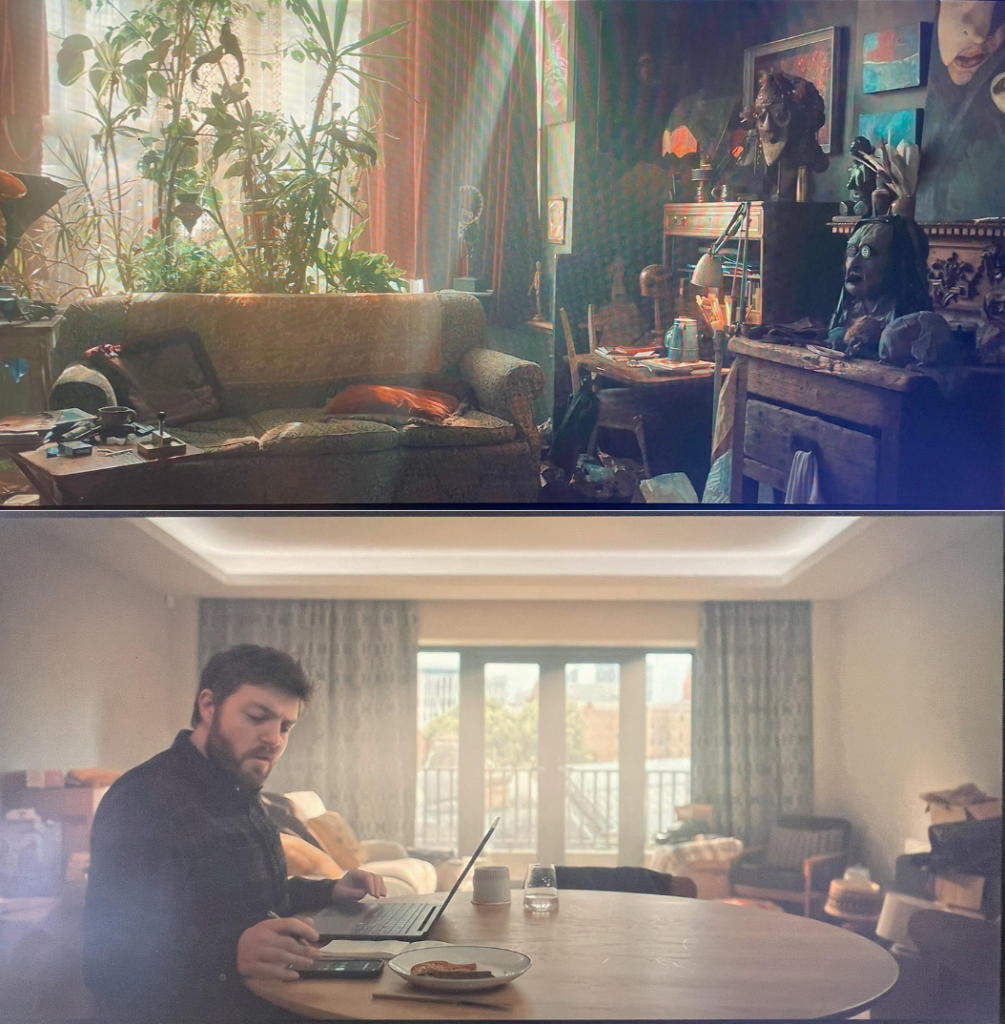
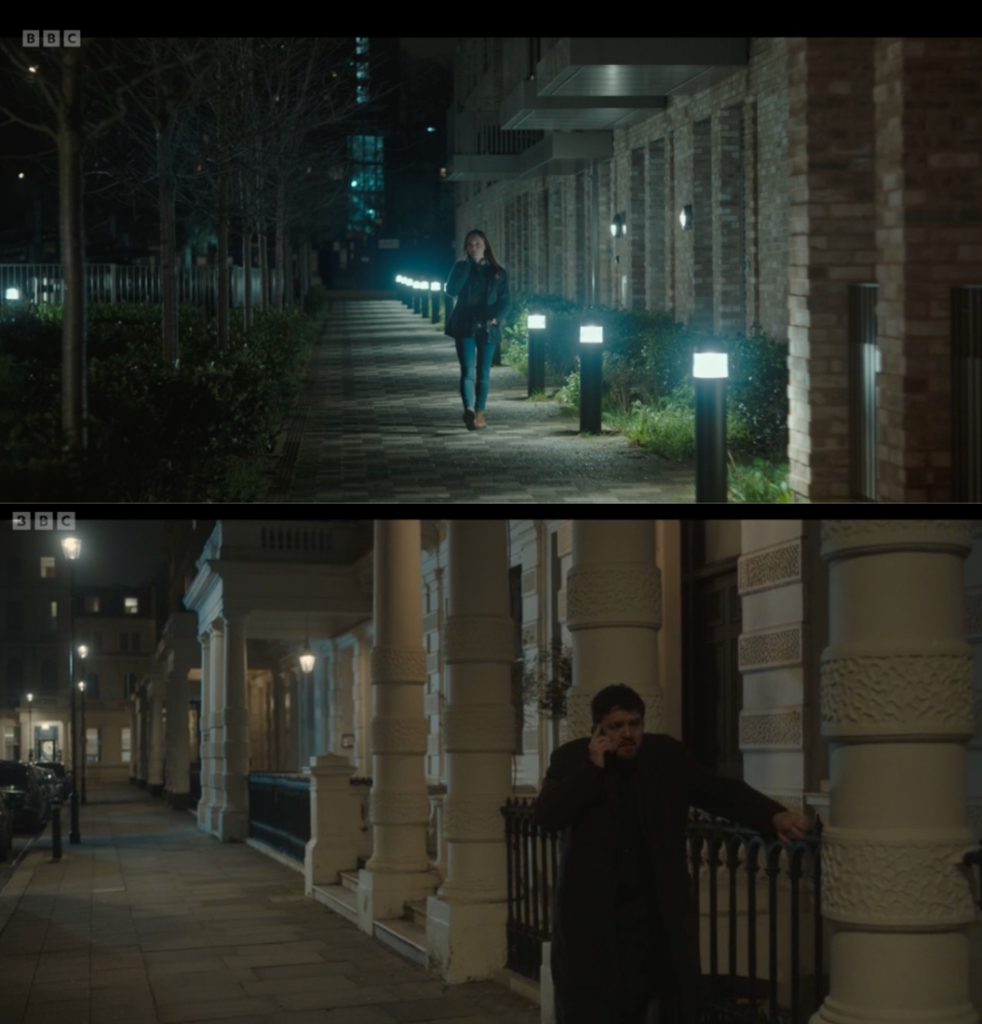

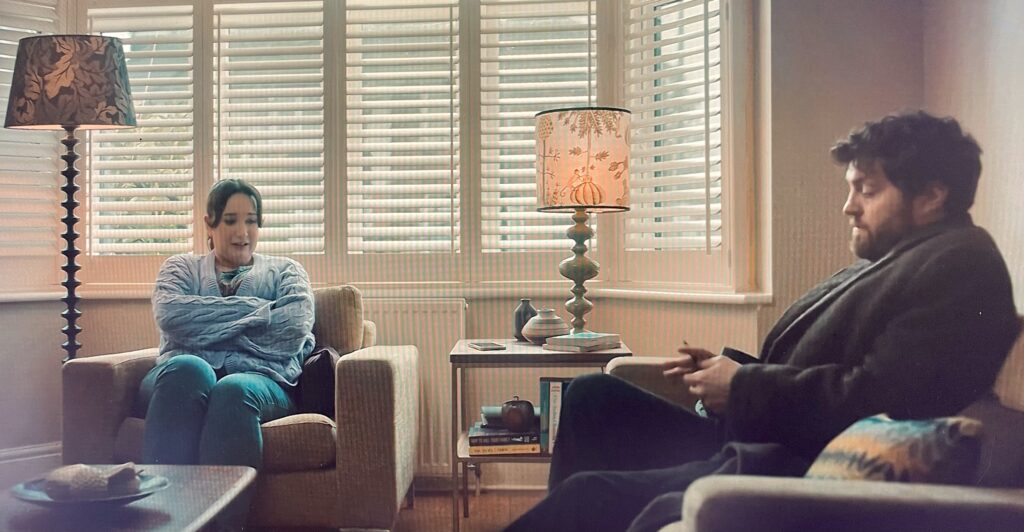
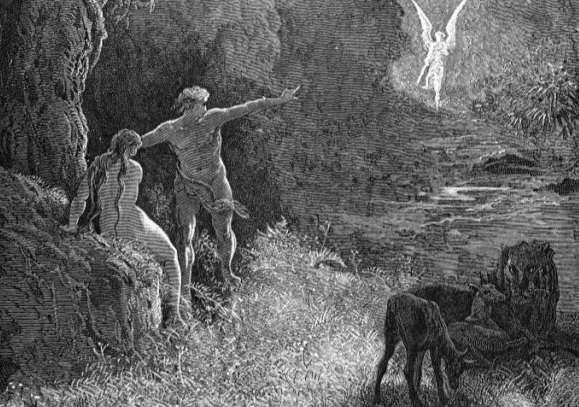


 The text underneath this superb image runs:



 Finally, after Robin’s angry demand “‘don’t […] buy me any more fucking flowers!’” (TB chapter 41), he arranges a thoughtful and beautiful birthday gift with the perfume and the drinks at the Ritz (TB chapter 73, IBH chapter 1). On her move, he anxiously tells her of his worry about the philodendron, which she answers with a laugh: “‘No. A plant isn’t flowers‘“ (IBH chapter 60). And he does all this not in order to get something in return (like the sex he gets from Madeline), but because he wants to make Robin happy.